
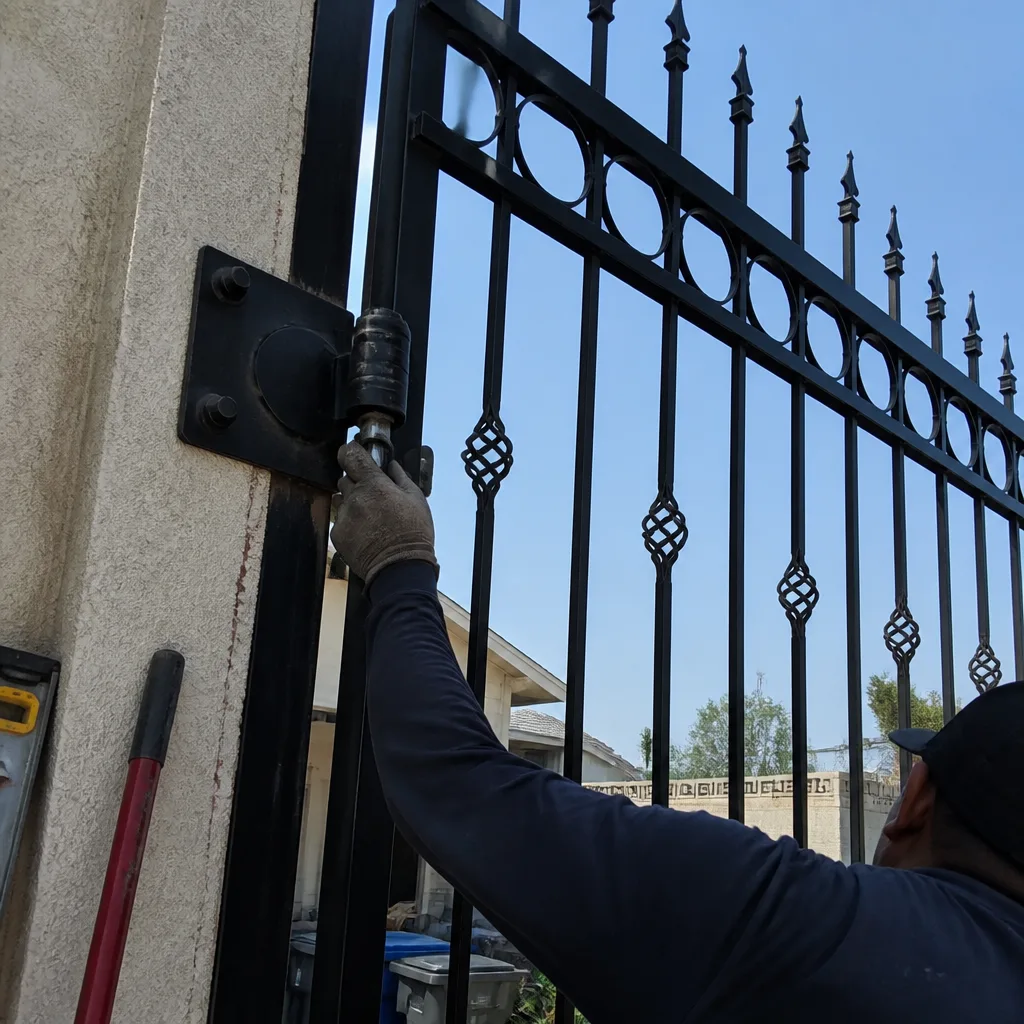
Last updated September 20, 2026
Free on-site gate assessment - hinges, posts, and your LiftMaster or Nice gate operator checked before anything is quoted
The assessment is free and the quote is the invoice.

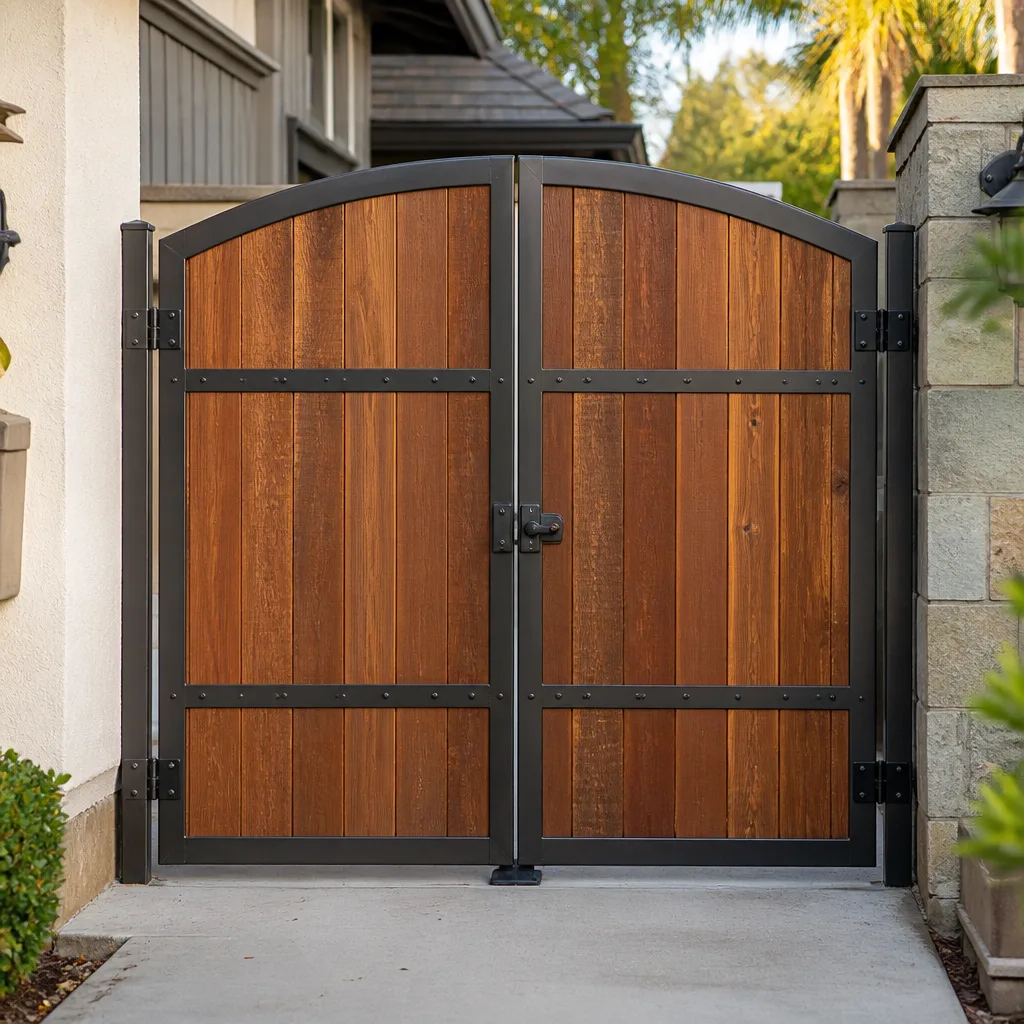
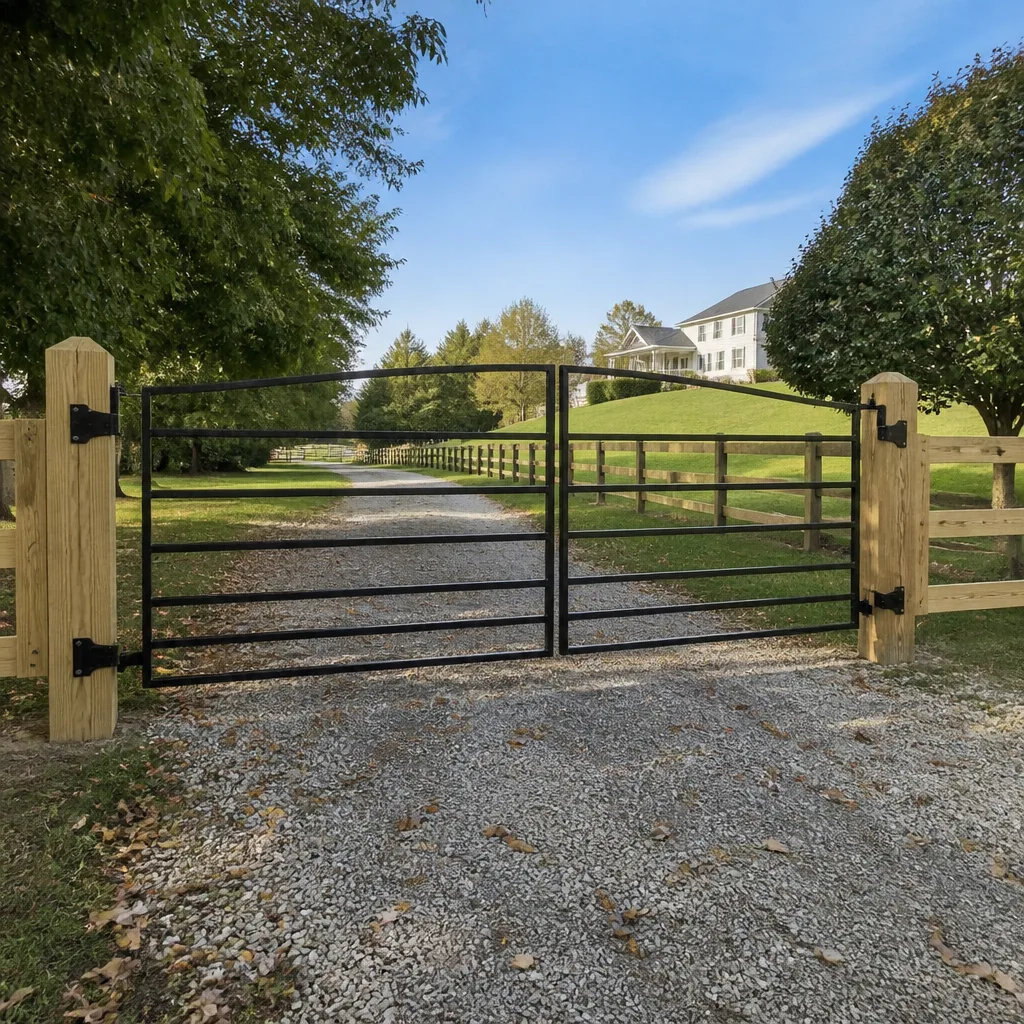
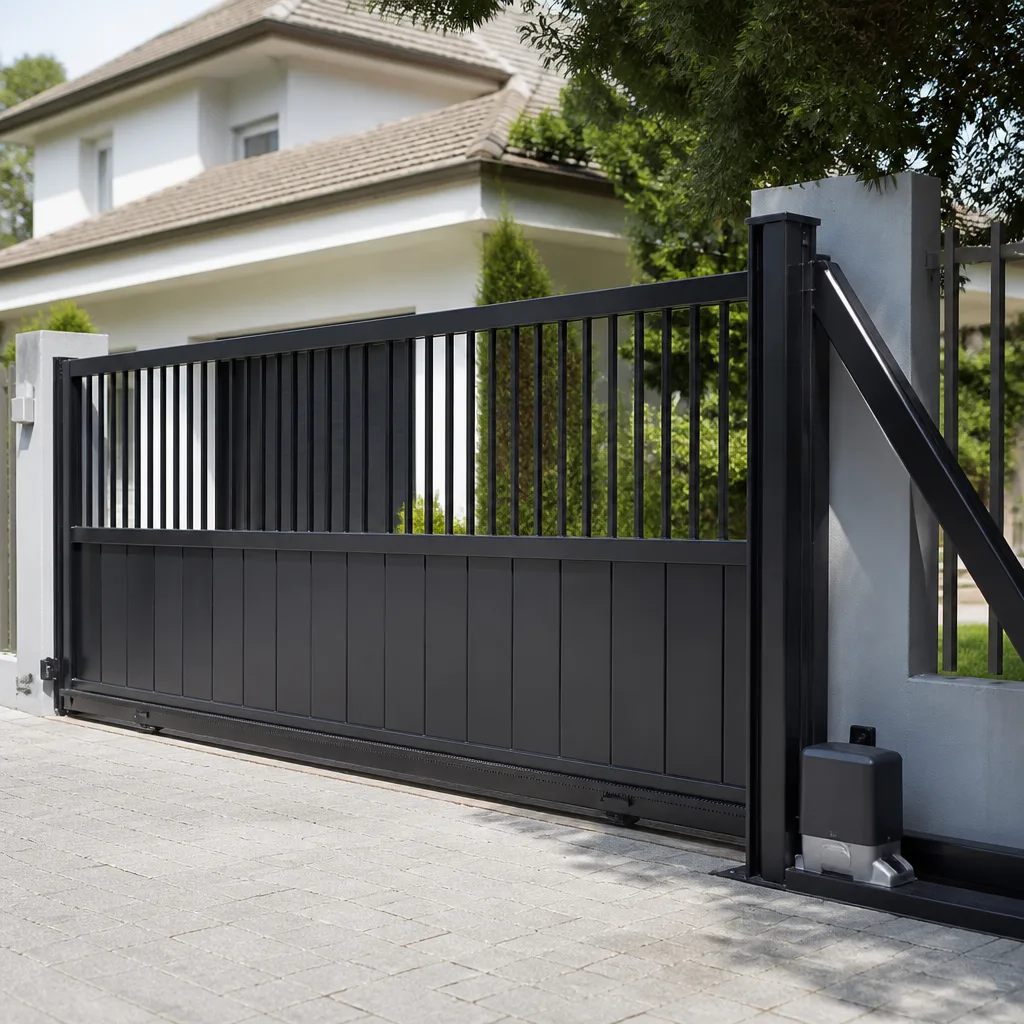
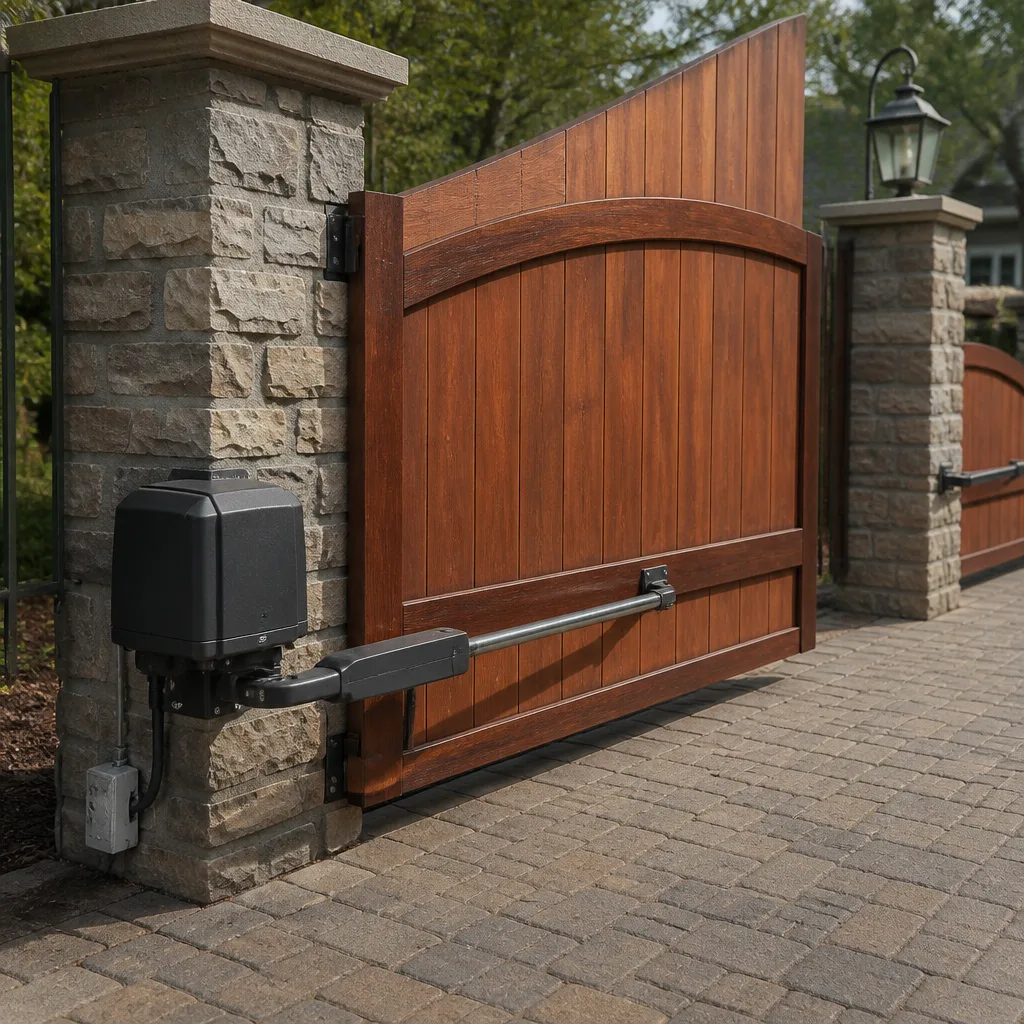
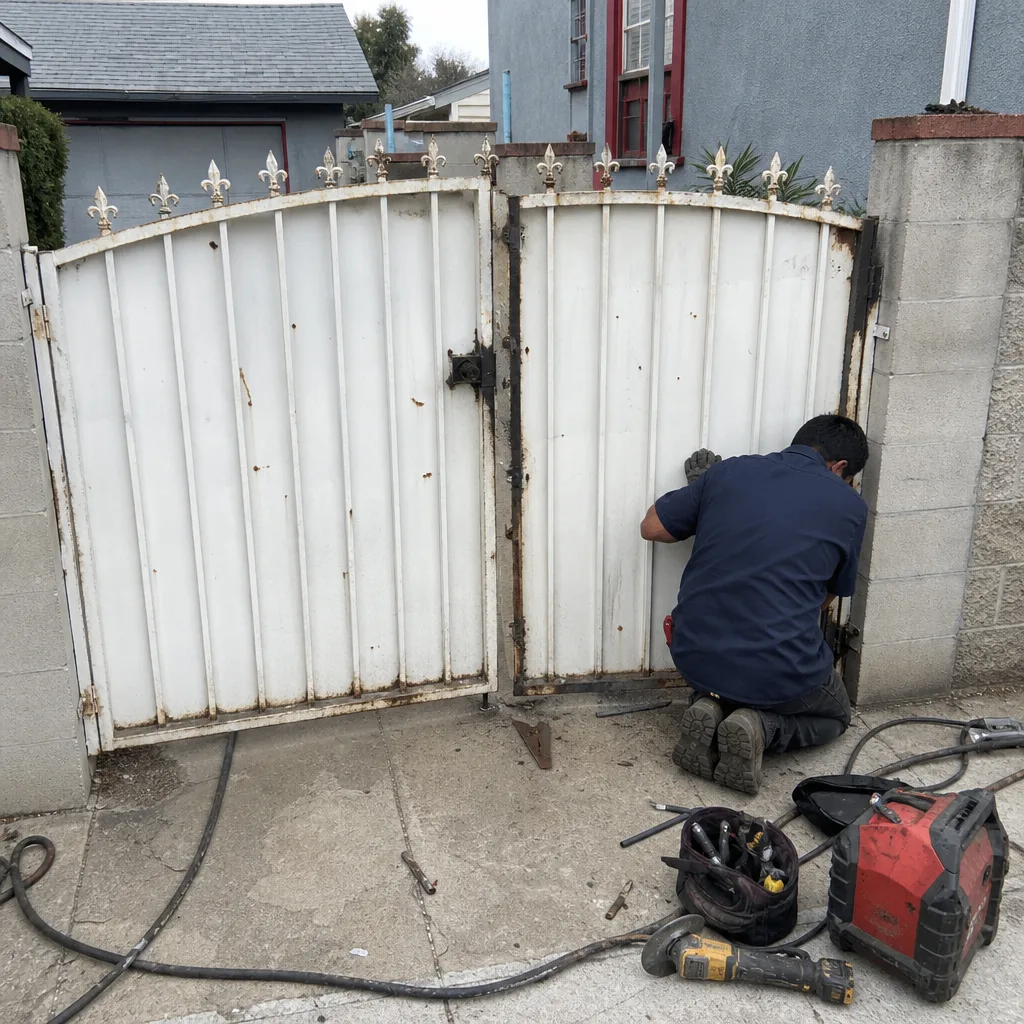 Before
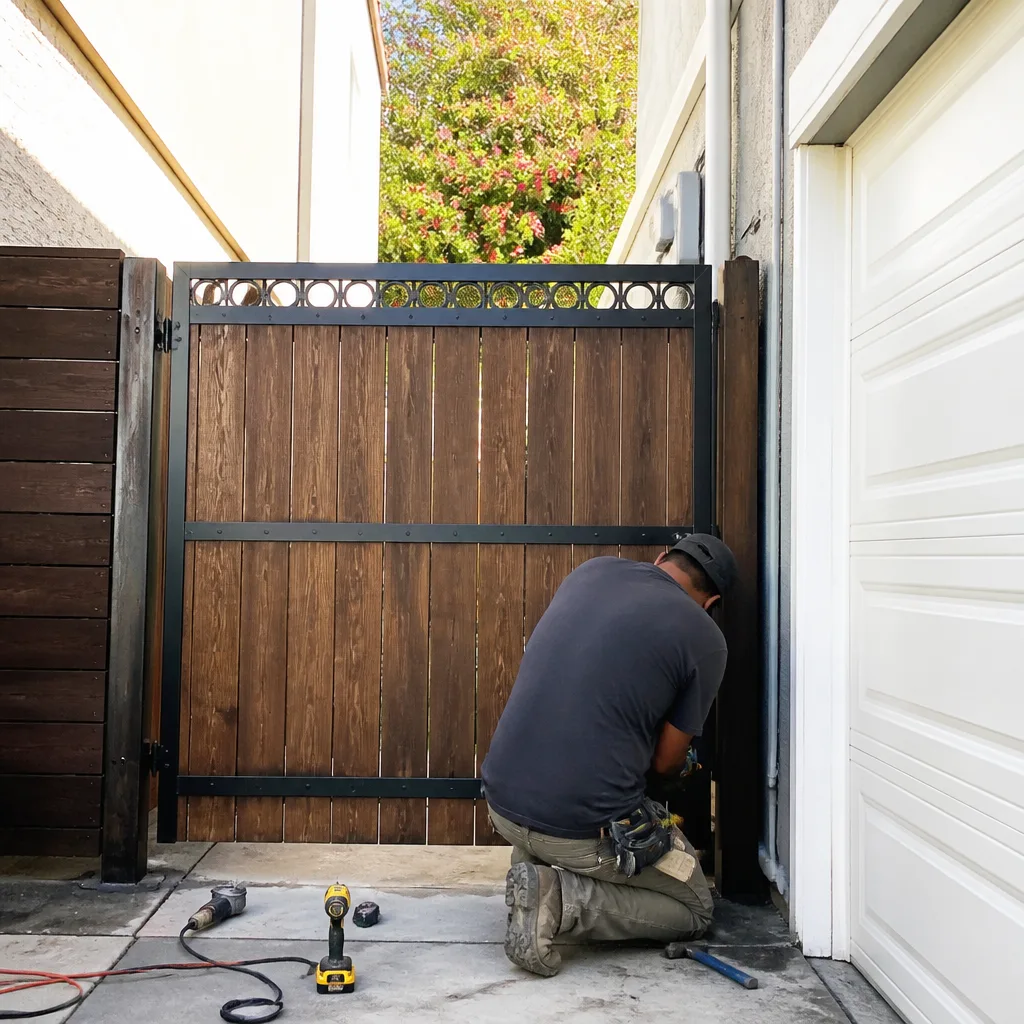 After
After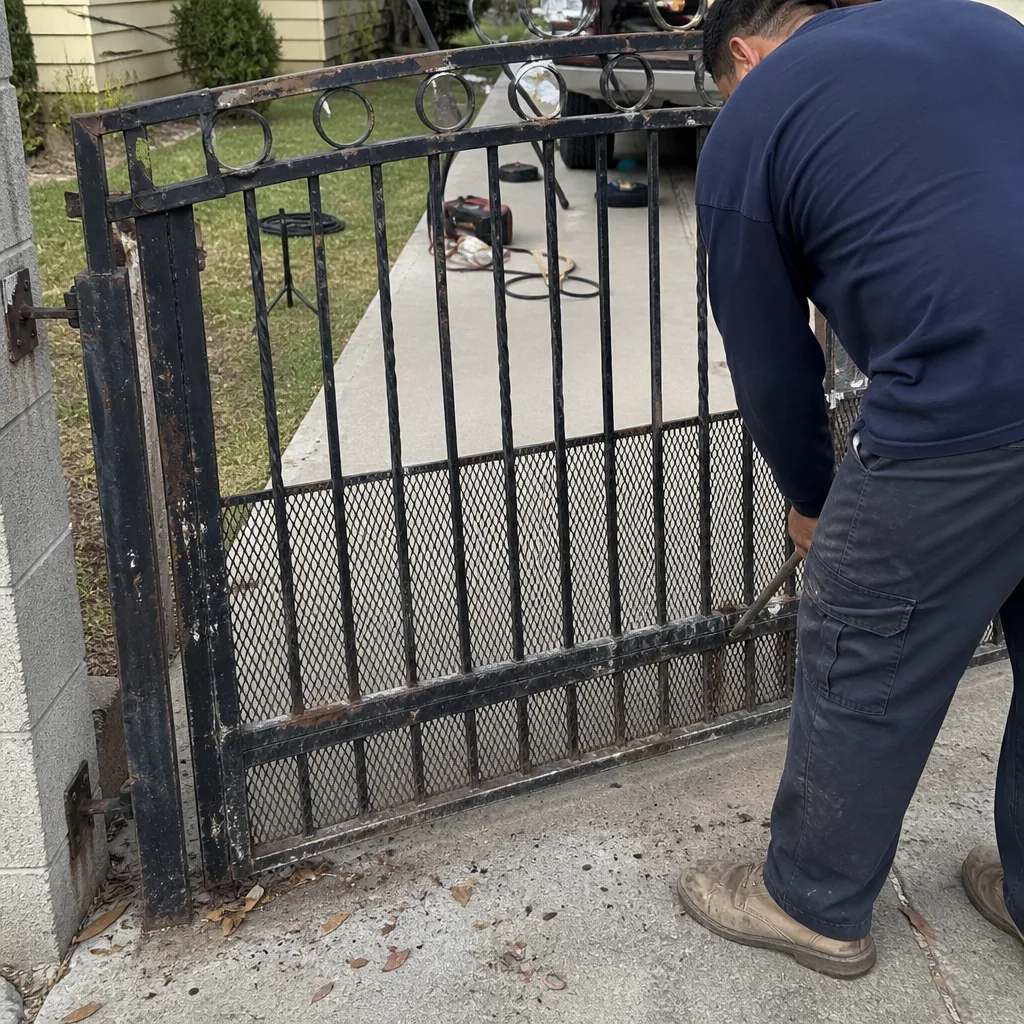 Before
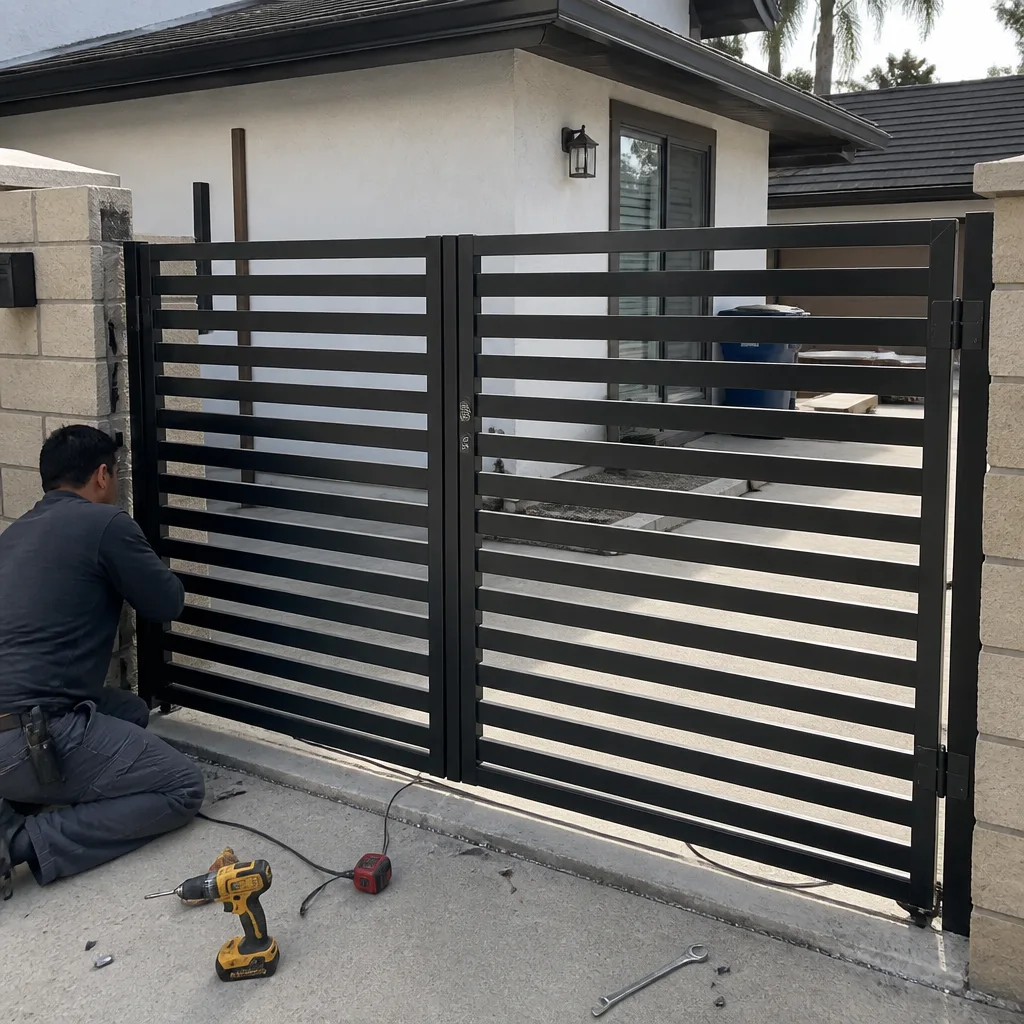 After
After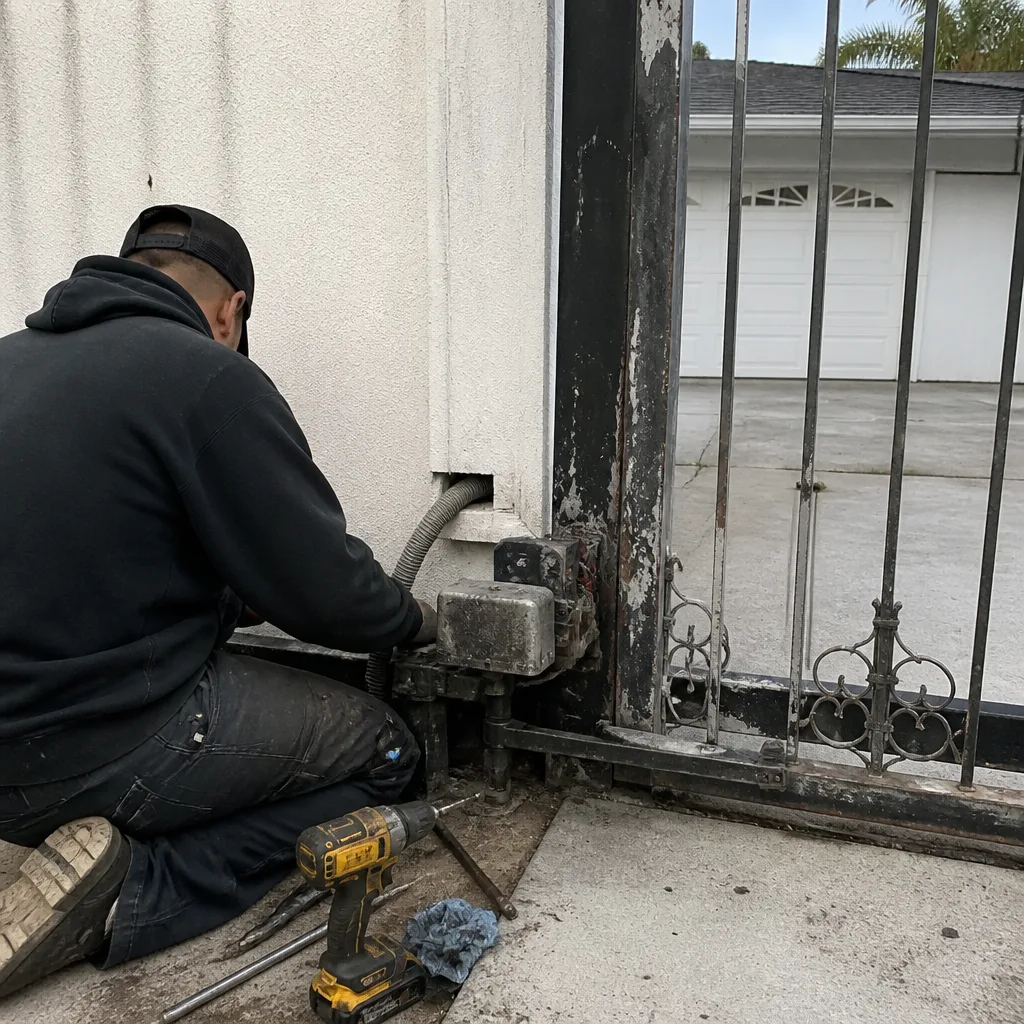 Before
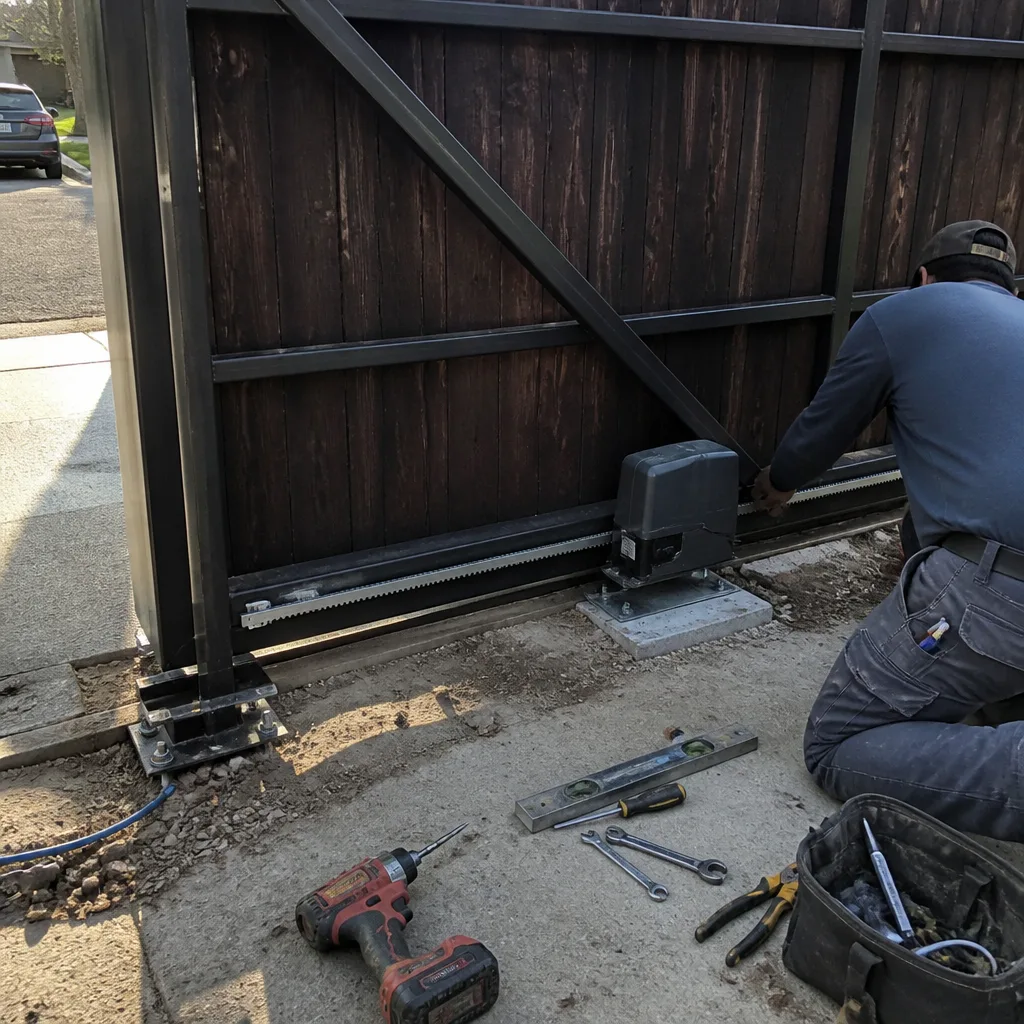 After
AfterGate Repair Permits, Codes & Inspections in CA: What You Need to Know
Here’s a fact most homeowners learn the hard way: the difference between a gate repair that needs a permit in California and one that doesn’t has almost nothing to do with how much you spend. It has everything to do with whether you’re touching the motor, the entrapment sensors, or the structural attachment points. A $6,000 gate replacement might sail through with no city permit at all, while a $400 operator swap done wrong can trigger a code violation, an insurance denial, and an inspector’s red tag. This guide walks through the actual California code framework, what UL 325 requires in plain language, how Long Beach handles gate permits specifically, and what documentation you should keep so nobody has to rediscover your gate’s history from scratch. For related reading, see our Gate Repair Warning Signs: A Long Beach Homeowner’s Reference Guide.
Quick Answer
Most cosmetic gate repairs in California need no permit at all, but any work that modifies the gate operator, entrapment-protection sensors, post anchoring, or hinge geometry can trigger a code review under UL 325 and the California Building Code (CBC). In Long Beach, a residential gate repair that restores the existing system to its original condition typically falls under “minor repair” and is exempt, but replacing an operator with a different model or changing the gate’s travel path or entrapment devices usually requires a permit. The determining factor is whether the motor or the structural attachment point is being modified, not the dollar value of the work.
Table of Contents
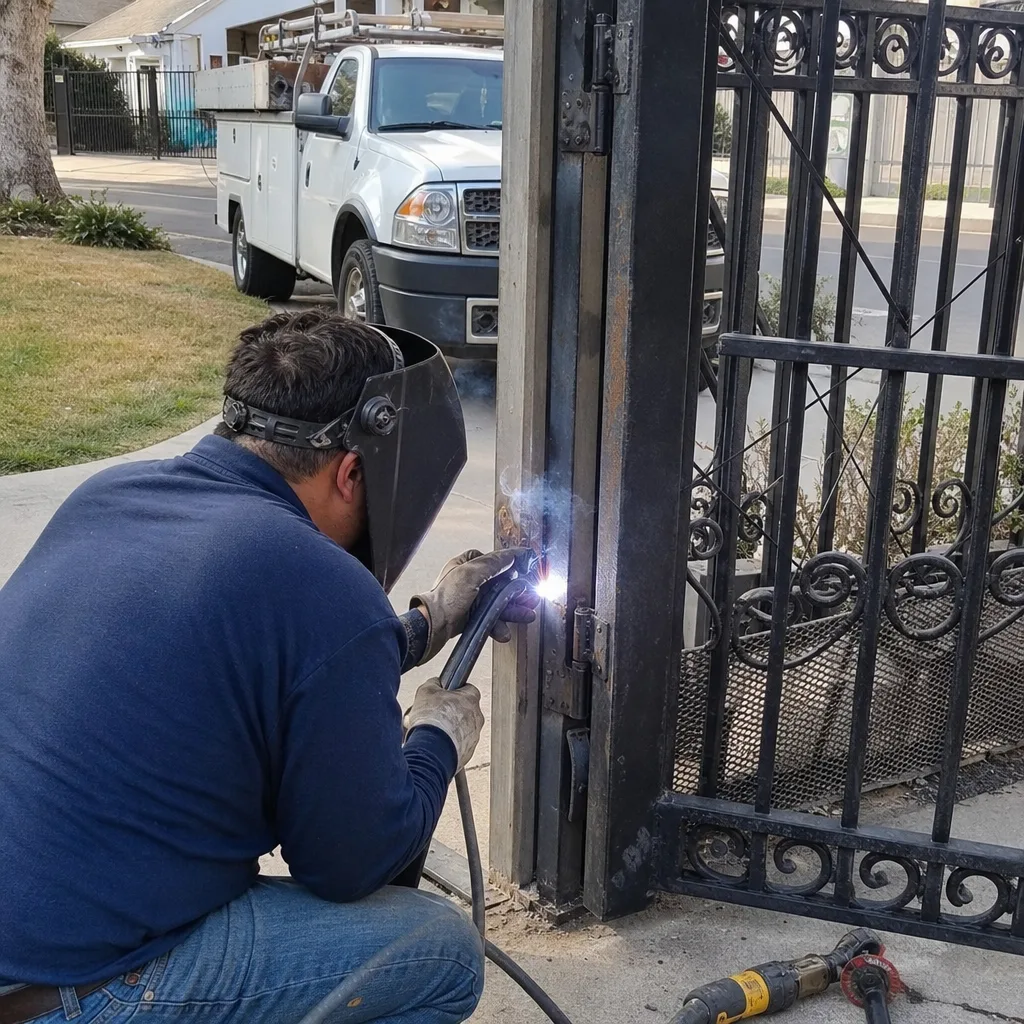
- UL 325 and California’s Entrapment-Protection Framework
- Long Beach Municipal Code: Repair vs. Modification
- Edge Sensors, Photo Eyes, and Loop Detectors: What Each Gate Actually Needs
- Documenting Your Gate Before Any Permit Work Begins
- HOA Architectural Review vs. City Code: Who Prevails
- What a Passed Inspection Record Should Contain
- Step-by-Step: Pulling a Gate Permit in Long Beach
- When No Permit Is Required: The Exemption Checklist
- Common Mistakes to Avoid
- When to Call a Professional
- Frequently Asked Questions
- The Bottom Line
BeforeAfterUL 325 and California’s Entrapment-Protection Framework
Every automated gate in California falls under UL 325, the national standard for automatic gate operators. This is not a suggestion. The California Building Code incorporates UL 325 by reference, which means a gate operator that does not comply with UL 325 is a code violation, full stop. UL 325 governs two things: the force the gate can apply before reversing and the sensors required to prevent a person or vehicle from being crushed, pinned, or dragged.
In plain language, UL 325 requires that every automated gate have at least two independent means of entrapment protection. The first is the inherent reversing mechanism: if the gate encounters resistance while closing, the motor must sense the load change and reverse direction. The second is an external entrapment-protection device. This can be a photo-eye (an infrared beam that, when broken, tells the gate to stop and reverse), a contact edge sensor (a rubber strip that triggers reversal when physically touched), or a loop detector installed in the driveway that senses a vehicle’s metal mass.
What many homeowners don’t realize is that the configuration of the gate changes what UL 325 requires. A sliding gate that travels parallel to a wall or fence can create a pinch point where the gate overlaps the hard structure. UL 325 treats that as a secondary entrapment zone and requires protection on both the leading edge and the trailing edge. A swing gate that opens out toward the street has different requirements than one that opens inward. And a gate with a gap at the hinge side that exceeds 4 inches at any point in the swing arc creates an entrapment hazard that inspectors look for specifically.
In Long Beach, where many homes have narrow side yards and gates that abut property lines, the clearance between the gate and any fixed object matters. If your gate swings within 16 inches of a wall or fence, that gap needs protection or the gate needs to be re-hinged. We’ve corrected dozens of these setups over the years as part of our Gate Repair services, and the pattern is always the same: the gate was installed years before UL 325 was enforced, and nobody realized the code applied until the operator failed and a new one had to go in.
Long Beach Municipal Code: Repair vs. Modification
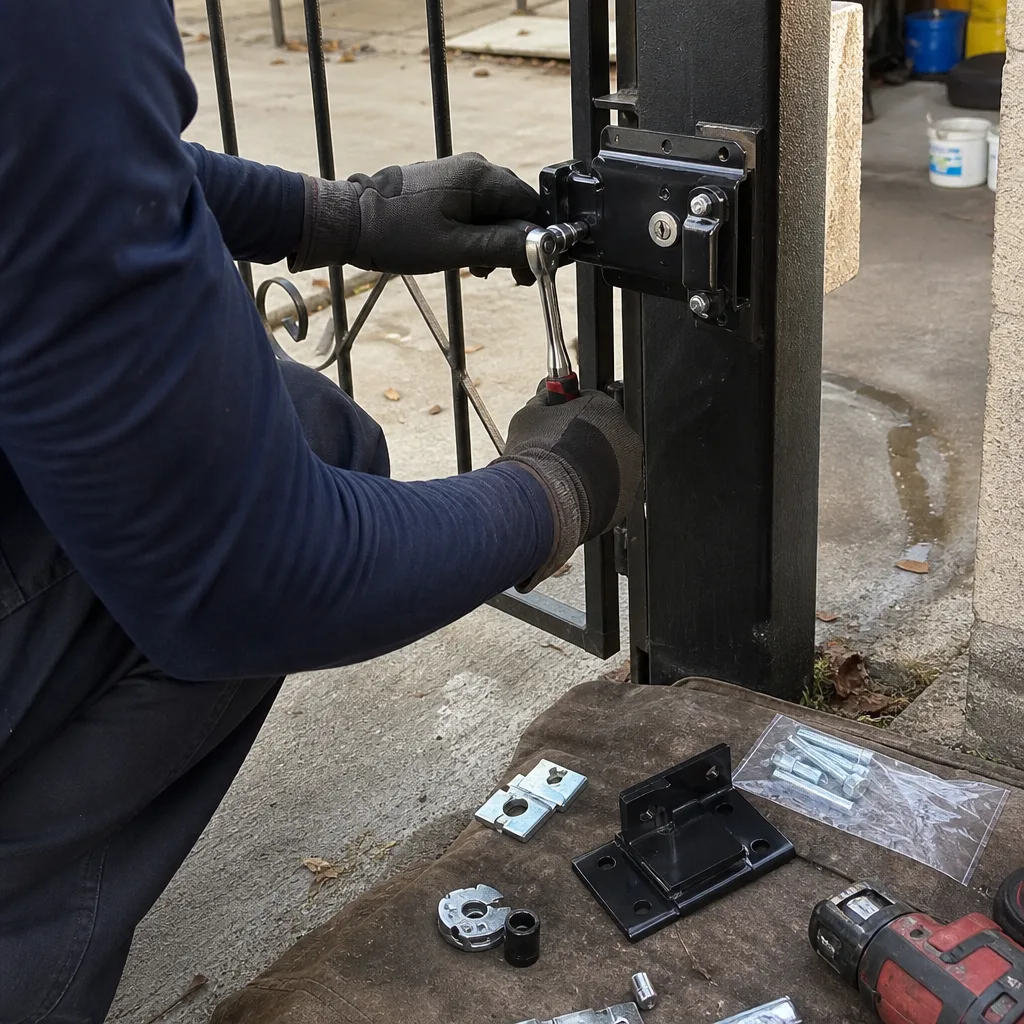
Long Beach adopts the California Building Code with local amendments, and the operative distinction for gate work appears in the city’s definition of “minor repair.” The threshold is this: if the work restores the gate, operator, or accessories to their original, code-compliant condition without changing the design, capacity, or function, no building permit is required. If the work changes any of those three things, it becomes a modification and a permit is triggered.
Here’s where homeowners get misled. Replacing a failed circuit board in an existing LiftMaster operator with the identical board? That’s a repair. Replacing a 1/2 HP operator with a 1 HP operator from a different brand, even if the gate itself doesn’t change? That’s a modification. The city’s logic is that the new operator has a different force profile, different internal entrapment settings, and different installation requirements, and those variables change the safety equation.
The dollar value is irrelevant. We’ve replaced a $900 gate hinge without a permit because it was a like-for-like restoration of the original attachment. We’ve also pulled permits for a $350 sensor replacement because the new edge sensor changed the gate’s entrapment protection profile and needed an inspector’s sign-off to be code-compliant. Anyone who tells you permits are based on cost doesn’t understand how Long Beach actually enforces the code.
The practical guidance: if the work involves the operator, the sensors, the post footings, or the hinge geometry, call a gate repair professional in Long Beach who can tell you which side of the line your project falls on before you start. The call costs less than a failed inspection.
Edge Sensors, Photo Eyes, and Loop Detectors: What Each Gate Actually Needs
The vocabulary of entrapment protection gets tossed around loosely, so let’s be precise about what each device does and which gate configurations legally require which.
- Photo-eyes: A photo-eye is a transmitter and receiver pair that projects an infrared beam across the gate opening. When anything breaks the beam, the gate stops and reverses. UL 325 accepts photo-eyes as the primary external entrapment device for most residential gate configurations. They need to be mounted at a height that a small child cannot crawl under, typically 6-8 inches above grade.
- Contact edge sensors: An edge sensor is a pressure-sensitive strip mounted on the leading edge of a sliding gate or the closing edge of a swing gate. When the strip contacts something, it sends a signal to reverse the gate. Edge sensors are mandatory when a gate closes against a hard surface where a photo-eye’s beam cannot cover the pinch zone, such as a gate that closes flush against a wall or post.
- Loop detectors: A loop detector is a coil of wire embedded in the driveway that detects the metal mass of a vehicle. Loop detectors serve two purposes: free-exit loops open the gate automatically when a car approaches from inside, and safety loops hold the gate open if a vehicle is sitting in the gate’s path. UL 325 does not accept a loop alone as entrapment protection because it cannot detect a person or a bicycle, but it is required as a secondary device on many slide-gate installations.
What a gate legally requires depends on the configuration. A swing gate that opens inward toward a driveway with no fixed obstruction within 16 inches typically needs a photo-eye and the operator’s inherent reverse. A slide gate that travels toward a wall or fence needs a leading-edge contact sensor, a photo-eye on the closing path, and often a rear-edge sensor to protect the trailing pinch point. A gate with an under-gate clearance of more than 4 inches needs a bottom edge or a photo-eye positioned to see below the gate’s lowest point.
In Long Beach’s older neighborhoods, like Belmont Heights and Rose Park, many gates were retrofitted onto narrow driveways years ago, and the original installations predate current UL 325 requirements. That doesn’t mean the gate is grandfathered out of compliance. The moment the operator is replaced or the entrapment system is modified, the entire gate must be brought up to the current standard. This is the single most expensive discovery in residential gate repair, and it’s why a written assessment before work begins matters.
Documenting Your Gate Before Any Permit Work Begins
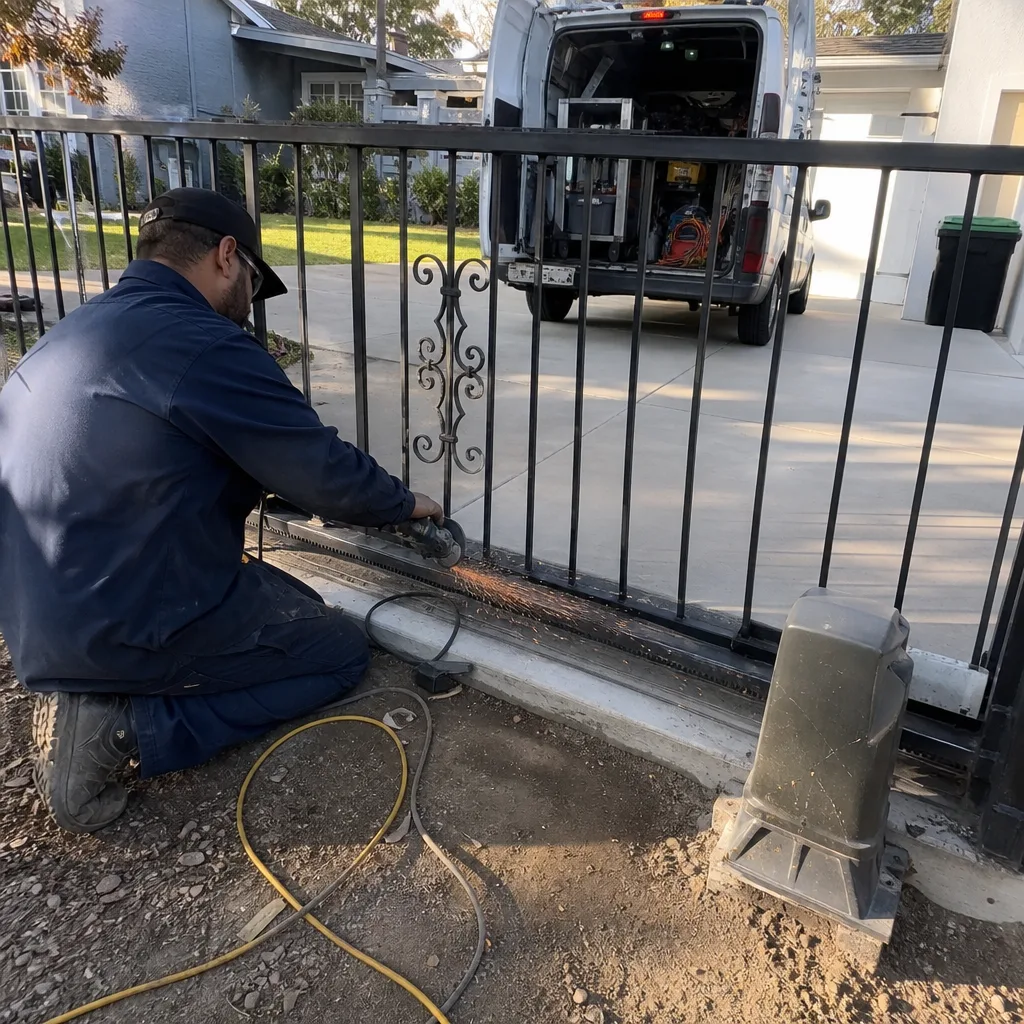
If your project needs a permit, the documentation you create before work starts is almost as important as the work itself. An inspector has no baseline to compare against unless you provide one. The time to photograph, measure, and record the gate’s condition is before the old operator comes off the post.
We recommend a simple documentation sequence that takes about fifteen minutes:
- Photograph the gate in both positions: Fully open and fully closed, from both sides. Capture the hinge-side gap, the leading edge, and the ground clearance. These photos are your evidence if a question comes up later about what changed.
- Record the operator’s nameplate data: Brand, model number, voltage, and date code. If the operator is being replaced under the permit, this tells the inspector what was there before.
- Measure the entrapment zones: The gap at the hinge, the distance from the gate to any fixed object in the swing path, and the under-gate clearance. Write these down. If any of them exceed UL 325 thresholds, note that in your documentation so the permit application can address it.
- Test the existing entrapment devices: If there’s a photo-eye, block it and confirm the gate reverses. If there’s an edge sensor, press it and confirm the gate reverses. Note whether each device passes or fails.
- Photograph the control board and wiring: Before any wires are moved. This is the photo that resolves disputes about what was connected where.
This is the same documentation habit we follow on every job in Long Beach. Before our technicians remove a single screw, there’s a written record of what existed, what was measured, and what was photographed. It protects the homeowner, it protects the inspector’s time, and it means the next technician who touches that gate doesn’t have to guess what came before. That record should stay with the property file. If you sell the house, it answers the buyer’s questions about the gate’s history without a single phone call.
HOA Architectural Review vs. City Code: Who Prevails
In Long Beach, many homeowners live under two authorities: the city and a homeowners association. When those two jurisdictions disagree about a gate, the short answer is that city code always prevails for safety and structural matters. The HOA cannot approve a gate modification that violates the Long Beach building code, and the city will not waive a code requirement because an HOA’s architectural guidelines said otherwise.
Where the HOA actually has teeth is in aesthetics and material selection. An HOA architectural review committee can reject a gate’s color, height, style, finish, or placement, and that rejection can prevent you from installing the gate even if the city would have issued a permit. The two processes run in parallel. In practice, you should get the HOA’s written approval for the design first, then submit the city permit application with the HOA’s sign-off attached. That sequence prevents a scenario where the city approves the permit but the HOA blocks the installation.
One specific intersection we see regularly in Long Beach’s older subdivisions: the HOA wants a specific gate style that violates current UL 325 entrapment requirements. An ornamental gate with decorative scrolling that creates pinch points, for example, may pass architectural review but fail a code inspection. In that case, the code wins. The gate either gets modified to meet UL 325 or it doesn’t get automated.
If you’re unsure which authority applies to your project, start with the city. The permit counter can tell you whether your gate modification requires a permit, and that determination governs the rest of the process. The HOA’s role is secondary to that.
What a Passed Inspection Record Should Contain
A passed gate inspection is not just a signature on a form. It’s a document that protects you from liability and protects future buyers from code violations they didn’t create. When your gate work passes its final inspection, you should receive or obtain a record that contains specific items.
- The permit number and inspection date: This ties the work to the city’s permanent record.
- The inspector’s name and the final outcome: “Passed” or “Approved,” not “Conditional” or “Partial.”
- A description of the work performed: The operator model installed, the entrapment devices added or replaced, and any structural changes to posts, hinges, or footings.
- UL 325 compliance confirmation: The inspector’s note that the gate’s force settings, entrapment devices, and clearances were verified against the current standard.
- Photos of the finished installation: Ideally from both sides of the gate, showing the entrapment devices in place.
A complete inspection record answers the questions a buyer’s home inspector will ask during a sale. It demonstrates that the gate was permitted, inspected, and brought into compliance. Without it, a buyer’s inspector may flag the gate as unpermitted work, which can derail a closing or force a retroactive permit application that costs more than the original repair.
Keep this record with your property file, not in a drawer that gets lost. When you sell, hand it to the buyer. It’s the same principle as keeping the paperwork for a roof replacement or a panel upgrade. The gate is a piece of the home’s infrastructure, and its documentation should travel with the property.
Step-by-Step: Pulling a Gate Permit in Long Beach
If your project falls on the modification side of the line, the permit process is straightforward but specific. Here’s the sequence we’ve followed on hundreds of permitted gate jobs in Long Beach.
- Determine if the project needs a permit. The gate operator, the entrapment devices, the post footings, and the hinge geometry are the four triggers. If you’re touching any of those in a way that changes the design, capacity, or function, assume a permit is required and verify with the city.
- Prepare the documentation package. Include the pre-repair photos and measurements from the documentation sequence above, the operator nameplate data for both the old and new units, and a written description of the work. The more complete the package, the fewer questions the plans examiner will have.
- Submit the application to the Long Beach Development Services Department. Residential gate operator permits are typically processed as an “over-the-counter” review if the documentation is complete. Some projects require plan review, which takes longer.
- Schedule the rough inspection if required. If your project involves new post footings or conduit runs, the city will want to inspect the footing excavation before concrete is poured and the conduit before it’s covered.
- Complete the work with documentation at every step. Photograph the footings before pouring, the conduit before burial, and the operator before the cover goes on. These photos protect you if the inspector has questions.
- Schedule the final inspection. The inspector will verify the entrapment devices, the force settings, the clearances, and the UL 325 compliance. If everything passes, you receive the approved record.
The entire process typically takes two to four weeks for a straightforward operator replacement, with most of that time spent waiting for inspection slots. It’s slower than the repair itself, which is why so many homeowners are tempted to skip it. The risk calculation is simple: an unpermitted operator that later causes an injury can void your homeowner’s insurance coverage for that event. The permit fee is trivial compared to that exposure.
We’ve helped Long Beach homeowners navigate this process for years. If you want help with gate installation in Long Beach or need clarity on whether your repair triggers a permit, our team can assess it in person and tell you exactly what the city will require.
When No Permit Is Required: The Exemption Checklist
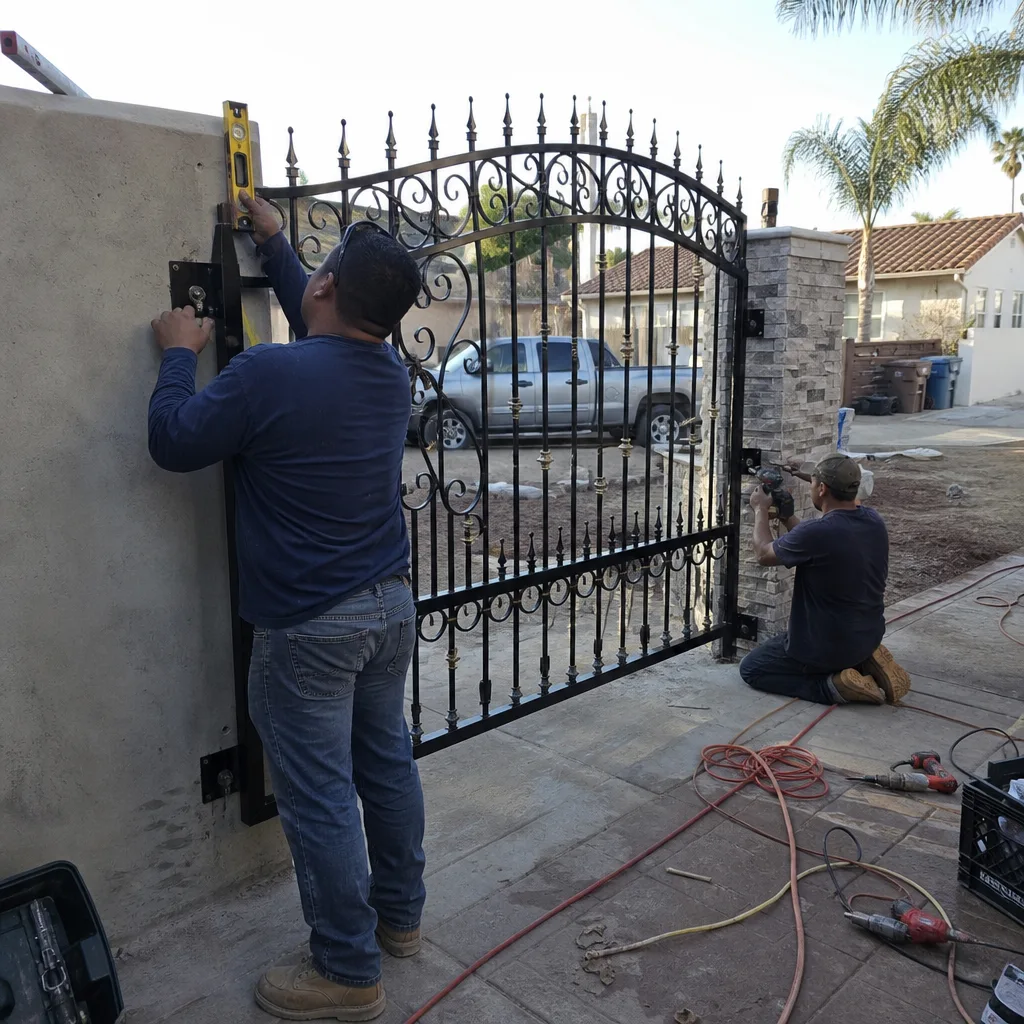
Most gate repairs never see a permit application, and for good reason. The city’s minor-repair exemption exists to let homeowners maintain their gates without bureaucratic overhead. Here’s a checklist of work that typically falls under the exemption in Long Beach.
- Replacing a like-for-like operator circuit board, remote receiver, or transformer
- Adjusting gate travel limits, force settings, or closing speed on the existing operator
- Replacing a failed photo-eye with a functionally identical unit
- Lubricating hinges, rollers, and bearings
- Tightening or replacing hinge bolts without changing the hinge geometry
- Repairing or replacing a wired keypad or intercom with no change to the control wiring
- Welding a crack in the gate frame, provided the structural configuration is unchanged
- Replacing the gate’s battery backup with the same voltage and capacity
The common thread: none of these items change the gate’s design, capacity, or function. The gate operates the same way after the repair as it did before. If you’re unsure whether your project qualifies, the city’s permit counter can give you a determination, or you can have a licensed professional make the call.
Be careful not to talk yourself into the exemption when the work actually crosses the line. Replacing a photo-eye with a different model that mounts at a different height? That’s a modification. Changing the hinge layout to correct a sagging gate? That’s a modification. The exemption applies to restoration, not improvement or alteration.
Common Mistakes to Avoid
- Skipping the permit because the previous owner skipped it. Unpermitted work by a previous owner doesn’t grandfather the gate into compliance. When the operator fails and you replace it, the whole system comes under current code. You inherited the liability; don’t extend it.
- Buying an operator from an online retailer and installing it without checking UL 325 compliance for your gate’s configuration. Not every operator is approved for every gate type. A swing-gate operator installed on a slide gate can create an entrapment hazard that no inspector would ever approve.
- Assuming the HOA approval means the city permit is automatic. The two processes are separate, and HOA approval never waives a building code requirement. We’ve seen Long Beach homeowners get HOA sign-off on a gate design that violated UL 325 clearance rules, then have to redesign it after the city flagged it.
- Not documenting the pre-repair condition. Without photos and measurements from before the work, you cannot prove what changed. That’s a problem whether the inspector asks or a future insurance claim depends on it.
- Installing a photo-eye at the wrong height. UL 325 has specific mounting requirements. A photo-eye mounted too high or too low can miss a small child or a pet, which defeats the entire purpose of the device and fails inspection.
- Using a handyman for operator replacement to save money. Gate operators are governed by UL 325 because they can seriously injure someone when installed wrong. A technician who doesn’t know the code cannot install to the code, and a failed inspection costs more than hiring it done right the first time.
- Throwing away the operator manual and nameplate data. The inspector needs to see the operator’s model and UL listing. If that information is gone, the inspection stalls until you can produce it.
When to Call a Professional
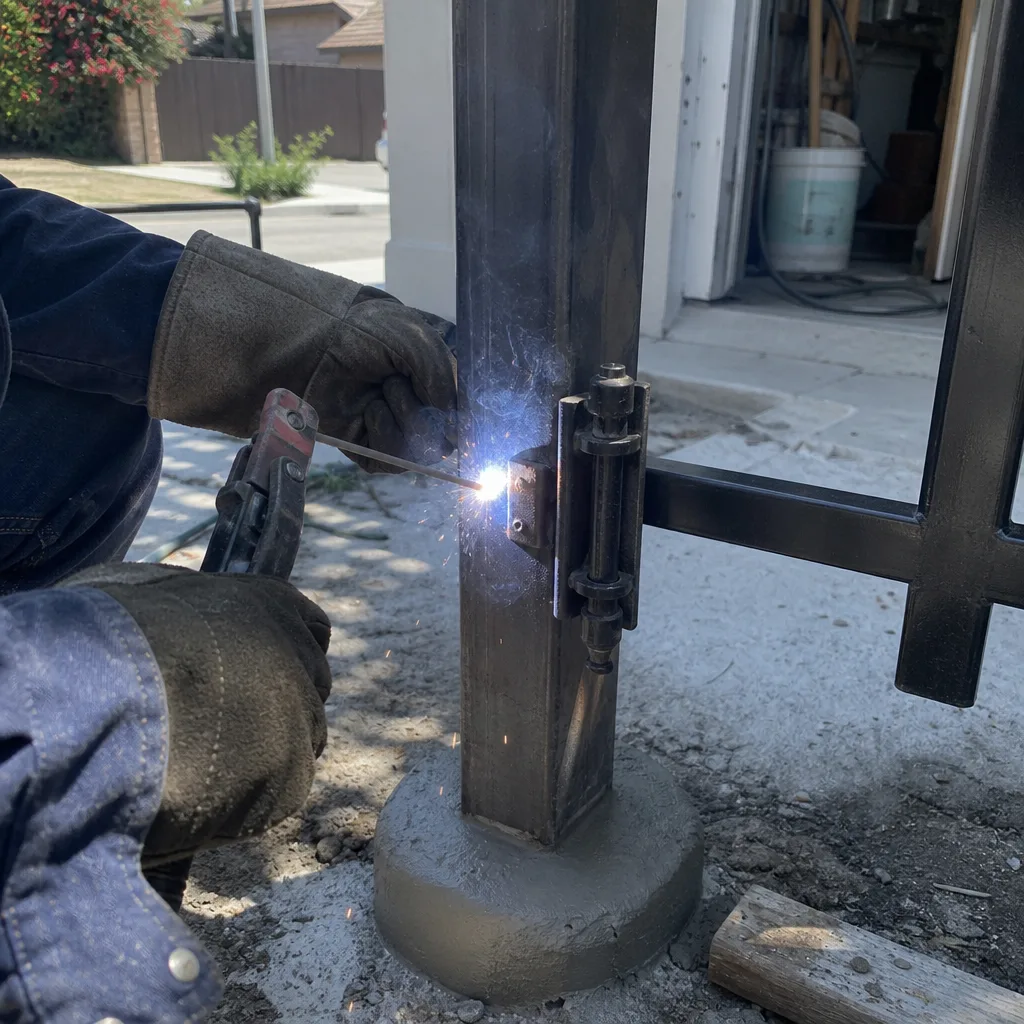
Some gate work is genuinely DIY: lubricating hinges, adjusting a keypad code, replacing a battery in a remote. But the line is bright. The moment you’re touching the operator, the entrapment sensors, the post footings, or the hinge geometry, you’re in territory where a mistake can injure someone and void your insurance. A gate operator has enough force to pin a person against a hard surface. That’s not a melodramatic warning; it’s why UL 325 exists.
If your gate is making new noises, the operator is fighting itself, the sensors don’t respond the way they used to, or you’re planning to replace the operator and don’t know whether the project triggers a permit, call a professional before you start. Gate motor and opener work in Long Beach benefits from someone who can identify the problem, tell you whether a permit applies, and document the work the way the city expects.
Vance Gate Repair Long Beach offers free estimates in Long Beach - call (424) 788-1027 and we’ll assess the gate in person, in writing, before any work begins.
Frequently Asked Questions
Most repairs do not need a permit. If the work restores the gate to its original, code-compliant condition without changing the design, capacity, or function, it falls under the minor-repair exemption. Replacing a failed operator with a different model, changing hinge geometry, or adding entrapment devices triggers a permit.
UL 325 is a national safety standard for automatic gate operators that requires entrapment protection (photo-eyes, edge sensors, or loops) and a reversing mechanism on every automated gate, residential included. It applies to every gate operator installed in California, regardless of whether a permit was pulled.
Residential gate operator permit fees in Long Beach typically run from $150 to $400 depending on the scope of work, with plan review and inspection fees added when required. The exact fee is calculated at application, but the permit is always less expensive than an unpermitted installation discovered later. Call (424) 788-1027 for a free gate assessment and written estimate, and we’ll help you determine the total cost of your project, including permits.
You can physically install one, but the installation is still subject to UL 325 and the California Building Code. If the installation doesn’t meet entrapment-protection requirements, the gate is not code-compliant and may void your insurance. A homeowner-installed operator that causes an injury carries the same liability as one installed by a professional, but without the documentation trail an inspector or insurer expects.
The gate is an unpermitted fixture, but that doesn’t mean it immediately needs to be torn out. The trigger for enforcement is alteration. The moment the operator is replaced, the hinges are changed, or the entrapment devices are modified, the entire system must be brought up to current code through the permit process. If you’re selling the house, an unpermitted gate may be flagged during inspection and need to be retroactively permitted.
A straightforward residential operator replacement with complete documentation typically takes two to four weeks from application to final inspection in Long Beach. Most of that is waiting for inspection slots, not the work itself. Complex projects involving new footings or plan review can take longer. We’ve handled the full permit process for many Long Beach homeowners as part of our installation work, and we’re glad to walk you through exactly what your project will require.
The Bottom Line
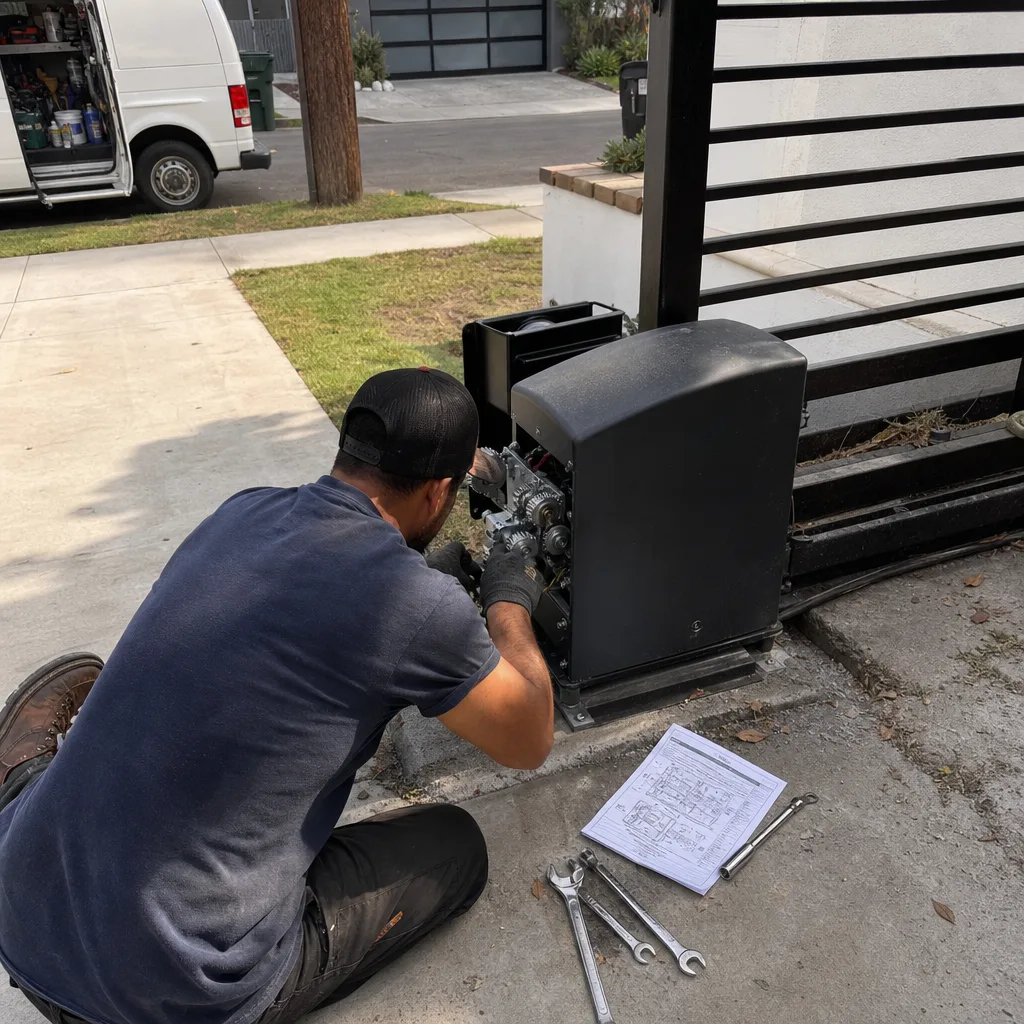
California’s gate permit landscape is not complicated once you understand the trigger points. Repairs that restore the gate to its original condition are exempt. Anything that modifies the operator, the entrapment devices, the footings, or the hinge geometry crosses into permit territory. UL 325 applies to every automated gate, permitted or not, and your insurance policy is contingent on compliance. Long Beach homeowners should document their gate before any work begins, keep inspection records with the property file, and assume that an unpermitted gate becomes a liability the moment it changes hands. The smart approach is to know which side of the line your project falls on before you start, and to get the answer in writing. Explore more guides & resources for Long Beach homeowners.
If you have questions about your gate, want a free estimate in Long Beach, or need a second opinion on another company’s proposal, call (424) 788-1027. We answer the phone 24/7, and we’ll tell you what we find, in writing, before any work begins. Visit our Vance Gate Repair Long Beach home page to learn more about how we work.
Written by Adrian Vance, Owner at Vance Gate Repair Long Beach, serving Long Beach since 2014.