

Last updated September 20, 2026
Free on-site gate assessment - hinges, posts, and your LiftMaster or Nice gate operator checked before anything is quoted
The assessment is free and the quote is the invoice.
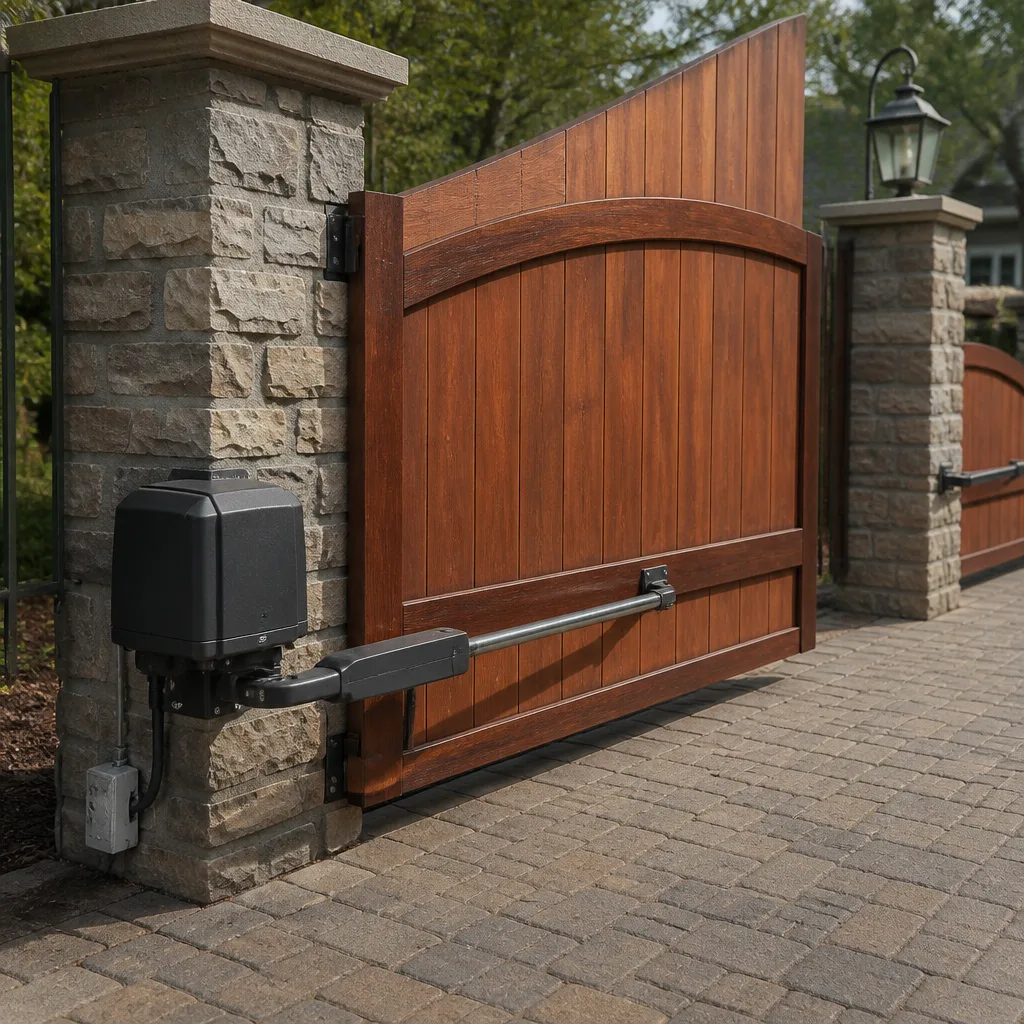
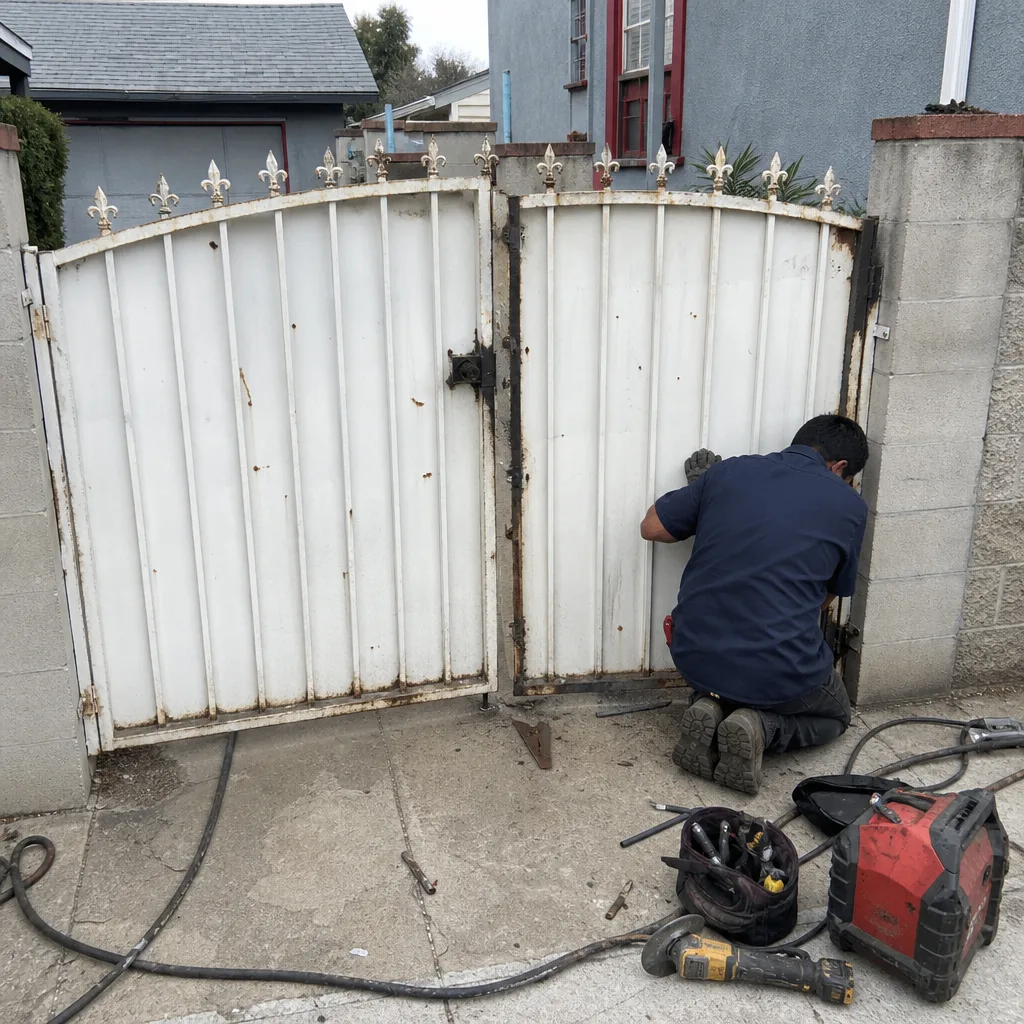 Before
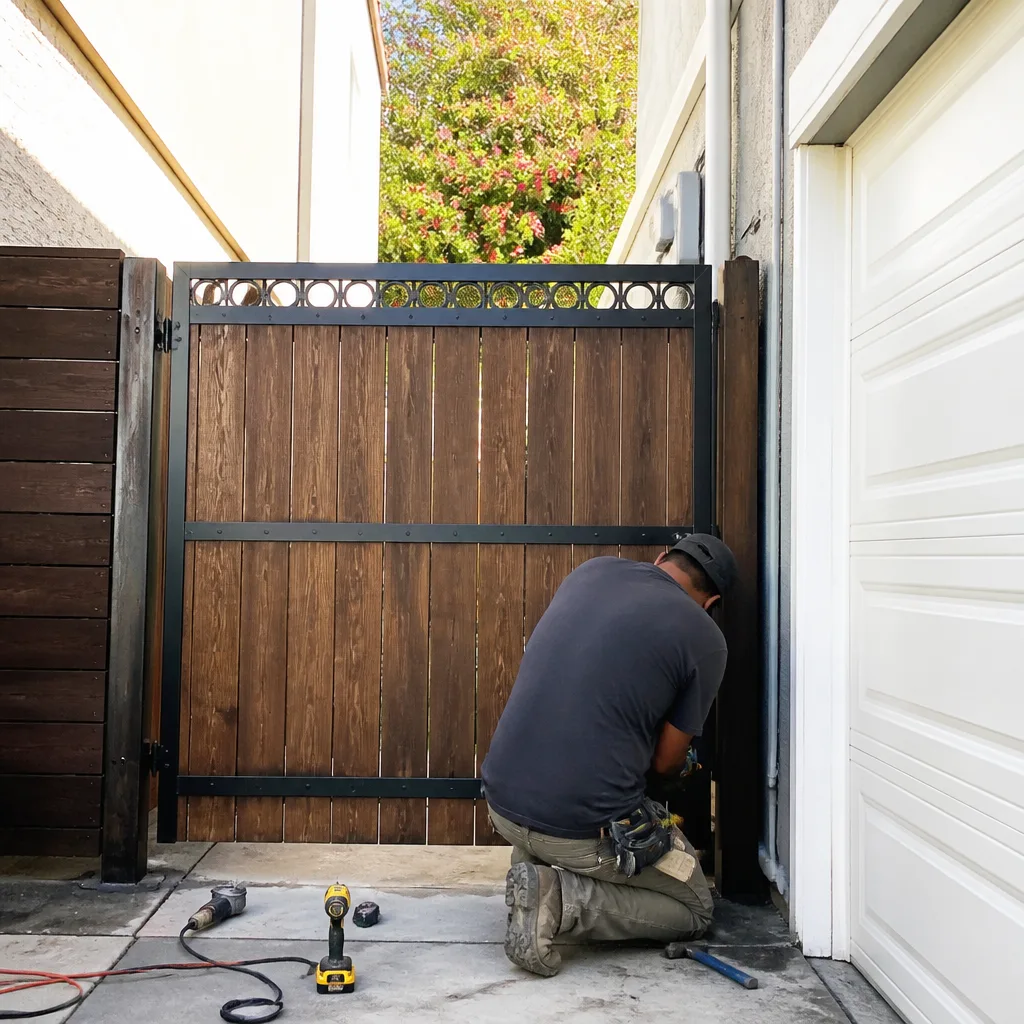 After
After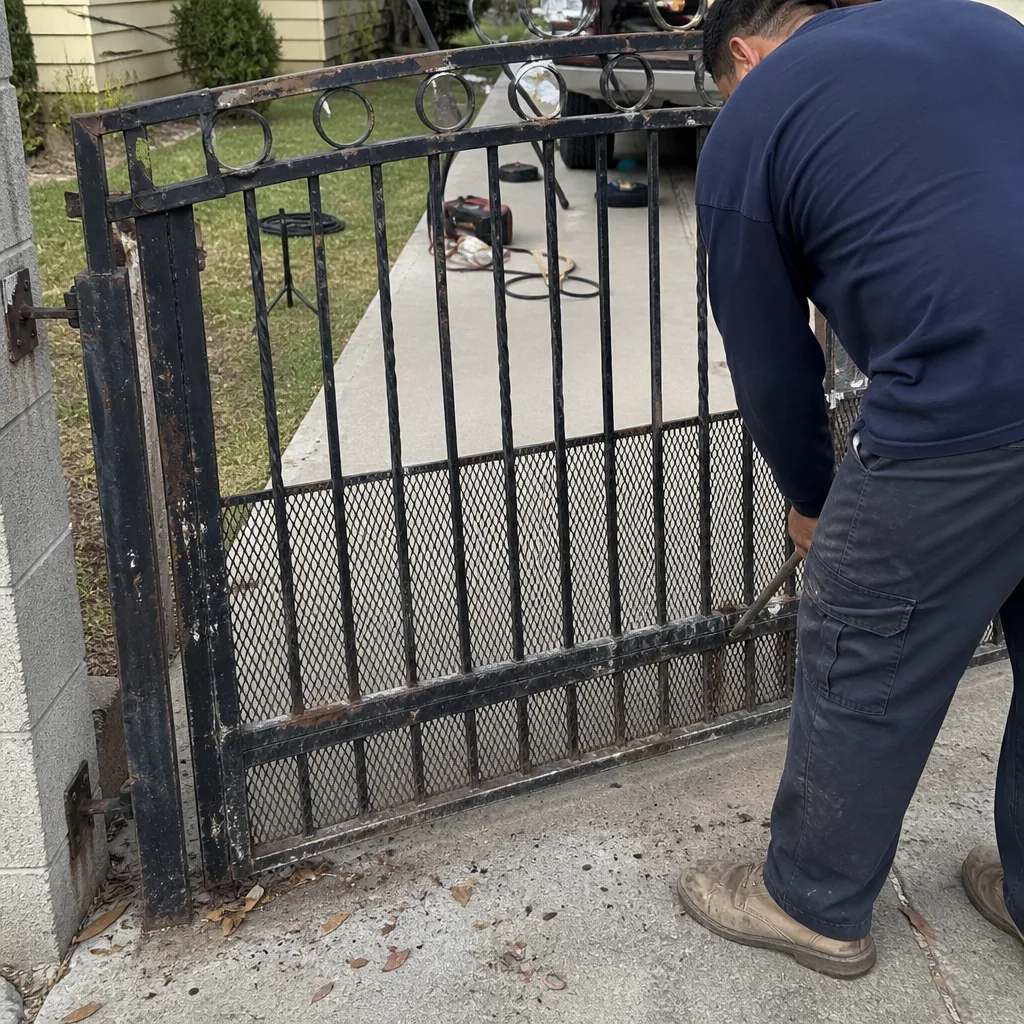 Before
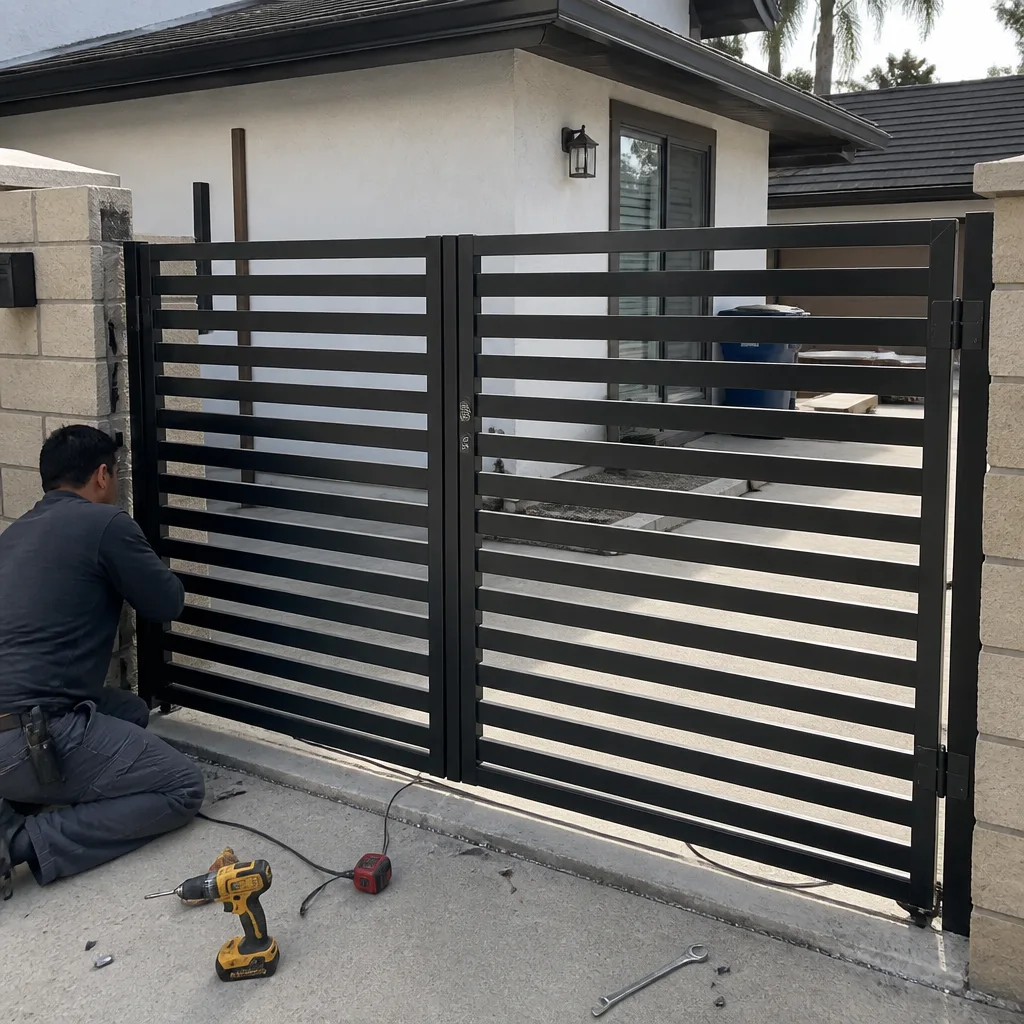 After
After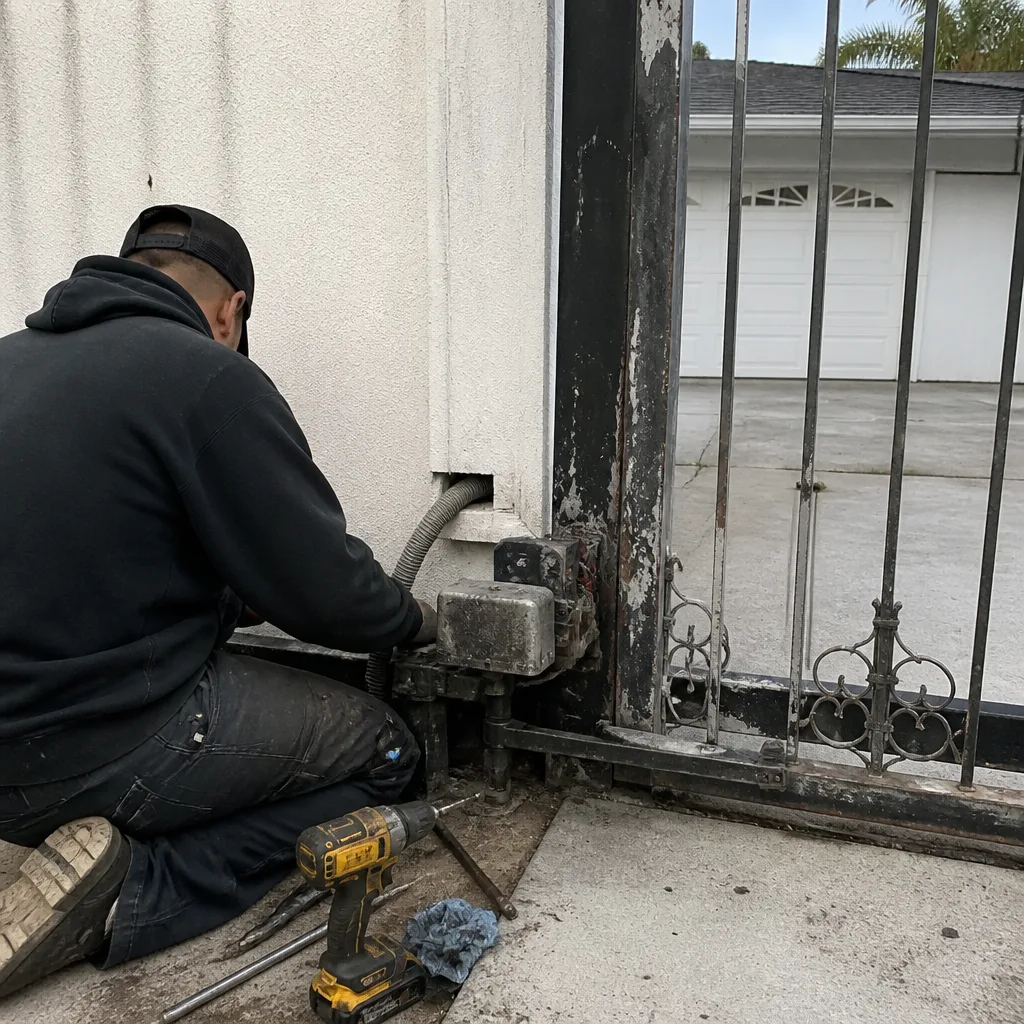 Before
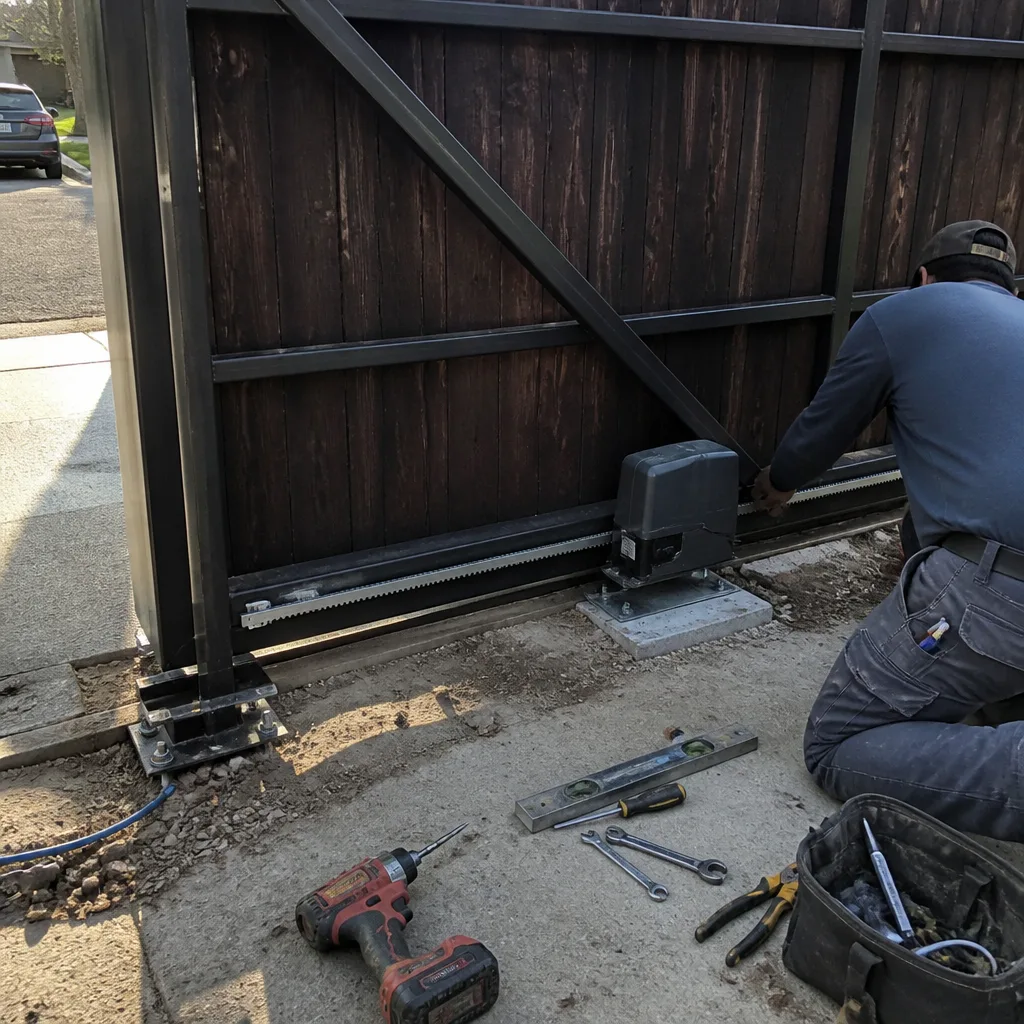 After
AfterGate Repair Warning Signs: A Long Beach Homeowner’s Reference Guide
The most reliable predictor of a gate operator replacement in Long Beach isn’t age or brand. It’s how many times the homeowner has “adjusted” their behavior to compensate for something the gate stopped doing correctly. You press the remote twice because the first press doesn’t always take. You nudge the gate leaf with your hip as it starts, because the motor stalls for a half-second under load. You wait an extra beat before pulling into the driveway because the gate takes longer to open than it did last year. None of these feel like emergencies. Each one is a mechanical or electrical fault running uncorrected, and our technicians have documented enough of them to know the pattern well: small workarounds are how homeowners in Long Beach unknowingly finance much larger repairs down the line. This guide covers the warning signs, what they cost to fix when caught early, and which three demand immediate attention.
Quick Answer
The clearest gate repair warning signs in Long Beach are behavioral, not visual: a remote that needs multiple presses, a gate that stalls at the start of travel, a motor that hums but doesn’t move the gate, and a closing speed that has gradually slowed. Each one corresponds to a specific, documented failure mode, and most cost between $95 and $400 to fix when caught early. Three signs, covered in the safety section below, mean the gate poses an entrapment hazard and should be assessed the same day.
Table of Contents
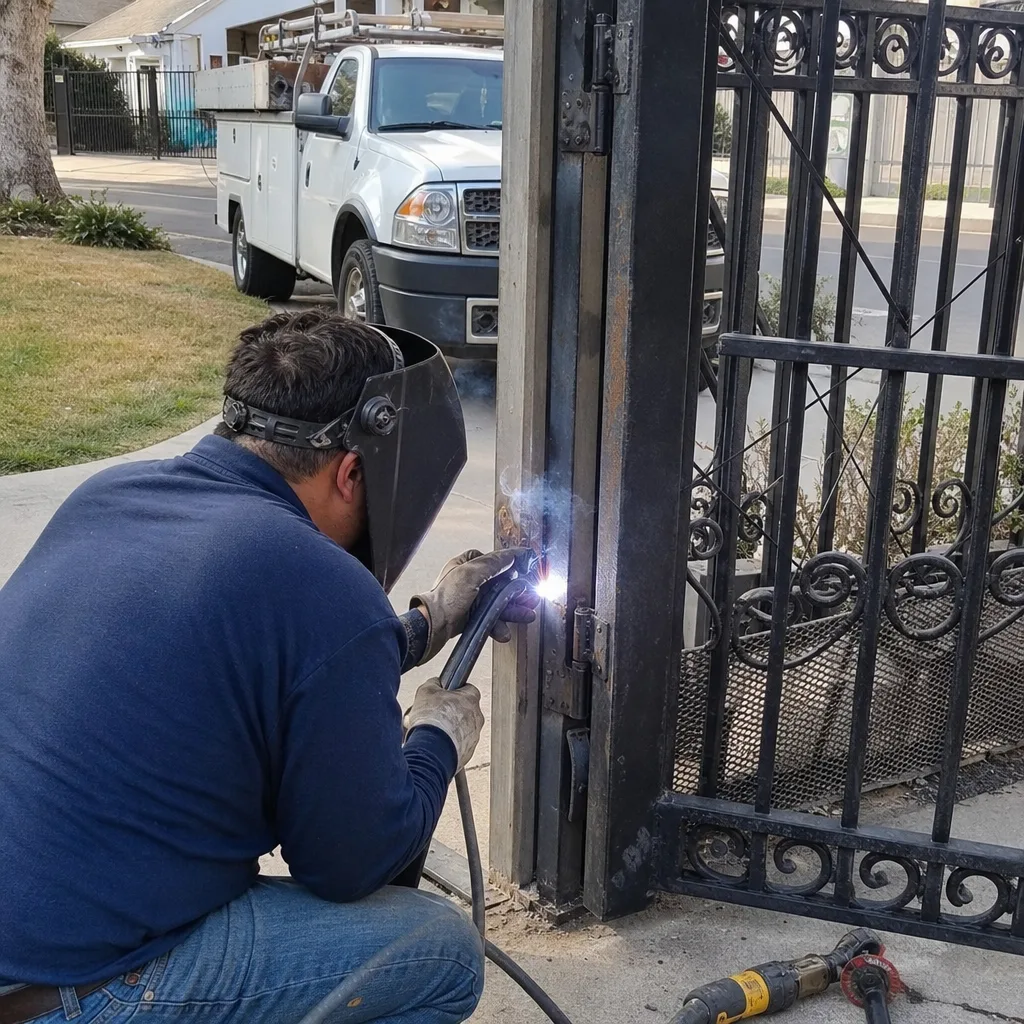
- The Behavior-Based Warning Sign Index
- What the Sounds Mean: Grinding, Clicking, and Relay Chatter
- Why the Gate Works in the Morning but Not at Night
- How to Photograph and Describe a Warning Sign So a Technician Can Diagnose Remotely
- Three Signs That Mean Immediate Safety Risk vs. Scheduled Repair
- Repair Cost Ranges by Warning Sign
- How Long Beach’s Coastal Climate Accelerates Specific Gate Failures
BeforeAfterThe Behavior-Based Warning Sign Index
We’ve built this index from 22,000+ gate repairs and installations since 2014, and it works better than watching the gate itself because homeowners notice their own behaviors more reliably than they notice the gate. For more guides & resources, see our blog. If you recognize yourself in three or more of these items, you have a gate that has been signaling for repair for months.
- You press the remote button twice, or hold it longer than you used to. This is the most common accommodation we see in Long Beach. It usually means the receiver module is failing, the remote battery is at the edge of its voltage range, or the antenna wire inside the operator housing has corroded. A new receiver board runs $120 to $220 installed on most brands. A battery is $18 to $35. The antenna rewiring is typically under $90. When the remote needs two presses, something in that chain has degraded, and it will not improve on its own.
- You position your car a specific way in the driveway so the remote signal reaches the gate. If you find yourself holding the remote up near the windshield, angled toward the operator housing, or waiting until you’re within 15 feet, that’s an antenna or receiver-sensitivity problem. Long Beach’s salt air accelerates corrosion on the exposed antenna wire, and we replace these regularly in Belmont Shore, Naples, and the Peninsula neighborhoods where ocean exposure is direct. Expect $85 to $160 for antenna replacement and receiver tuning.
- You nudge the gate leaf by hand to get it moving. This means the motor’s start capacitor is weak or the gear train has enough wear that the motor can’t overcome static friction on its own. In our experience, a gate that needs a physical push is a gate that will fail completely within six to nine months. A capacitor replacement is $95 to $150. A gear train rebuild is $280 to $500 depending on the operator brand. The push is the warning. The dead motor is what happens if the push is ignored.
- You wait for the gate to close fully before driving away, because it’s reversed on you before. This behavior signals a photo-eye misalignment, a closing-force setting that’s drifted too high, or a limit switch that’s losing its position. The homeowner adjusts by waiting; the gate needs an adjustment or a part. Photo-eye alignment is $75 to $120. Limit switch replacement on a Linear or Viking operator is $110 to $190. None of these fixes takes more than an hour.
- You’ve changed the gate’s closing behavior on purpose to “work around” an issue. Some Long Beach homeowners set the auto-close timer to hold the gate open longer, or they disable auto-close entirely, because the gate started slamming or reversing unpredictably. That’s a safety setting being used as a bandage for a limit switch or force-setting problem. The fix is $90 to $200, and it restores the gate’s designed safety profile.
What the Sounds Mean: Grinding, Clicking, and Relay Chatter
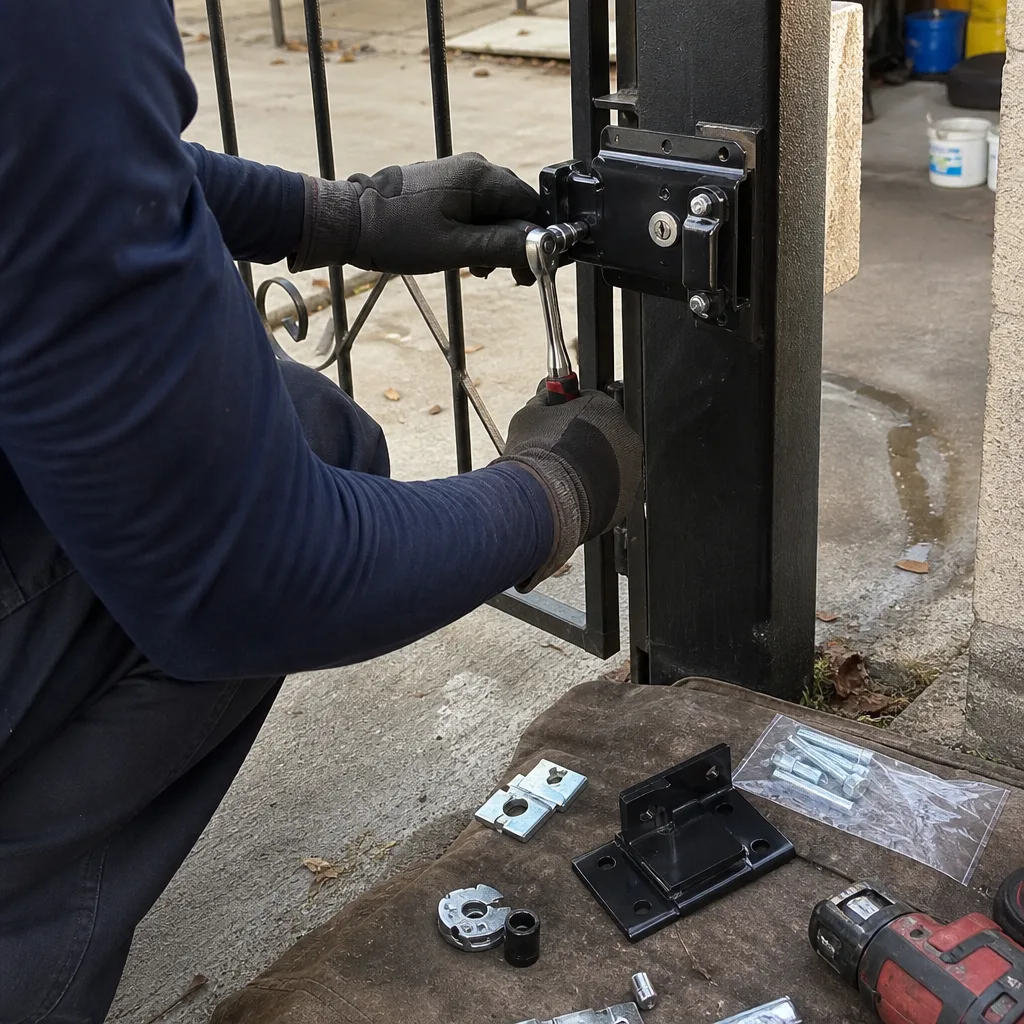
Sound is the first diagnostic tool we use over the phone, and it’s remarkably precise. A homeowner describing a noise is often enough for us to identify the failing component before we dispatch a technician to the property in Long Beach. If you can’t identify the sound by name, recording a short video on your phone and describing when it happens (on open, on close, at the end of travel, only when cold) is the next best thing.
Grinding or a low metallic groan during travel: This is metal-on-metal wear in the gear train or drive sprocket. On most residential operators, the output gears are steel-on-steel and last 8 to 14 years under normal use. A gate in Long Beach that operates near the ocean spray line wears faster. Grinding means the gear teeth are no longer meshing cleanly, and the repair is a gear rebuild. We quote $280 to $500 for most residential operators, depending on brand. Ignoring the grind turns a rebuild into a full operator replacement, which runs $800 to $1,800 installed.
Clicking at the end of travel, typically a rhythmic series of three to five clicks: This is the limit switch assembly stopping the motor, and in most cases the clicking means the limit has drifted past the physical end of travel. The motor cycles against the mechanical stop, the limit switch can’t complete its circuit, and the logic board sits there pulsing the relay. We see this on DoorKing and Viking operators frequently. The fix is a limit switch adjustment or replacement, $110 to $190. It’s not an emergency unless the gate is slamming at end of travel, but it should not be ignored.
Relay chatter, which sounds like a rapid buzzing or machine-gun clicking from the control board: This is the logic board’s relay trying to engage and failing, usually because of a voltage sag at the board or a failed relay contact. On a Ghost Controls or Linear system, we trace this to a power supply issue about half the time and to the board itself the other half. A new power supply runs $80 to $140. A control-board replacement runs $180 to $350. Relay chatter that continues for weeks tends to burn out the relay entirely, and the gate stops responding to any input.
Why the Gate Works in the Morning but Not at Night
This is one of the most common complaints we get in Long Beach, and homeowners often assume the gate is “moody” or that a neighbor’s remote is interfering. The real explanation is almost always electrical, and it’s explainable in plain terms.
Voltage drop. Residential gate operators are designed to run on a specific voltage range, and when the supply voltage drops below that range, the motor produces less torque and the control board may brown out. Voltage drop is more common at night in Long Beach because that’s when line voltage is at its lowest across the local grid. Add a long wire run from the house panel to the gate, aged connections, or a transformer that’s undersized for the motor, and the night-time sag is enough to keep the operator from completing a full travel. The fix is usually a heavier-gauge wire run, a closer transformer, or a boost transformer at the operator. We quote $150 to $400 for voltage-correcting repairs depending on the run length and access.
Thermal cutout. Here’s a counterintuitive one: if the gate runs fine at night but stalls in the afternoon, that’s the motor’s thermal protection circuit. Direct sun on a dark operator housing in a Long Beach summer can push the interior temperature past the cutout threshold, and the motor shuts down until it cools. The fix is a shaded or ventilated housing, or a motor with a higher temperature rating. We see this most often on operators installed on west-facing walls or pedestals with no sun cover. Repairs range from $120 for a sun shield to $400 for a housing replacement.
How to Photograph and Describe a Warning Sign So a Technician Can Diagnose Remotely
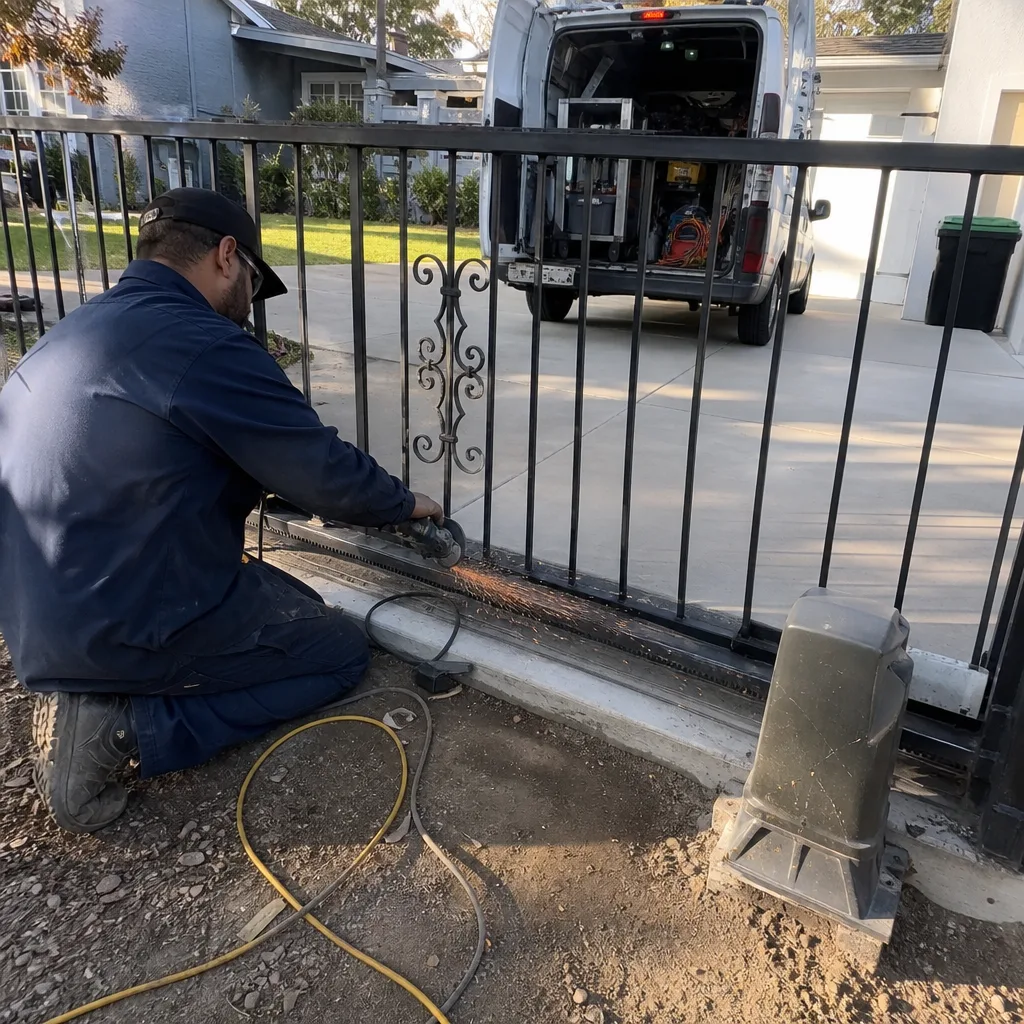
Our dispatch team can name the likely failure and quote a range over the phone if the homeowner can provide the right details. Here’s what actually helps, in order of value.
- Photograph the operator housing from the front. Include the keypad, the visible wiring, and the model label if present. A clear front view tells us the brand, the machine’s age by chassis design, and whether the installation was done to code. Most homeowners have this photo on their phone already.
- Photograph the gate leaf at its closed position, filing the gap between the gate and the post. This shows us whether the leaf has sagged, whether the hinges are pulling out, and whether the gate’s weight is being carried by the motor. That gap is the first thing we measure on-site.
- Record a 15-second video of the gate completing one full open-and-close cycle. Stand where the camera can see both the gate and the operator arm. The sound, the speed, the hesitation at startup, and the jerk at end of travel are all diagnostic data. We listen to these recordings during the dispatch call.
- Write down what changed and when. “Gate started hesitating about three weeks ago, got worse after the rain, now it stalls halfway open every time.” That’s more useful than “the gate is broken.” The timing of the change is a diagnostic clue. Weather correlation points to water intrusion or a failing capacitor. A gradual decline points to mechanical wear. A sudden change points to a component failure.
The aim here isn’t to save the technician ten minutes. It’s to save the homeowner a second trip. A correct remote diagnosis means the technician arrives with the likely part on the truck, and the job is finished on the first visit. Every Gate Repair job includes a photo record of what was found and what was fixed, which is part of our standard documentation process.
Three Signs That Mean Immediate Safety Risk vs. Scheduled Repair
Most of the warning signs in this guide allow for a repair scheduled within a week or two. Three signs do not. These are entrapment hazards, and they should be addressed the same day they’re noticed.
1. The gate reverses on a person or a pet without touching any obstacle. A properly adjusted gate should stop and reverse only when its photo-eye beam is broken or its contact edge is pressed. If the gate reverses mid-travel with nothing in the path, the closing-force setting has drifted too high and the operator is interpreting its own motor load as an obstruction, or the photo-eye is misaligned and the logic board is receiving an intermittent signal. Both conditions can cause the gate to close on a child or a vehicle because the safety inputs are no longer reliable. This is the sign that requires immediate professional attention. The repair is typically $90 to $180, and it should not wait.
2. The gate free-falls or slams closed when the operator disengages. If you pull the manual release and the gate swings or slides freely with no resistance, the gate’s mechanical braking system has failed or was never properly adjusted. A gate leaf that can move under its own weight is a standing hazard, especially on sloped driveways, which are common in the hillside neighborhoods in Long Beach like Signal Hill. The repair is $150 to $350 for brake adjustment or replacement, and it’s an immediate-safety item.
3. The gate continues to move after the remote or keypad is released. This means the limit switches are not stopping the motor at the correct position, and the gate is running past its intended travel. On a slide gate, this can push the leaf off the end of the track. On a swing gate, it can bend the arm and place extreme load on the hinges and posts. Limit switch failure is $110 to $190 to repair, and it’s a same-day call.
Repair Cost Ranges by Warning Sign
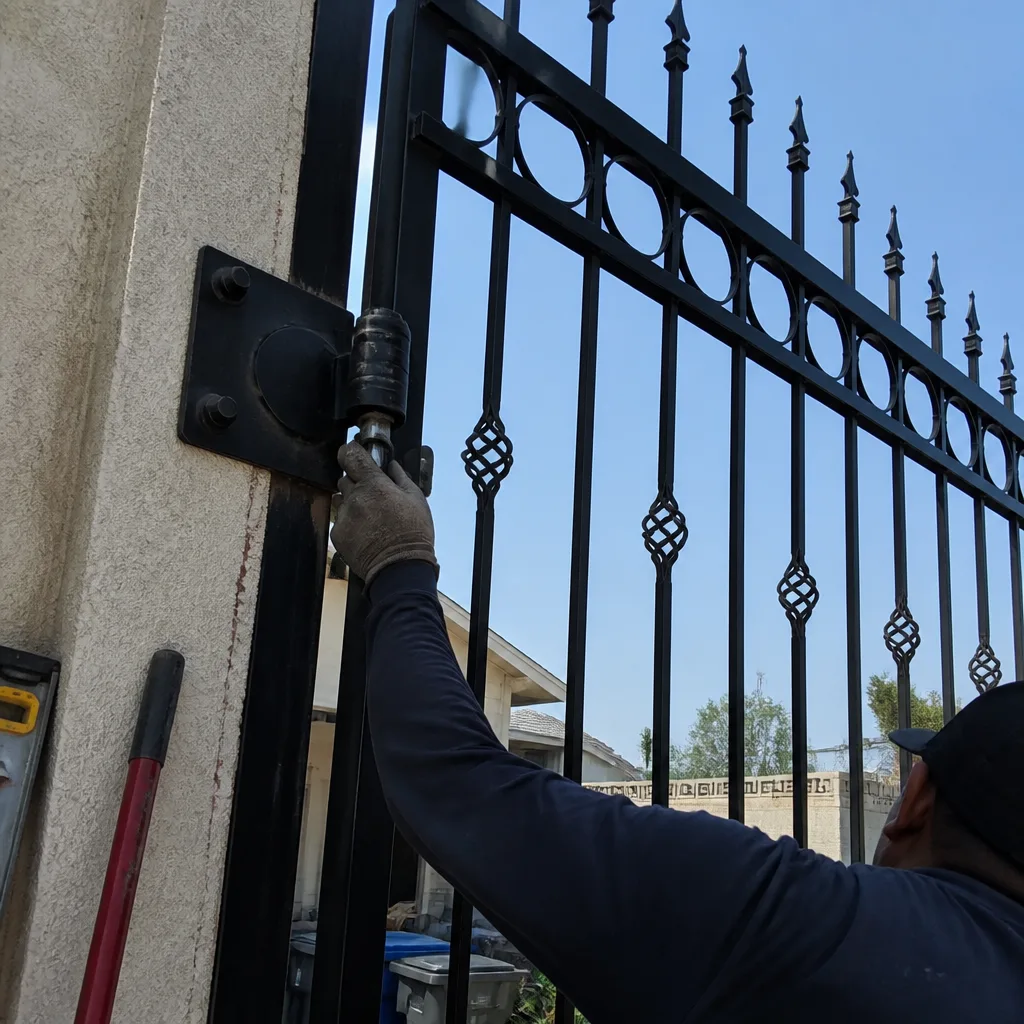
Here are the most common gate repair warning signs we see in Long Beach, paired with the typical repair cost ranges for the repair. These are written-price ranges based on actual jobs, and every job at Vance Gate Repair includes a written price before any work starts.
- Remote needs multiple presses: $18 to $220, depending on whether the cause is a remote battery or a receiver-board replacement.
- Gate stalls at start of travel and needs a push: $95 to $500, depending on whether the cause is a capacitor or a gear-train rebuild.
- Gate reverses mid-travel with no obstruction: $90 to $180 for force-setting and photo-eye correction.
- Grinding noise during travel: $280 to $500 for gear-train rebuild; $800 to $1,800 if the operator requires replacement.
- Clicking at end of travel: $110 to $190 for limit-switch adjustment or replacement.
- Relay chatter from the control board: $80 to $350, depending on whether the cause is a power supply or a board replacement.
- Gate works in the morning but not at night: $150 to $400 for voltage-correcting repairs.
- Gate free-falls when released: $150 to $350 for brake adjustment or replacement.
The price range is narrow because most of these repairs involve a known part and a known labor time. We write the price down before the work starts, and the homeowner signs off on it. That’s the entire job, from diagnosis to done, with no invoice at the end that wasn’t already agreed to.
How Long Beach’s Coastal Climate Accelerates Specific Gate Failures
Long Beach is not one climate. The Peninsula and Naples neighborhoods get direct ocean salt spray. Signal Hill and the areas around Cal State Long Beach get hot inland sun with coastal humidity. The difference matters for gate repair because it determines which components fail first and how quickly.
Salt corrosion on electronics. We replace antenna wires, control boards, and relay contacts more frequently in the coastal strip of Long Beach than anywhere else in the city. The salt air works its way into the operator housing, settles on the board, and creates micro-bridges between connections that cause false triggers and relay chatter. A gate that opens or closes on its own, with no remote input, is often a salt-bridged control board. The repair is a board replacement, $180 to $350, and for homes within a quarter mile of the water, we recommend a weather-sealed housing as a preventive measure.
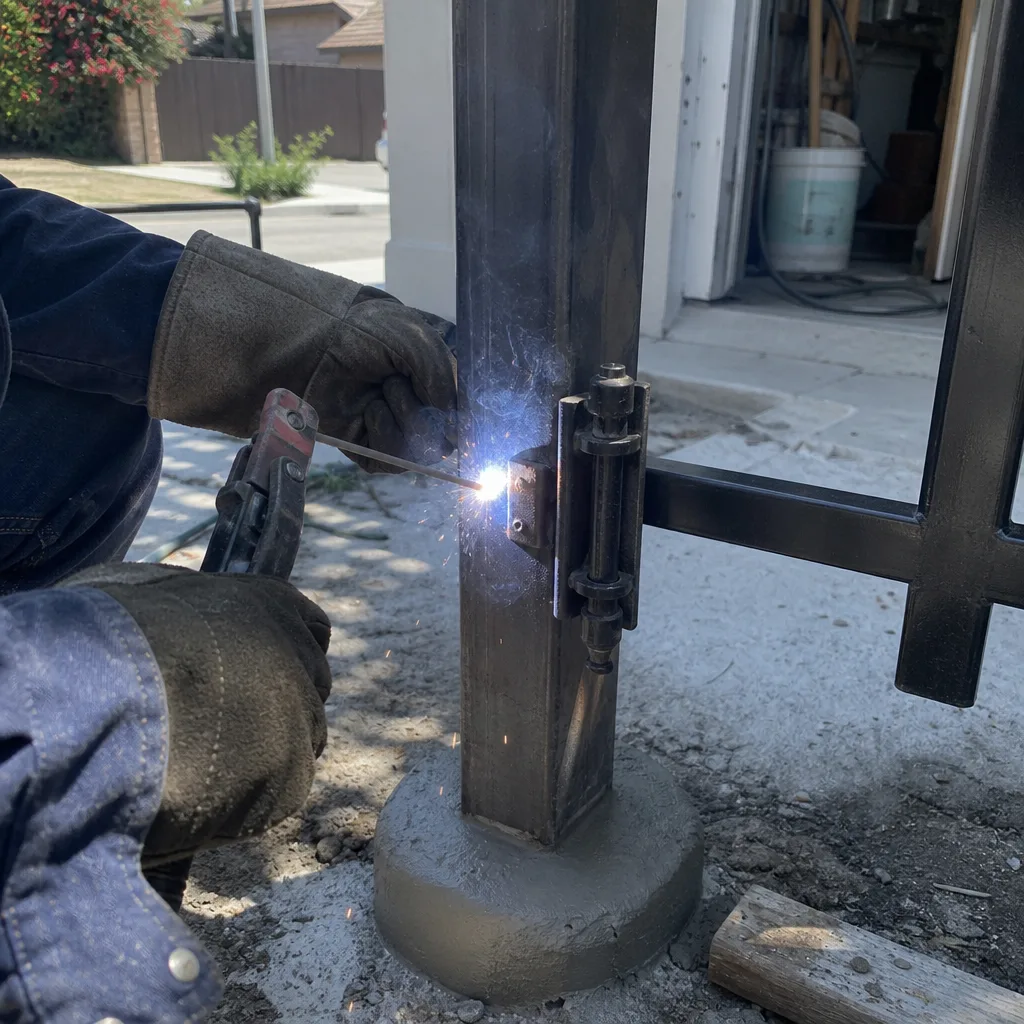
Moisture intrusion at the hinge welds. Long Beach’s marine layer means gates stay damp for hours after sunset, and the weld points at the hinges absorb that moisture. We see hinge weld failures and gate-sagging more frequently in Long Beach than in drier inland cities, and the fix is often welded reinforcement plus hinge replacement, $250 to $500 depending on the gate weight. The gate leaf sagging is the early sign; the hinge tearing away from the post is the late sign.
UV degradation on plastic drive components. Operators from some brands use nylon or plastic drive gears, and those gears become brittle after years of direct sun. On a Viking or Ghost Controls unit with a plastic output gear, the failure mode is a sudden, complete stop during travel, often with a cracking sound. The gear replacement is $150 to $300, and after replacement, the operator typically has years of service left.
For the full scope of what a gate repair visit involves in the city, our Gate Repair in Long Beach page covers the process from initial call to final photo record. If you’re considering whether a repair is even worth it versus replacing the gate entirely, our Gate Installation in Long Beach page explains the decision with real cost ranges. And if the diagnosis points to the operator rather than the gate itself, our Gate Motor & Opener in Long Beach page covers the brands we service, including Linear, Viking, Ghost Controls, and DoorKing.
Common Mistakes to Avoid
- Lubricating the gate without diagnosing the wear. If the gate is grinding, lubricant masks the sound for a few weeks while the gear wear continues. The problem isn’t dry metal; it’s worn metal, and oil doesn’t restore a gear tooth. In Long Beach’s salt environment, the wrong lubricant can also trap salt against the metal and accelerate corrosion.
- Replacing the remote battery and assuming the problem is solved. If the signal problem is in the receiver board or the antenna, the new battery will mask the issue for a month or two, and then the remote will need pressing twice again. We see this most often in coastal Long Beach homes where the antenna has corroded.
- Adjusting the gate’s force settings higher to “fix” a stalling gate. The gate was stalling because something changed, not because the motor suddenly got weak. Cranking the force setting lets the gate push through the resistance for a while, but it also defeats the gate’s entrapment protection. If the gate starts closing on objects with more force than it should, the force setting is to blame.
- Ignoring a slowing gate because it “still works.” A gate that takes longer to open or close than it did a year ago is telling you the motor is working harder. In our experience across Long Beach, the gap between “slowing down” and “stopped entirely” is usually under six months. The repair at the slowing stage is a few hundred dollars; the repair after failure can be a full operator replacement.
- Assuming a nighttime gate failure is random. Voltage drop follows a daily pattern that tracks the local grid load, which rises in the evening in Long Beach. If the gate fails at the same time of day or night, that’s an electrical diagnosis, not a mystery. Write down the times when it fails, and the technician can confirm the pattern quickly.
- Waiting for the gate to fail completely before calling. This is the most expensive mistake on the list. Every warning sign is a discount on the eventual repair. The homeowner who calls when the remote first needs a second press spends $150. The homeowner who calls when the gate won’t move at all spends $1,200. The same failure progression, two wildly different invoices.
When to Call a Professional
Call a gate technician when the gate’s behavior changes and the change doesn’t go away. That’s the entire rule. A one-time hesitation after a rainstorm is worth a note. A gate that needs a push to start every day is worth a call. You should also call if the gate reverses with no obstruction, free-falls when disengaged, or continues moving after the keypad is released. Those are the safety-signal cases. Vance Gate Repair Long Beach offers free estimates in Long Beach, and every job comes with a written price before work starts and a documented photo record when it’s done. For How to Hire a Gate Repair Contractor in Long Beach: A Step-by-Step Guide, see our detailed walkthrough. Call (424) 788-1027.
Frequently Asked Questions
The first signs are almost always behavioral: the remote needs a second press, the gate hesitates at the start of travel, or the closing speed has slowed noticeably. In Long Beach, salt corrosion on the antenna wire and control board is a common early cause in coastal neighborhoods. Call for a free estimate if any of those behaviors have appeared, and the repair can typically be handled in a single visit, before the problem escalates. For an exact quote, call (424) 788-1027.
Most gate repairs in Long Beach run between $95 and $500, depending on the component involved. Remote and receiver problems are at the low end, gear-train rebuilds at the high end. A full operator replacement runs $800 to $1,800. We write the price down before any work starts, so the number you discuss on the call is the number you pay. Call (424) 788-1027 for a written estimate.
Yes, for entrapment-safety issues like a gate that reverses with no obstruction, free-falls when released, or runs past its travel limits. Our technicians are dispatched for same-day service in Long Beach when the gate poses a safety risk. For non-emergency repairs, we schedule within a few days. Call (424) 788-1027 with a photo or video, and we’ll identify the likely cause over the phone.
Intermittent gate operation in Long Beach is usually a voltage-drop issue or a thermal cutout. Voltage drop follows the daily grid load pattern and is worse at night. Thermal cutout hits in direct afternoon sun. The repair is different for each cause, so note when the gate fails and when it works, and the technician can narrow it down before arriving. Call (424) 788-1027 with the timing pattern.
No, and treating a grinding gate with lubricant can make the problem worse. Grinding is the sound of worn gear teeth meshing incorrectly, and no lubricant restores a worn tooth. In Long Beach’s salt air, the wrong lubricant can also trap salt against the metal. The fix is a gear rebuild, which we price at $280 to $500 for most residential operators. Call (424) 788-1027 to schedule an inspection.
We service nine major automation brands, including Linear, Viking, Ghost Controls, DoorKing, LiftMaster, FAAC, BFT, Elite, and Mighty Mule. There’s no need to replace an operator just because another company doesn’t list the brand. If the motor is repairable, we’ll repair it and document the work. Call (424) 788-1027 with the brand and model, and we’ll tell you whether a repair makes sense.
The Bottom Line
Gate repair warning signs don’t announce themselves with a smoke signal. They show up as small adjustments the homeowner makes without thinking about it. The remote needs a second press. The gate needs a nudge. The closing speed is slower than it used to be. Each accommodation is a mechanical or electrical fault running uncorrected, and each one has a known repair cost that is a fraction of what the eventual failure will cost. In Long Beach, where salt air and coastal moisture accelerate gate wear, catching a warning sign early means the difference between a $150 repair and a $1,200 operator replacement. Watch your own behavior. When you start adjusting to the gate, the gate is the thing that needs adjusting. And if you’re not sure what a sound or a hesitation means, call us and describe it. We can tell you what we think it is over the phone, before anyone gets in a truck. The estimate is free, and what we quote is what you’ll pay.
For more on how we handle repairs across the city, visit our Vance Gate Repair Long Beach home page or explore the related guides linked throughout this article. Written by Adrian Vance, Owner at Vance Gate Repair Long Beach, serving Long Beach since 2014.