
Last updated September 20, 2026
Free on-site gate assessment - hinges, posts, and your LiftMaster or Nice gate operator checked before anything is quoted
The assessment is free and the quote is the invoice.

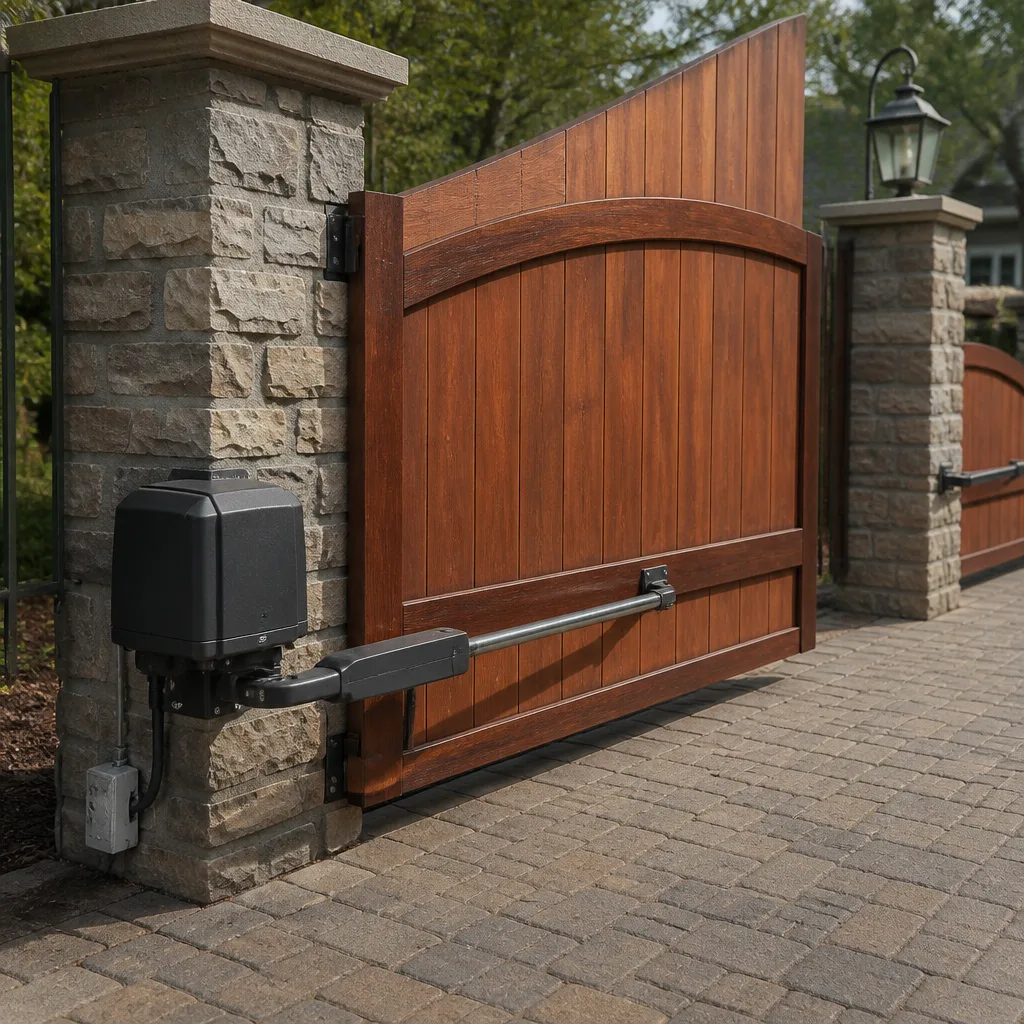
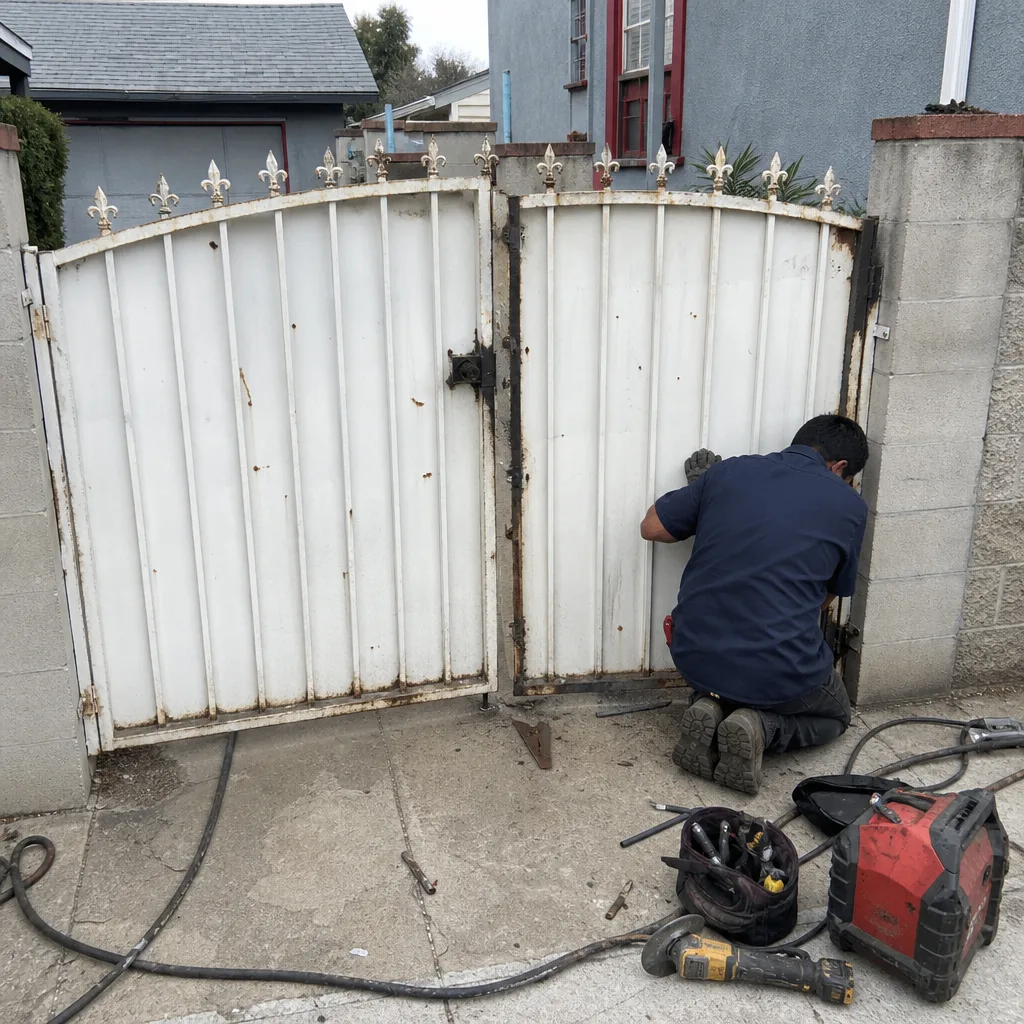 Before
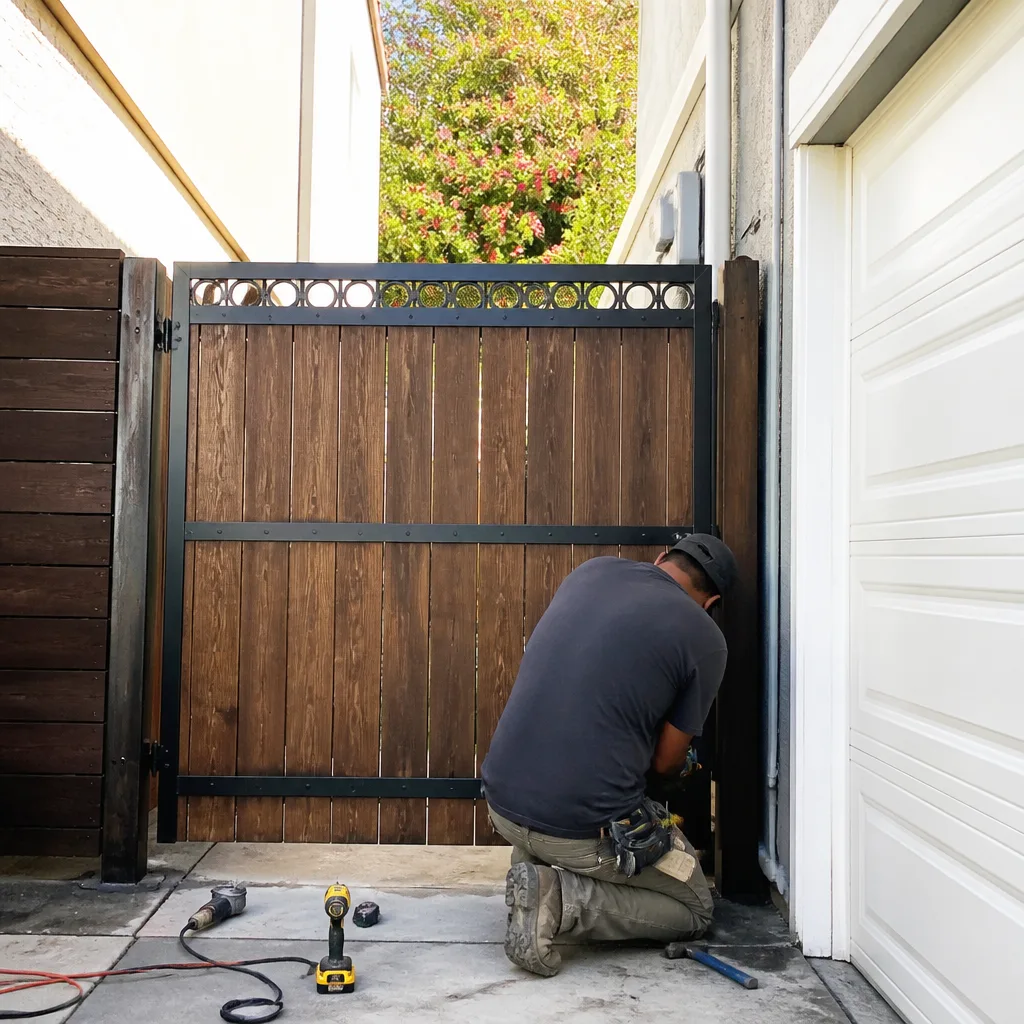 After
After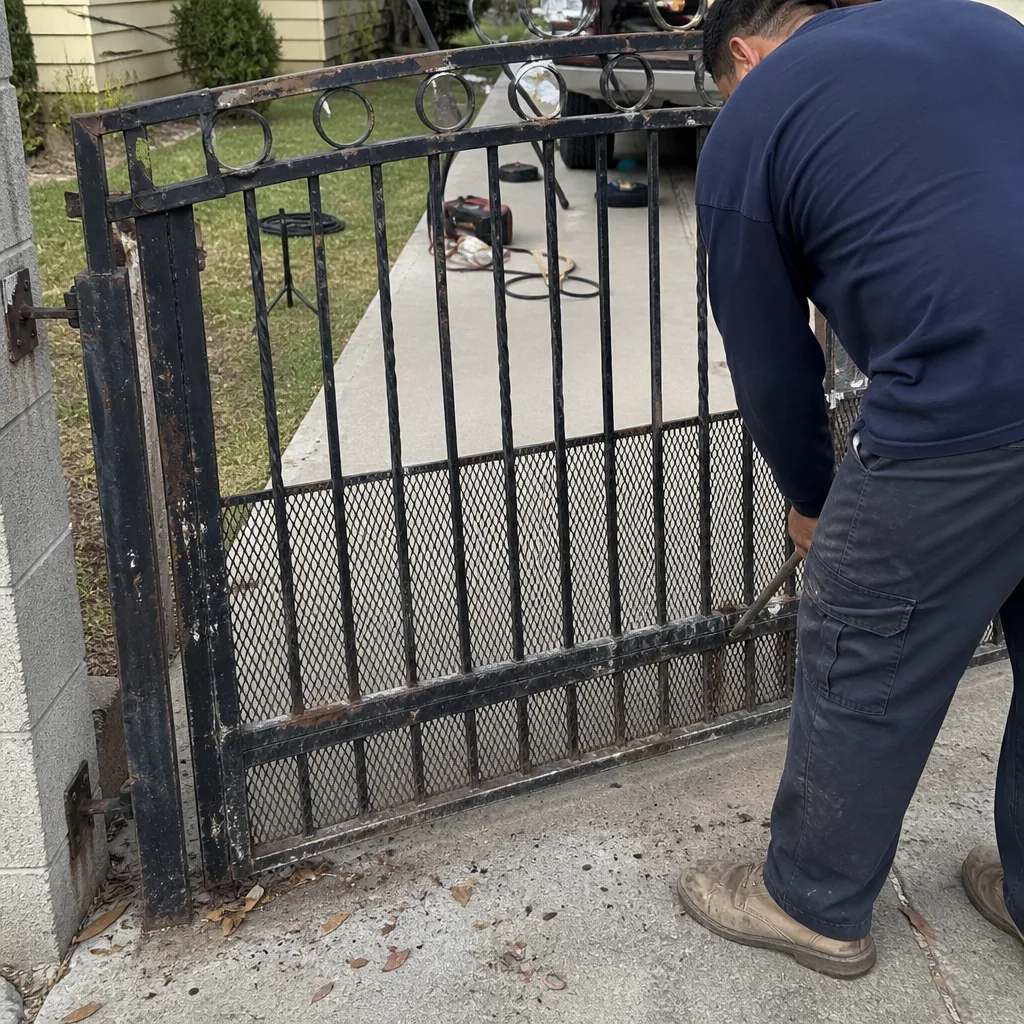 Before
 After
After Before
 After
AfterSeasonal Gate Repair Care for Long Beach: Year-Round Homeowner’s Guide
Most gate maintenance advice you’ll find online was written for places with snow, frost, and a defined “shut it down for winter” season. Long Beach doesn’t work that way. Our climate works in four distinct environmental phases instead of four temperatures, and each phase attacks your gate system differently: the June marine layer pushes salt-laden moisture into electrical connections, Santa Ana winds in fall load slide-gate tracks with airborne grit, winter rain finds every compromised seal and conduit, and spring UV breaks down wire insulation and plastic limit-switch housings faster than you’d expect. What follows is a full year of gate care mapped to Long Beach’s actual weather sequence, not a generic calendar written for Ohio. You’ll learn which two months matter for lubrication, how to record baseline readings so a technician can spot drift before failure, and what a single heavy rain can do to an underground conduit in Long Beach soil.
Quick Answer
The most important seasonal gate maintenance in Long Beach happens in May (before the marine layer arrives) and again in October (after the first Santa Ana event). Owners should focus on electrical connection integrity in late spring, track and chain cleaning after wind season, and conduit drainage inspection after any significant rain. Most failures we see in Long Beach are not random; they are the predictable result of maintaining on a generic schedule instead of a local one.
Table of Contents
- Long Beach’s Four Environmental Stress Phases: A Month-by-Month Map
- June Through August: The Marine Layer Corrosion Window
- September Through November: Santa Ana Wind Stress and Operator Faults
- December Through February: Winter Rain Infiltration and Conduit Flooding
- March Through May: Spring UV Exposure and Pre-Summer Preparation
- How to Record Seasonal Baseline Readings
- Common Mistakes to Avoid
- When to Call a Professional
- Frequently Asked Questions
- The Bottom Line
BeforeAfterLong Beach’s Four Environmental Stress Phases: A Month-by-Month Map
Long Beach doesn’t give you a hard freeze, but it does give you a sequence of environmental attacks that move through the year in a predictable order. If you understand the sequence, you can time your maintenance to address the failure mode before it happens. If you don’t, you’ll be lubricating a gate right before the salt fog arrives and wondering why the grease turned to sludge.
Here is the map, based on what we see in our Gate Repair services across Long Beach:
- March through May (UV and drying phase): Sun angle climbs, daytime temperatures rise, and the air is still relatively dry. Plastic components (wire nuts, limit-switch housings, photo-eye lenses) take the most damage now. This is the right window for lubrication, because grease applied now cures before the humidity spike arrives.
- June through August (marine layer phase): Night and morning overcast pushes humid, salt-laden air into every exposed connector, terminal strip, and circuit board. The daily cycle of condensation and evaporation is the single biggest electrical stressor of the year in Long Beach. Nothing should be lubricated during this window.
- September through November (Santa Ana phase): Hot, dry winds blow inland, carrying fine grit and dust. Slide-gate tracks pack with debris, chain tension shifts as metal heats and cools rapidly, and swing-gate hinge pins dry out. Operators work harder; faults often appear two to three weeks after a wind event, not during it.
- December through February (rain phase): Long Beach rain is sporadic but can be intense. Water pools against gate posts, follows conduit runs underground, and collects inside motor housings that haven’t been re-sealed. A single downpour after months of dry soil can fill a cracked conduit and short a loop detector or a low-voltage transformer.
These phases do not line up with spring, summer, fall, and winter on a calendar. They line up with what the air and ground are doing to your gate’s metal, plastic, and electrical systems. Adjust accordingly.
June Through August: The Marine Layer Corrosion Window
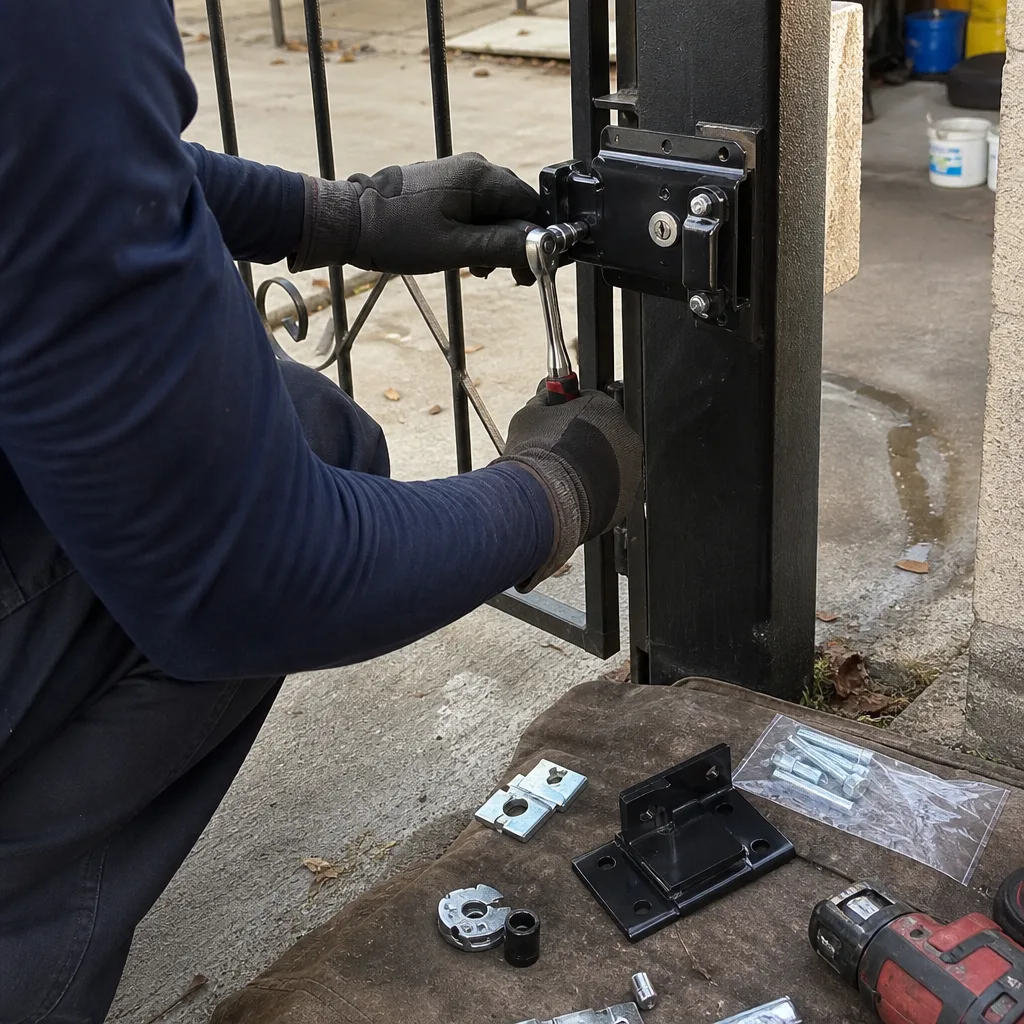
From early June through late August, Long Beach mornings start under a marine layer that doesn’t always burn off until midday. That gray ceiling keeps relative humidity high for hours at a time, and the air coming off the Pacific carries salt. We open gates in Long Beach during these months and find green-white corrosion on battery terminals, oxidized spade connectors, and circuit boards with a fine white bloom across the solder joints.
Here is what happens mechanically: warm afternoon air holds more moisture. When evening arrives and temperatures drop, that moisture condenses on surfaces that are still cooling, including the inside of your gate operator housing if the gasket is tired. The next morning, the sun burns the marine layer off, the condensation evaporates, and the dissolved salt stays behind. Repeat that cycle 60 or 70 times over a summer, and every unprotected connection becomes a corrosion site.
The highest-risk components during this phase:
- Battery backup terminals (especially on swing-gate operators): corrosion here creates high resistance, which creates heat, which kills batteries early.
- Photo-eye wiring at the junction: these low-voltage connections sit close to the ground and near the gate posts, where humidity lingers longest.
- Control board edge connectors: the cheap ones tarnish within one Long Beach summer; the board can still work, but intermittent faults begin.
- Any wire nut or crimp that was exposed rather than sealed: twist-on connectors are not weatherproof, and a Long Beach marine layer will prove it.
What to do before the marine layer arrives (late May):
- Open the operator housing and look at every connection. If you can see green, white powder, or darkening on any terminal, it needs cleaning and sealing now, not in July.
- Confirm the housing gasket still compresses. A flat or cracked gasket is the difference between a dry summer and a summer of intermittent faults.
- Apply dielectric grease to low-voltage connections, but not to high-voltage terminals. The low-voltage side is where corrosion starts.
- Check the photo-eye lenses. A hazy lens from salt film can cause phantom obstructions; clean it with a dry microfiber cloth.
- Test the manual release mechanism. Humidity jams cheap release locks; better to learn that in late May than at 6 a.m. in July when the gate won’t open.
And a note on lubrication: do not grease your gate in June, July, or August. The advice to “lubricate the gate in spring” assumes a spring that stays dry. In Long Beach, the spring is dry; the summer is not. Grease applied in June will emulsify in marine-layer humidity and trap salt, forming an abrasive paste that accelerates wear on hinge pins and chain links. If you only remember one maintenance rule from this guide, make it this one: lubricate in April or May, or wait until September.
September Through November: Santa Ana Wind Stress and Operator Faults
Santa Ana events are the windstorms that come off the high desert, usually starting in late September and running through November. The air is hot, extremely dry, and fast. For a gate system, the two threats are load and grit. The wind itself pushes against a solid gate panel like a sail, and the airborne dust grinds into everything that moves.
What we see in Long Beach after a Santa Ana sequence:
- Slide-gate track packing: Dust and leaf fragments accumulate in the V-track or the roller channel. The gate still opens, but the operator is now dragging extra weight. Faults usually appear later, when the operator’s current sensor trips on a cool morning.
- Chain or belt slack: Rapid heating and cooling shifts the tension. A chain that was fine in September is rattling by October and wearing the sprocket.
- Swing-gate hinge pin scoring: Dry, dusty air extracts the last moisture from hinge grease. Metal-on-metal contact at the hinge pin, even for a week, leaves scoring that no amount of re-lubrication will fully remove.
- Limit-switch drift: The operator’s travel limits were set when the gate moved a certain way against a certain resistance. That resistance changes as the wind loads the gate; the result is a gate that stops three inches short of the close position, or slams against the open stop.
- Photo-eye misalignment: Wind vibration can move an eye off-axis. A photo-eye off by two inches won’t see the beam bounce back, so the gate refuses to close, or reverses every time.
Here is a step-by-step sequence to run after the first strong Santa Ana of the season, or after any sustained wind event:
- Inspect the track, wheels, and rollers for packed debris. Blow out the track; do not spray water into it unless you can dry it afterward.
- Run the gate one full cycle and watch the chain or belt. Listen for slap or rattle. If you can move the chain more than about half an inch by hand at its midpoint, tension needs adjustment.
- Check both photo-eyes. A vertical line of sight should run between them; if they’re visibly off, mark the position with tape and call a technician rather than guessing.
- Re-lubricate hinge pins and chain links now. September through November is the second valid lubrication window in Long Beach. The air is dry, the grease will stay put, and it will carry the gate through the winter rain without washing out.
- Write down the operator’s current rating if the board displays it. A rise of more than about 15% compared to the last reading means the gate is working harder; that’s an early warning, not a noise.
Santa Ana wind is the most deceptive seasonal stressor in Long Beach because it rarely damages anything on the day the wind blows. The damage shows up as a fault code on a calm morning three weeks later. If you run through those five checks after each major wind event, you’ll catch most of it before the operator does.
December Through February: Winter Rain Infiltration and Conduit Flooding
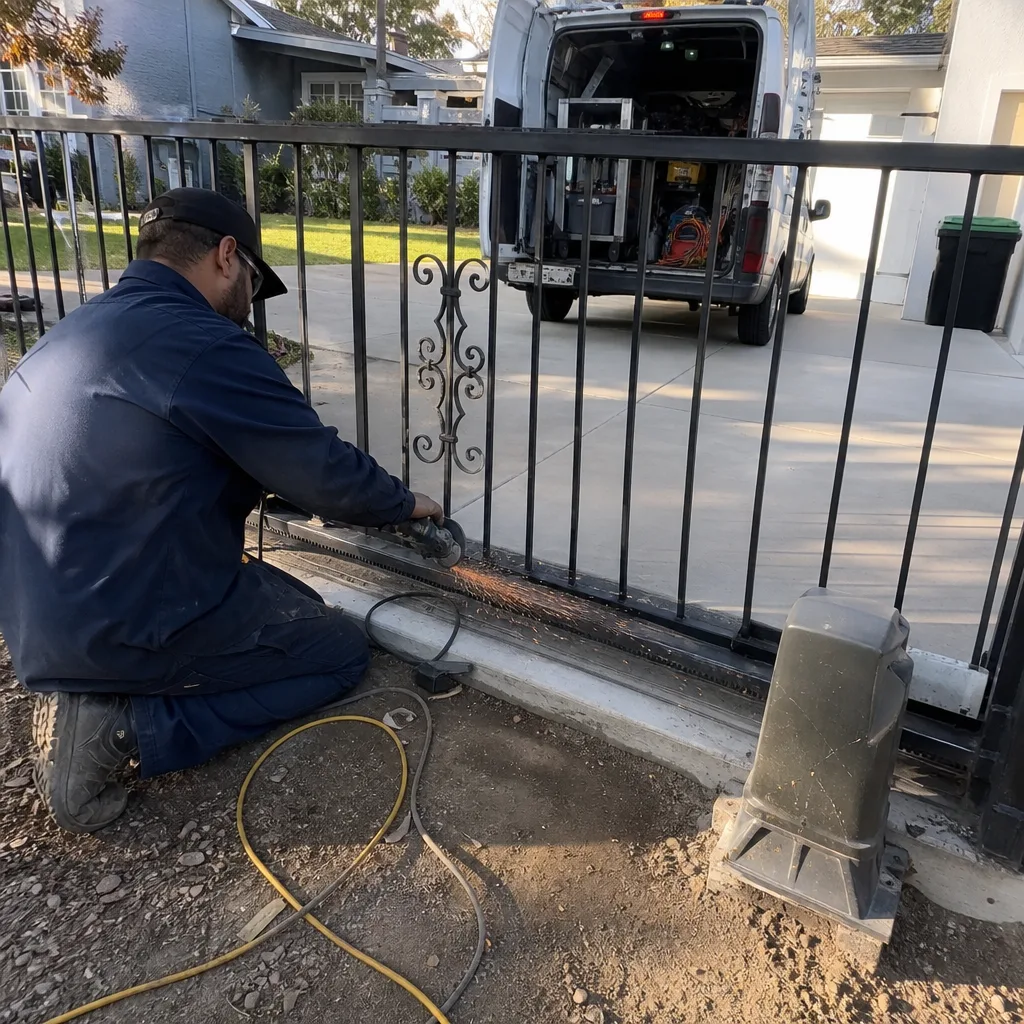
Long Beach gets maybe 12 inches of rain a year, which isn’t much, but it arrives in bursts. A storm can drop two or three inches in a day. The ground, hardened and dry from months without rain, can’t absorb the first heavy downpour. Water pools against gate posts, backs up against the concrete pad under the operator, and finds its way into any crack in a conduit or any unsealed entry point.
The failure mode that surprises Long Beach homeowners is not a motor burning out in the rain. It’s the underground loop detector or the low-voltage control wiring shorting days after the storm has passed, because a conduit filled with water on Tuesday corrodes the splice it was holding by Friday. The gate still worked through the rain. Then it stopped working under clear skies.
Here is the winter inspection most people skip, and it matters in Long Beach because the rains are so widely spaced that a wet conduit can sit saturated for weeks before the next heat cycle dries it:
- Walk the gate line after any rainfall over half an inch. Look for standing water against the posts or the operator pad. If the water is still there four hours after the rain stopped, the drainage has failed.
- Open the operator housing and look for condensation, not just water. A fogged interior lens or drops on the inside of the cover mean the housing has a seal problem. It will kill the board before the summer is over.
- Check the low-voltage conduit entry points. If the conduit enters the operator from below, it’s a water path. Conduit should be sealed with duct seal or a proper gland; if it’s open, water will wick upward.
- Test the safety edges and photo-eyes while the air is still damp. Rain exposes marginal connections. A photo-eye that works when dry but faults when humidity is high is telling you exactly which connection needs attention.
- Inspect the ground around the gate posts. Soil settling after rain can shift a post by a quarter inch. You won’t see it. The gate will feel it, and the limit switches will store the information as “the gate doesn’t close all the way anymore.”
One Long Beach-specific note: our soil is heavy clay in many areas. It expands when wet and cracks when dry. That expansion-and-contraction cycle is what loosens gate post footings over time and what pulls conduits apart at the glue joints. A post that is plumb in December can be an eighth of an inch out by February and a quarter inch out after the next dry spell. The only way to catch that drift is to record it. See the baseline section below.
March Through May: Spring UV Exposure and Pre-Summer Preparation
Spring in Long Beach is bright, dry, and warm without being hot. It’s the most stable phase of the year for gate systems, which makes it the ideal time for the work that prevents problems in the other three phases. It’s also the season when UV damage from the previous six months becomes visible, because plastic components that have been quietly degrading all winter start to crack or cloud.
The components most vulnerable to UV in Long Beach, ranked by how often we replace them:
- Plastic limit-switch housings: they live inside the operator, usually exposed through ventilation slots. UV breaks the plastic down, and the first sign is a hairline crack along the mounting tab.
- Photo-eye lenses and mounting brackets: the lens turns milky and the bracket gets brittle. Both can be replaced without replacing the eyes themselves.
- Wire insulation on exposed low-voltage runs: the jacket hardens and cracks over a single summer in direct sun. The bare copper underneath is what shorts when the marine layer arrives.
- Rubber gaskets on the operator housing: they shrink and flatten with combined UV and heat exposure. A gasket that doesn’t compress is the same as no gasket.
- Plastic safety-edge profiles (on gates that have them): the profile can crack away from the aluminum rail. When the safety edge is compromised, the gate operator will fault out as a safety measure; that’s usually the first sign.
- Clean and inspect every plastic component, including the ones inside the housing.
- Re-silicon the housing gasket if it’s compressed but not cracked; replace it if it’s cracked.
- Apply corrosion inhibitor to all low-voltage connections. This is the last dry window before the marine layer, and the treatment will carry through the summer.
- Lubricate hinge pins, chain links, and slide-track rollers (see the note above: this is the correct lubrication window, not June).
- Record baseline readings. If you have not already been recording them, now is the start. Write down the close time, the motor current, the photo-eye alignment position, and the chain tension. Compare against next year.
- Run the gate five full cycles with the power on and one cycle on manual release. The manual release is the component most likely to be seized when you need it, and spring is a much better time to find that out than during a power outage in August.
- Full close time, measured to the second. Use your phone. A swing gate or slide gate that takes six seconds to close in May and nine seconds to close in November hasn’t changed its limit; it’s lugging something.
- Motor current, if the board displays it. Most LiftMaster, FAAC, BFT, and Linear residential operators will show current draw through the diagnostic display or through a handheld programmer. Write the number down. If it creeps up 15 to 20 percent across a season, the gate is working harder: track is packed, chain is overtightened, or a roller is failing.
- Chain or belt deflection at the midpoint. Push down with your thumb. The displacement should be consistent, and you should measure it with a ruler if you want it to be useful. Half an inch of deflection in May and one full inch in October is a meaningful change.
- Photo-eye alignment position. Use a piece of masking tape on the gate post to mark the current laser or LED position. If the eye moves even a quarter inch, the tape tells you.
- Manual release force. Time how long the release takes to engage and how much force it needs. This is more of a feel measurement, but you’ll notice when it changes.
- Battery voltage on the backup system, if equipped. A healthy battery sits around 13.2 to 13.8 volts on most residential operators. A steady decline across seasons means the charging circuit or the battery itself is failing before the gate ever loses grid power.
- Lubricating in June or July with the wrong product. The marine layer will emulsify standard grease and trap salt against hinge pins and chain links. If you lubricated in early summer, wipe it off and redo it in September with a dry-film or marine-grade lubricant.
- Ignoring the operator housing gasket until the board is already corroded. The gasket is the only thing between your control board and a summer of salt fog. A five-dollar gasket replacement in May beats a four-hundred-dollar board replacement in August.
- Testing the manual release only when the power is out. The release mechanism rusts from disuse. If you never try it until you need it, the odds it will work are not good. Test it every time you clean the gate.
- Spraying water into the track or motor to clean it. Long Beach dust is fine and sticky. Water makes it into mud, and mud carries grit into the rollers and bearings. Use compressed air or a dry brush.
- Waiting for a fault code before investigating a slowing gate. By the time the operator displays a fault, the component has been failing for weeks. A slower close time or a louder motor is the fault code that comes before the fault code.
- Assuming the photo-eyes are fine because the gate opens. A gate can open normally with a failed or misaligned close-side photo-eye, because many operators only check for obstructions on the closing cycle. Test the close side specifically.
The May service list for a Long Beach gate:
Spring is also the right time for any Gate Repair in Long Beach work that requires dry weather to set properly, like re-bedding a gate post or patching concrete. If you have a repair you’ve been putting off, March through May is the window to do it before the marine layer makes outdoor electrical work unpleasant and the rain makes concrete work impossible.
How to Record Seasonal Baseline Readings
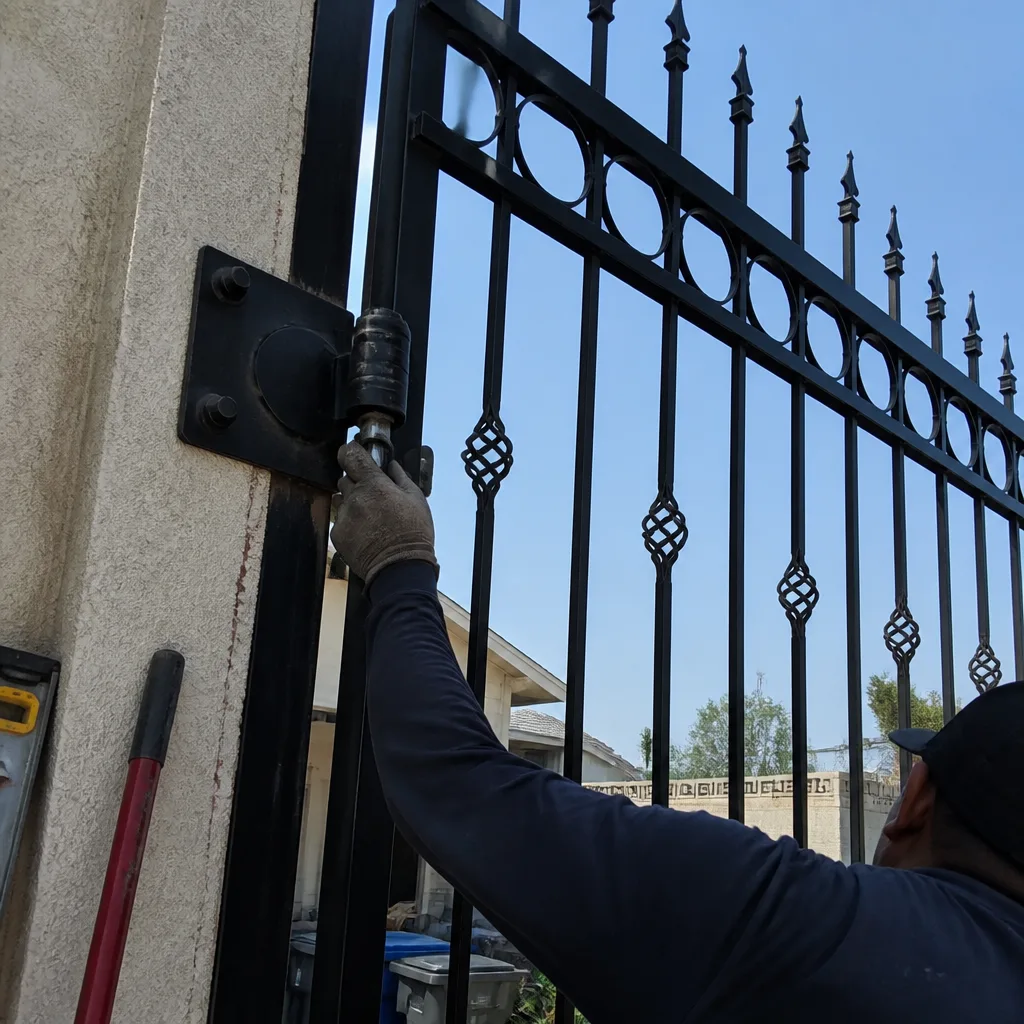
The entire point of seasonal maintenance is to catch problems before they become failures. But you can’t catch movement if you don’t know where the measurement started. A baseline is simply a written record of how your gate performs during normal conditions. Once you have two or three data points across a year, you can see drift: the gate closing a little slower, the motor pulling a little more current, the chain riding a little looser.
Here is the minimum set of readings to record, and how to take each one:
Keep these readings in a note on your phone or in a small notebook that stays near the operator. You can also find more guides & resources on our blog to help track gate performance. When we arrive at a Long Beach home for service, the first thing we look for is any kind of history: an old service invoice, a scribbled note, a phone photo of the board. Any record is better than none. A dated baseline log is the best record a homeowner can hand us, because it tells us what changed and when.
This practice is also why we give every customer a documented photo record under Clause 4 of our Haven Standard: what we found, what we adjusted, and what we installed. When the next seasonal inspection comes around, that photo record becomes the baseline for the next comparison. No guessing.
Common Mistakes to Avoid
When to Call a Professional
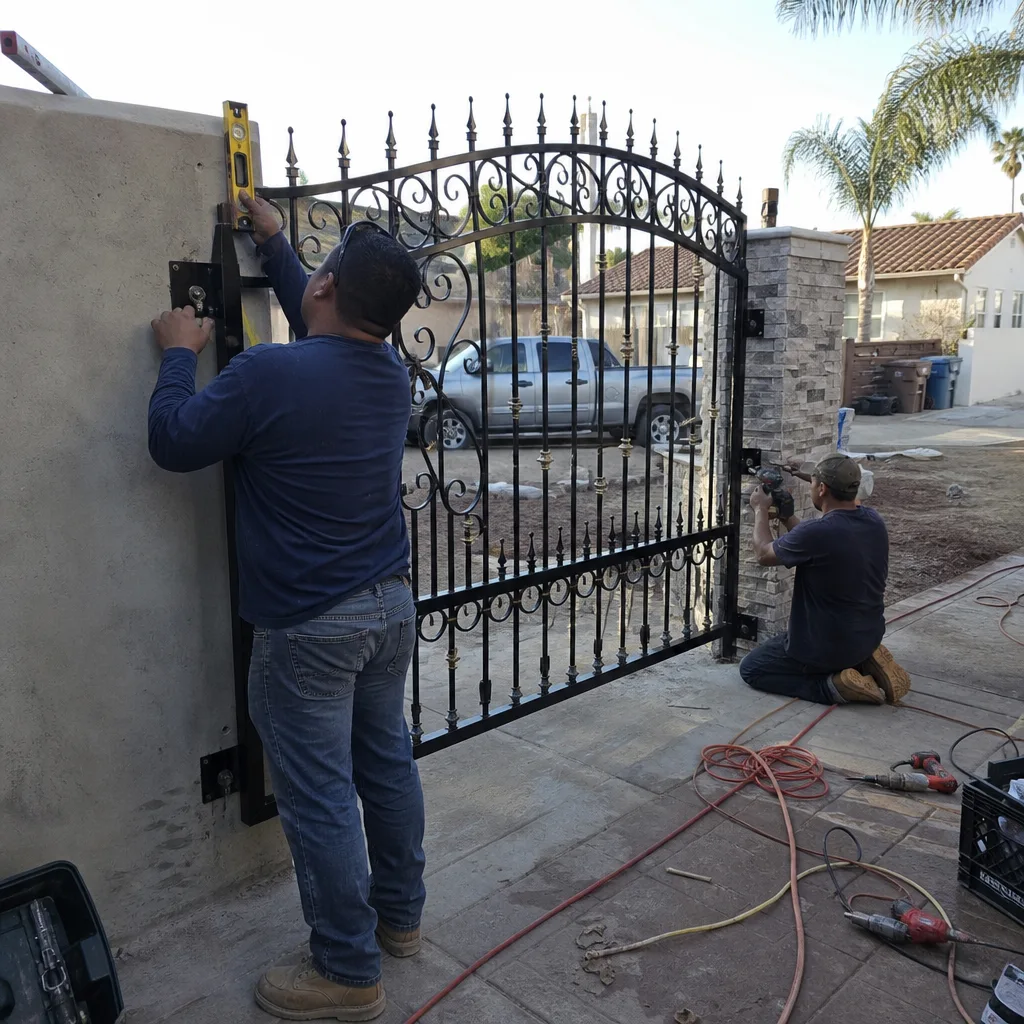
Some maintenance is homeowner work: cleaning the track, checking the gasket, recording the close time, keeping a log. Other work should be handled by someone who does it daily. If the gate is tripping a breaker, blowing a fuse, or displaying a fault code, don’t reset it repeatedly; something is drawing current, and each reset heats the component until it fails permanently. If you see green corrosion on a control board, hear arcing, or smell hot plastic, cut power to the operator and call. If any work involves a high-tension spring, a chain under load, or the point where the gate connects to the operator arm, have a trained technician handle it: those components hold enough energy to cause serious injury if released incorrectly. And if you’re in Long Beach and your baseline log shows a current draw climbing more than 15% season over season, that’s a pre-failure signal worth an inspection. Vance Gate Repair Long Beach home has been serving Long Beach gates since 2014, and we offer free estimates for seasonal inspections. Call (424) 788-1027 if you want a written assessment.
Frequently Asked Questions
Twice a year, but the timing matters. Lubricate once in April or May, before the marine layer arrives, and again in September or October, after the first Santa Ana wind event. Those two windows are dry enough in Long Beach for the grease to stay put instead of emulsifying in humidity or washing out in rain. For an exact product recommendation for your gate’s specific hardware, call (424) 788-1027 and we’ll tell you what works.
Yes, and it does it faster than you’d expect. The daily condensation-evaporation cycle from June through August deposits salt on every exposed electrical connection, and the failure often shows up months later when the corroded joint finally opens. The fix is preventive: seal low-voltage connections in late May and verify the housing gasket before the fog season starts.
Can I fix a corroded gate connection myself?
You can clean light surface corrosion on a battery terminal or a spade connector using a wire brush and a proper contact cleaner. But if the corrosion has traveled up into the wiring, if the board shows white bloom across solder joints, or if the connection is on the high-voltage side, stop and call a professional. A Gate Motor & Opener in Long Beach specialist can identify which connections are failing and which ones are fine without replacing parts unnecessarily.
Rain enters a conduit, a splice, or an operator housing and the short takes time to develop. The gate often keeps working while the water is present, then fails as the water dries and leaves corrosion behind. After any Long Beach storm over half an inch, check the operator housing for condensation and inspect the conduit entries. If the gate faults later, the water already left its mark.
It loads the gate panel with wind pressure, shifts chain tension as the metal heats, and packs the track with fine grit. The result is an operator that has to work harder and a gate that may drift off its limit stops over the following weeks. Run through the five-point wind checklist after any strong Santa Ana in Long Beach, and record the motor current before and after.
A seasonal inspection with cleaning, lubrication, and baseline readings typically runs between $120 and $250 depending on the gate type, the number of operators, and whether any parts need replacement. If you need a specific price, call (424) 788-1027 and we’ll give you a written quote before any work begins. Prices are always agreed before the service, never after.
The Bottom Line
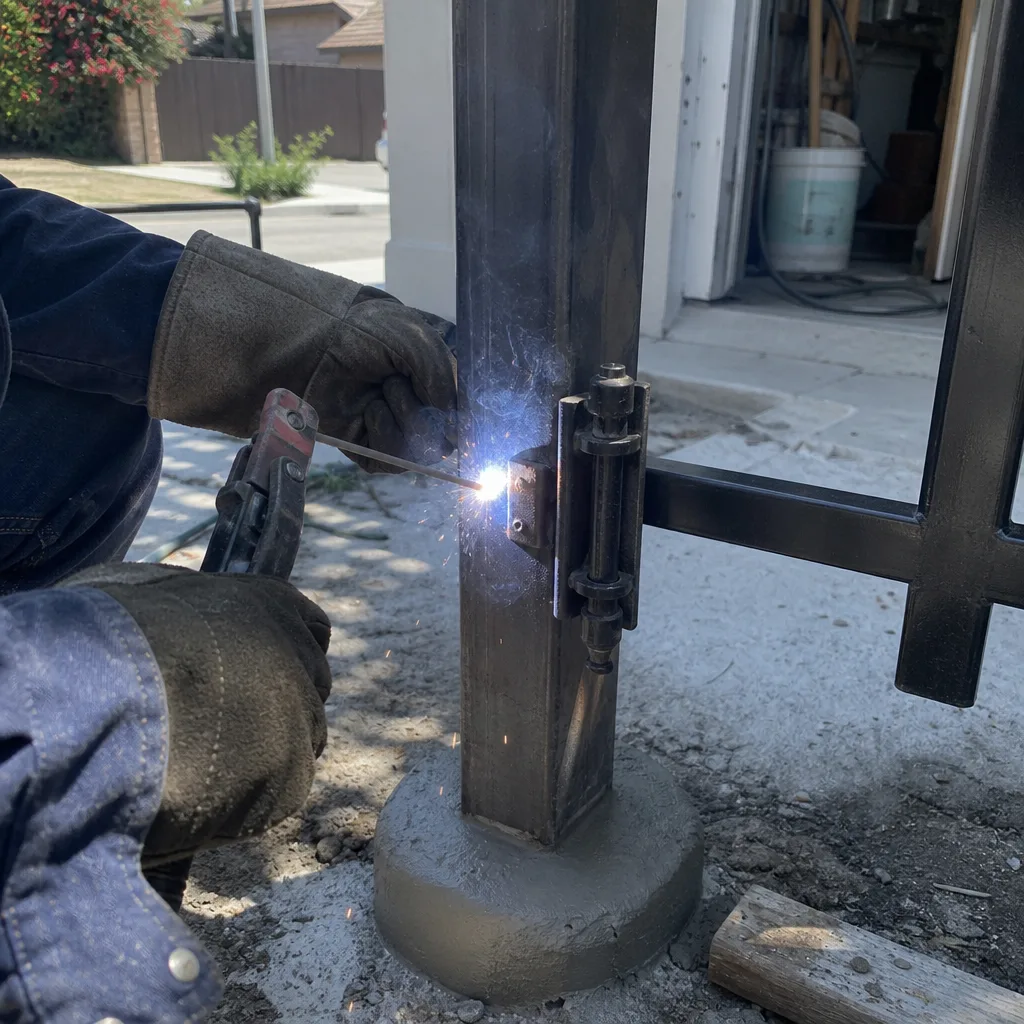
Long Beach gate maintenance is a year-round job, but it’s not a monthly job. Four environmental phases, four target inspections, and two lubrication windows. Lubricate in April or May, and again in September or October. Check electrical connections before June. Inspect the track after every Santa Ana event. Check drains and conduit seals after any rain over half an inch. Record your baseline numbers each season, and keep them somewhere you can find them. If any of that turns up something you don’t want to handle yourself, we are Gate Installation in Long Beach specialists as well as repair technicians, and we are happy to take a look. Vance Gate Repair Long Beach serves Long Beach with written pricing, documented records, and a live person on the phone at (424) 788-1027.
Written by Adrian Vance, Owner at Vance Gate Repair Long Beach, serving Long Beach since 2014.