
Last updated September 20, 2026
Free on-site gate assessment - hinges, posts, and your LiftMaster or Nice gate operator checked before anything is quoted
The assessment is free and the quote is the invoice.
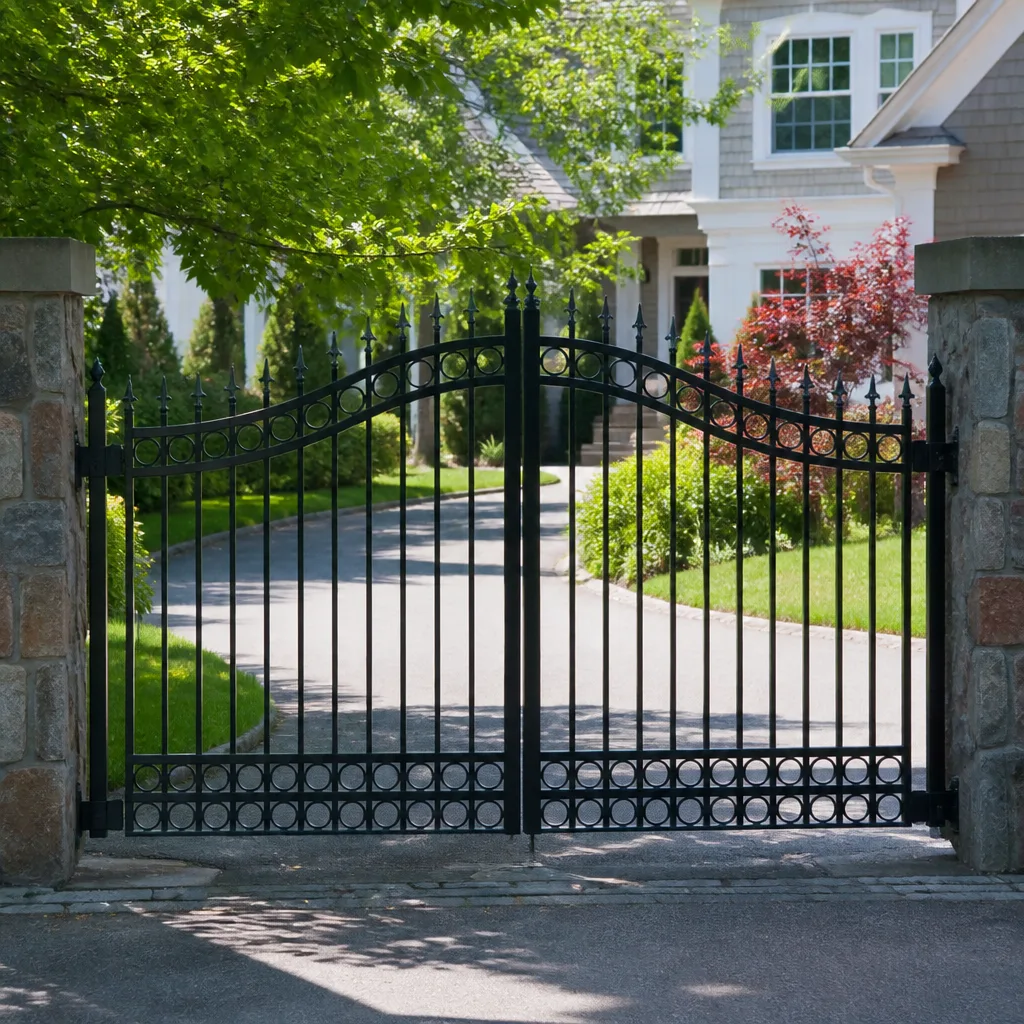
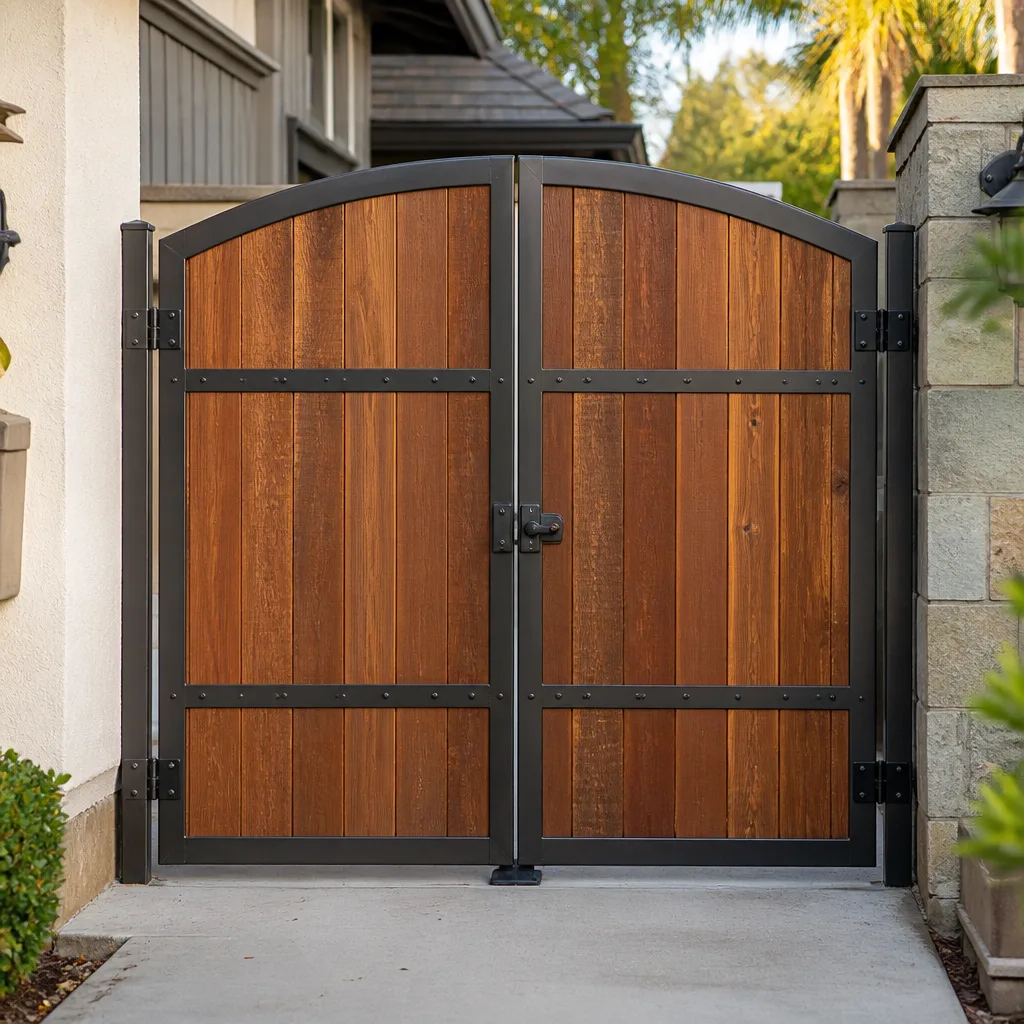
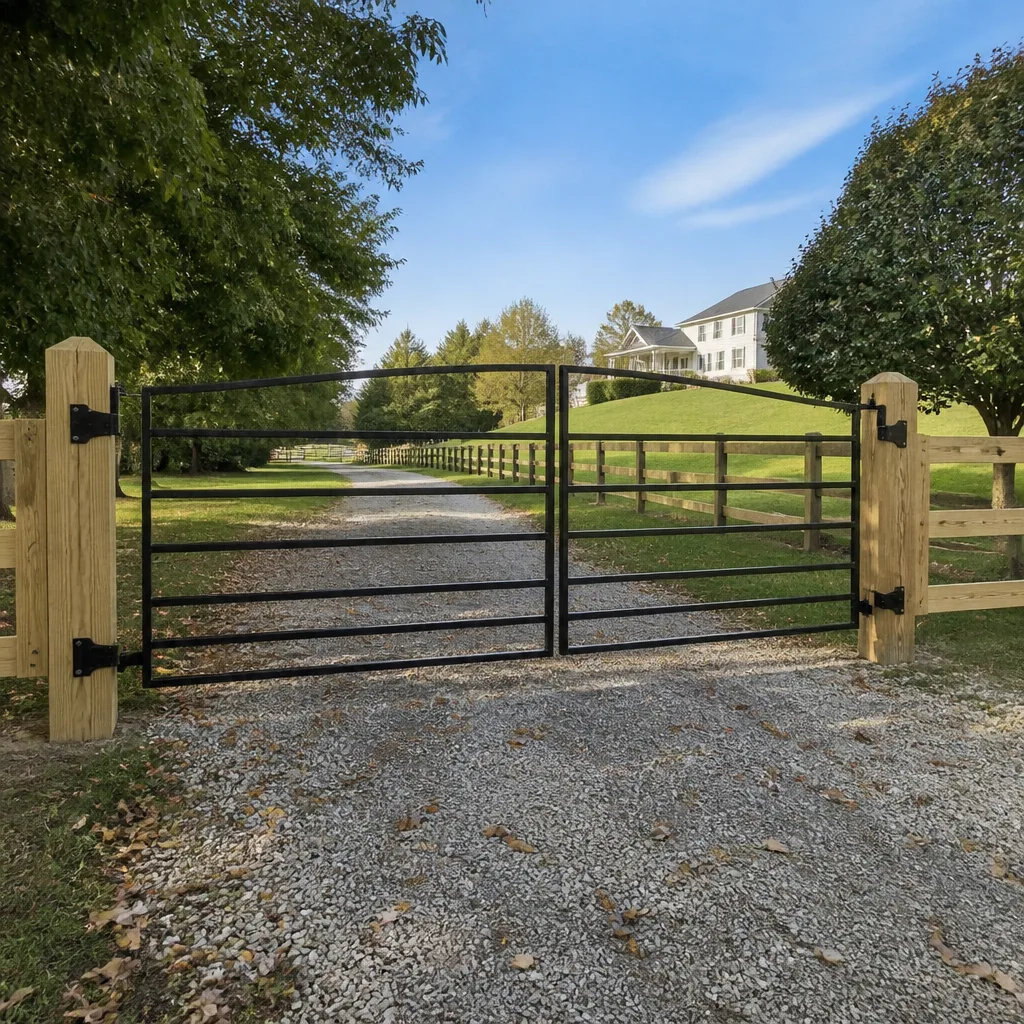
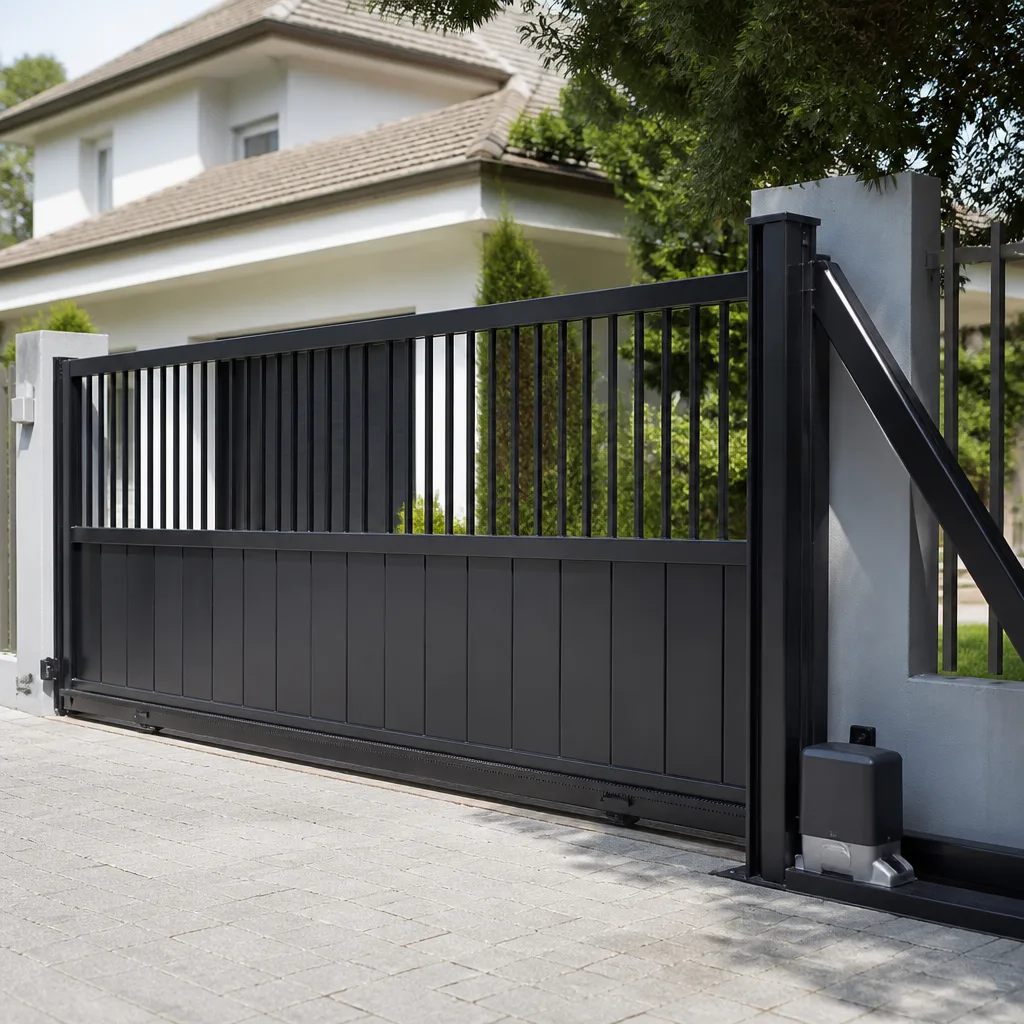
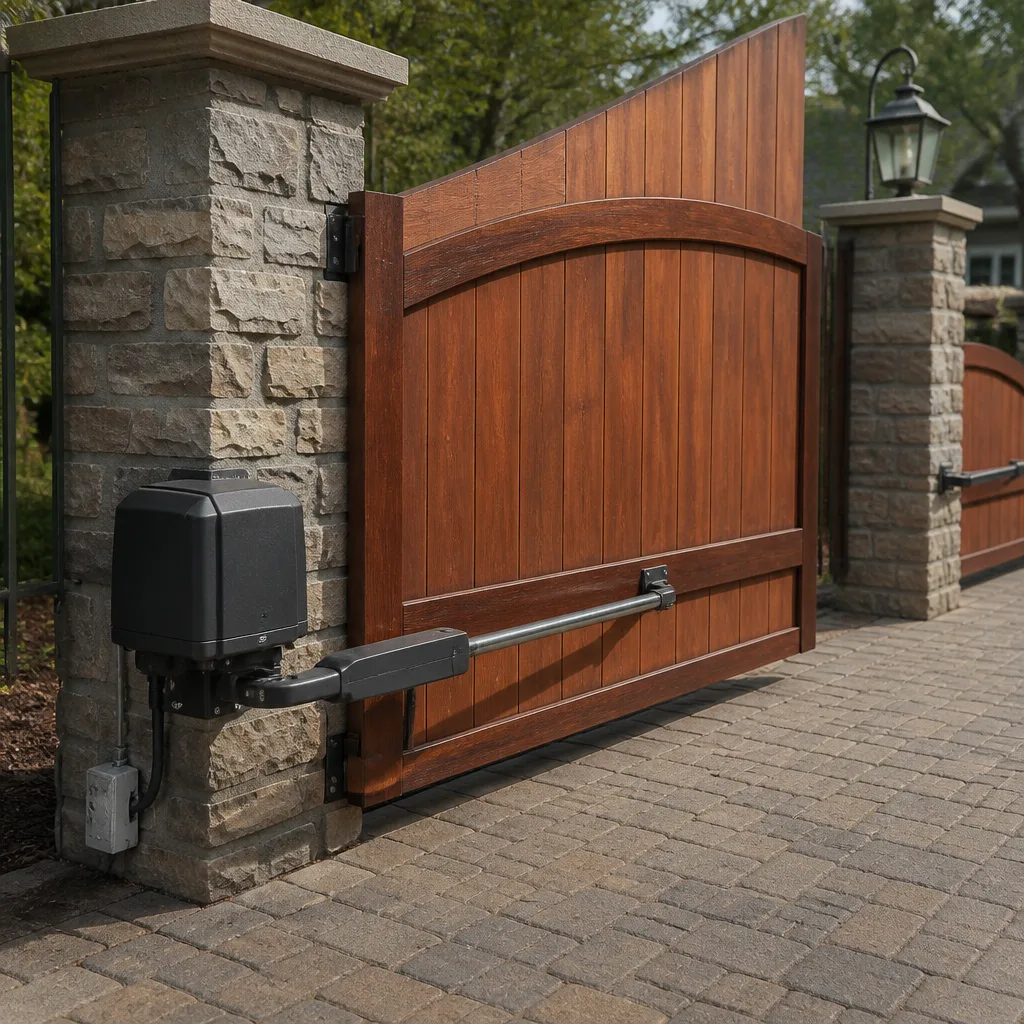
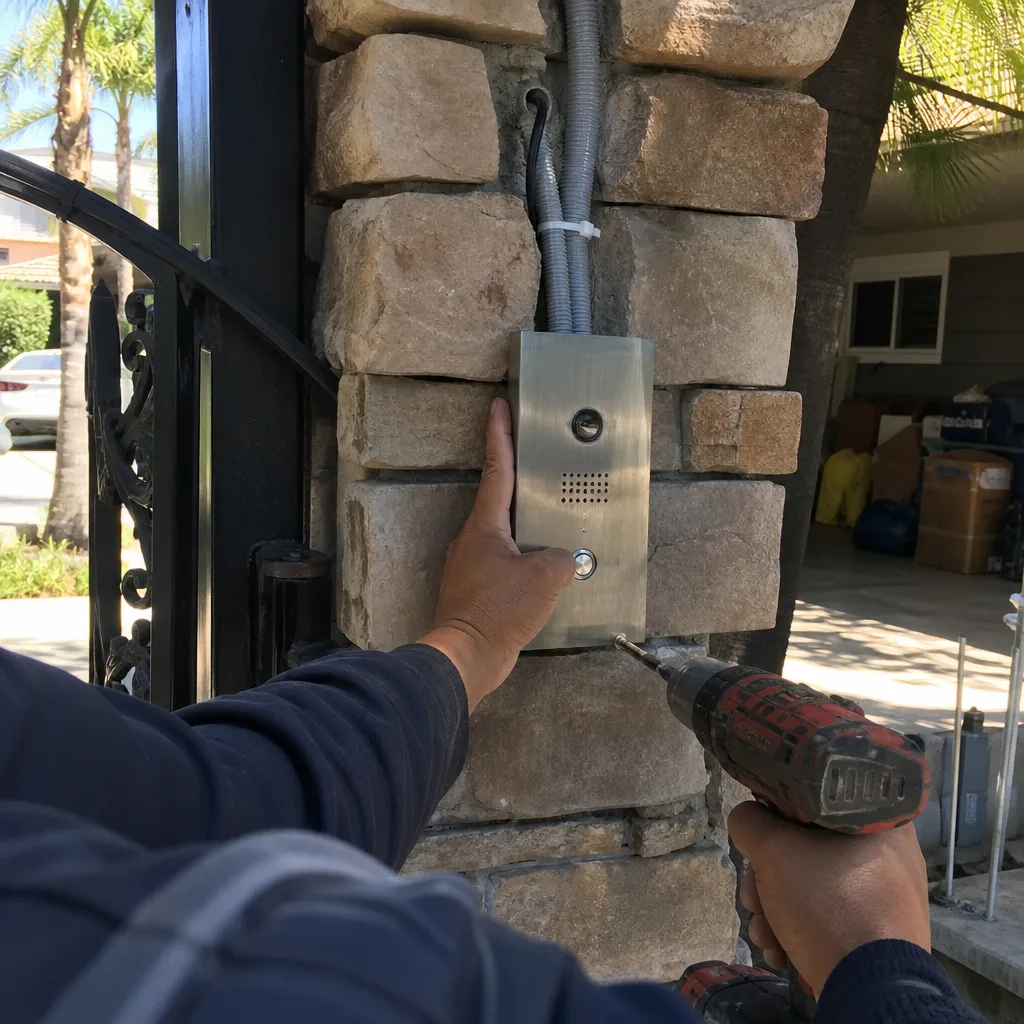
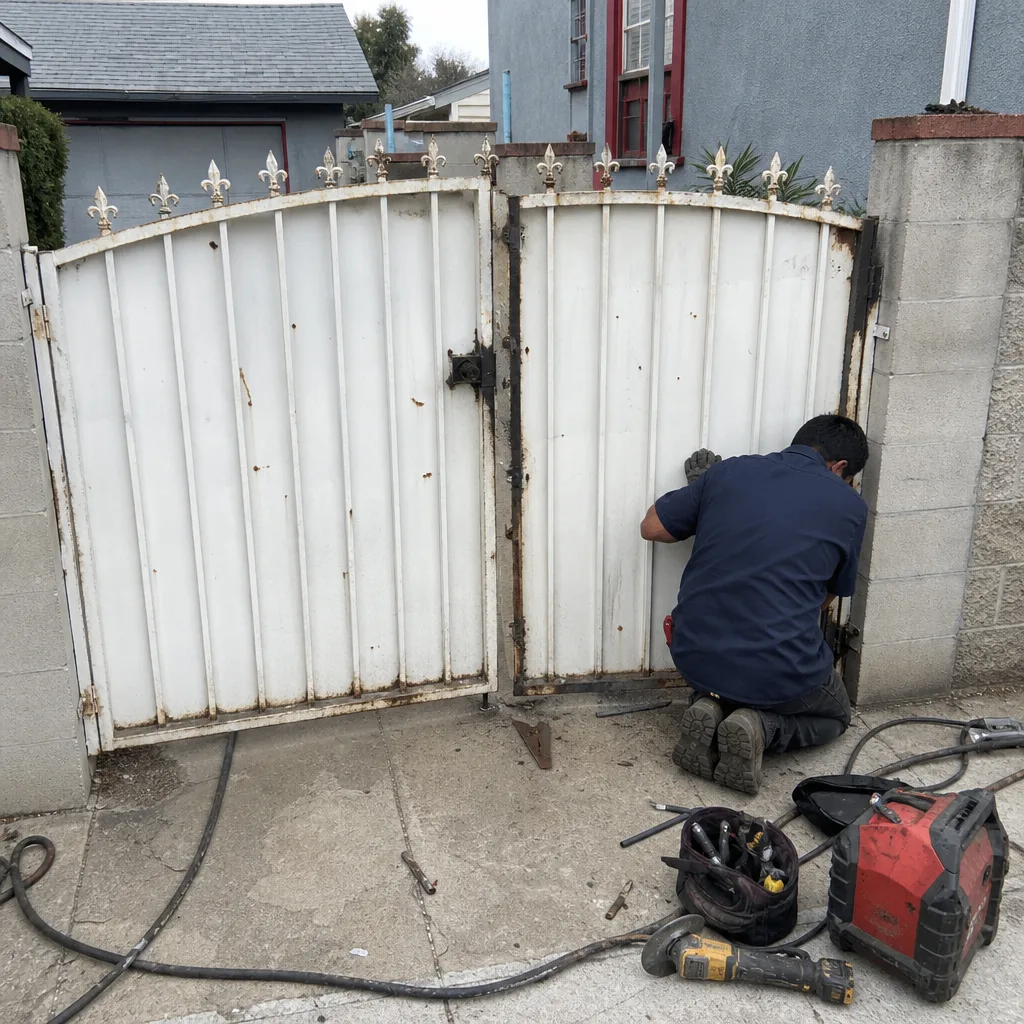 Before
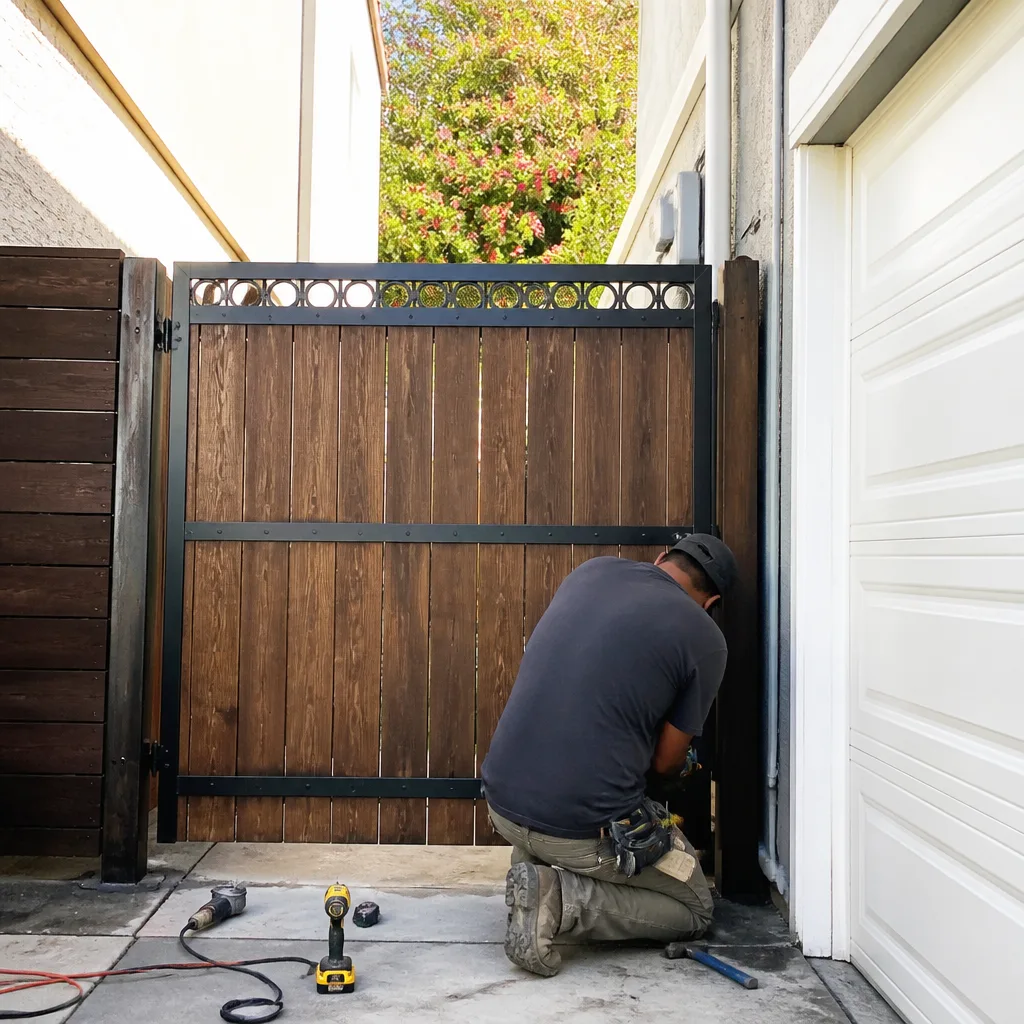 After
After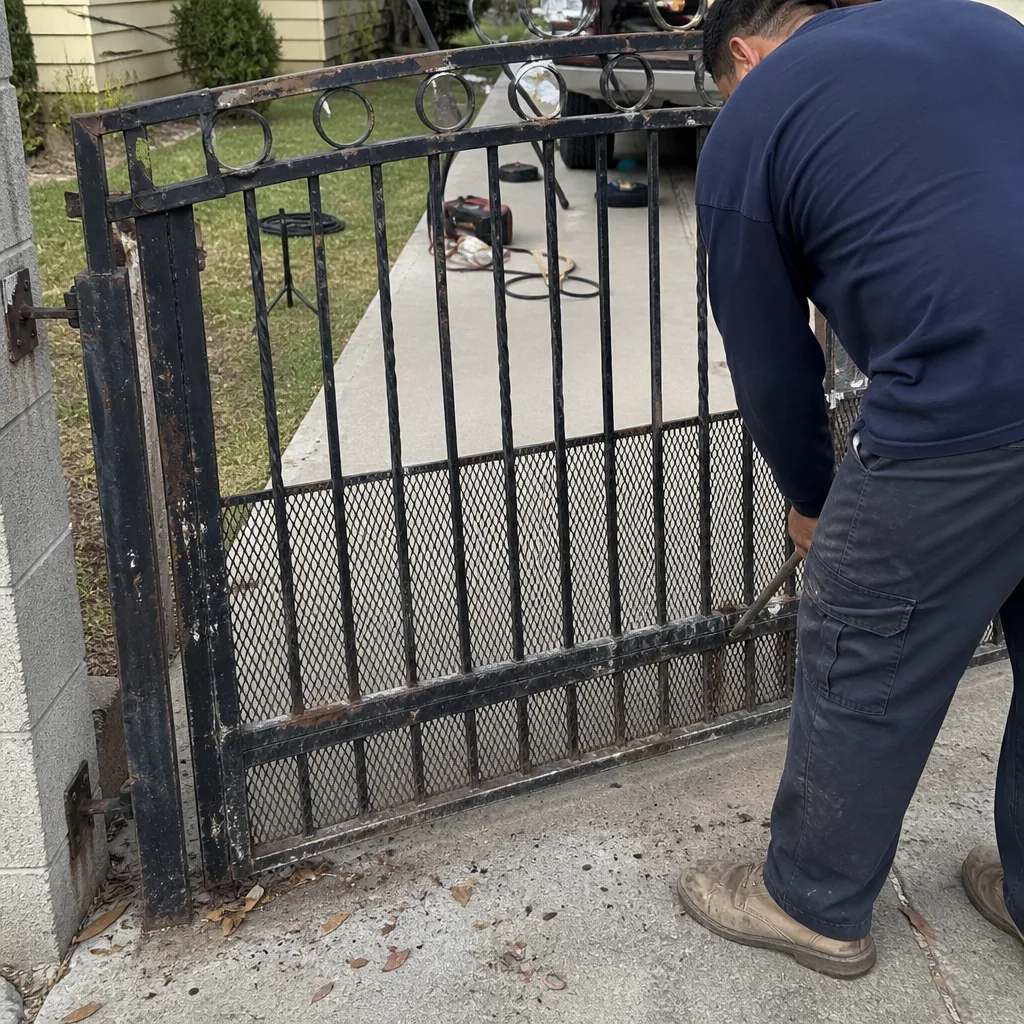 Before
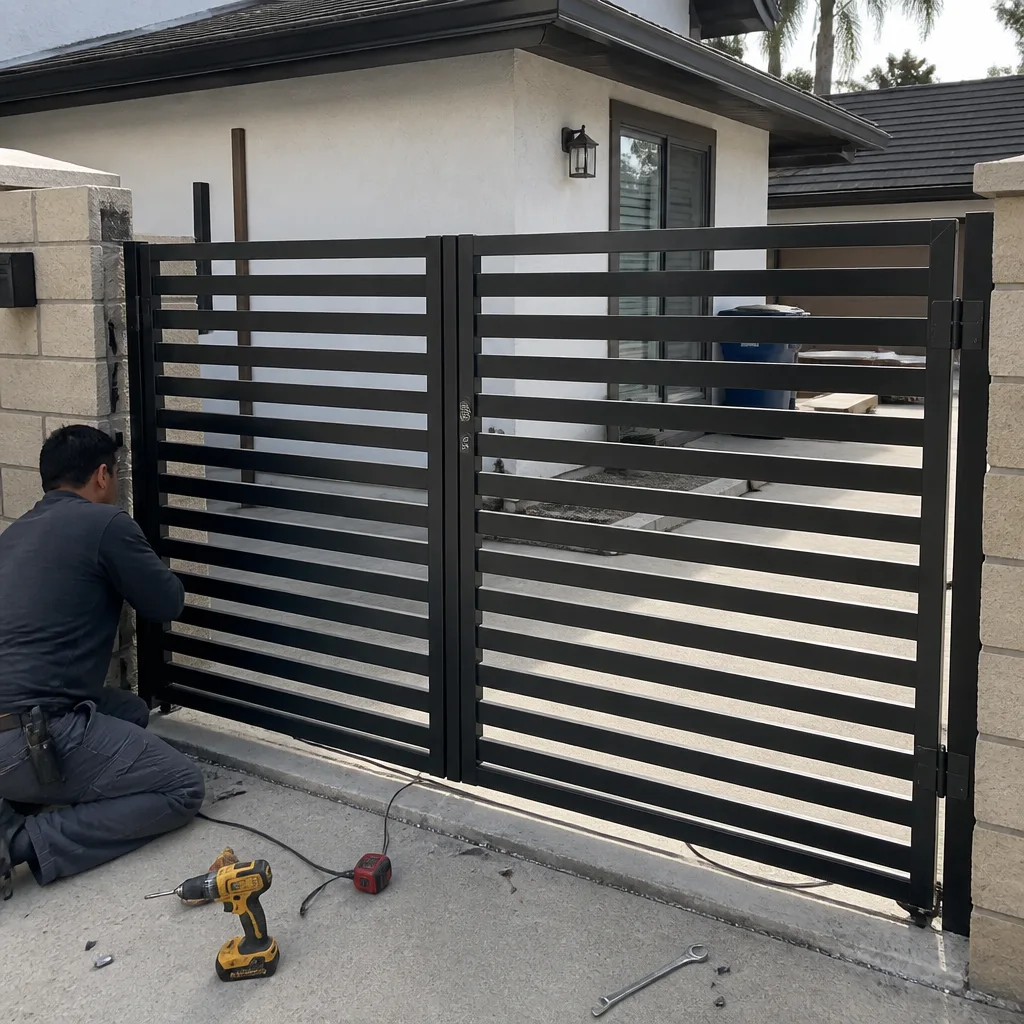 After
After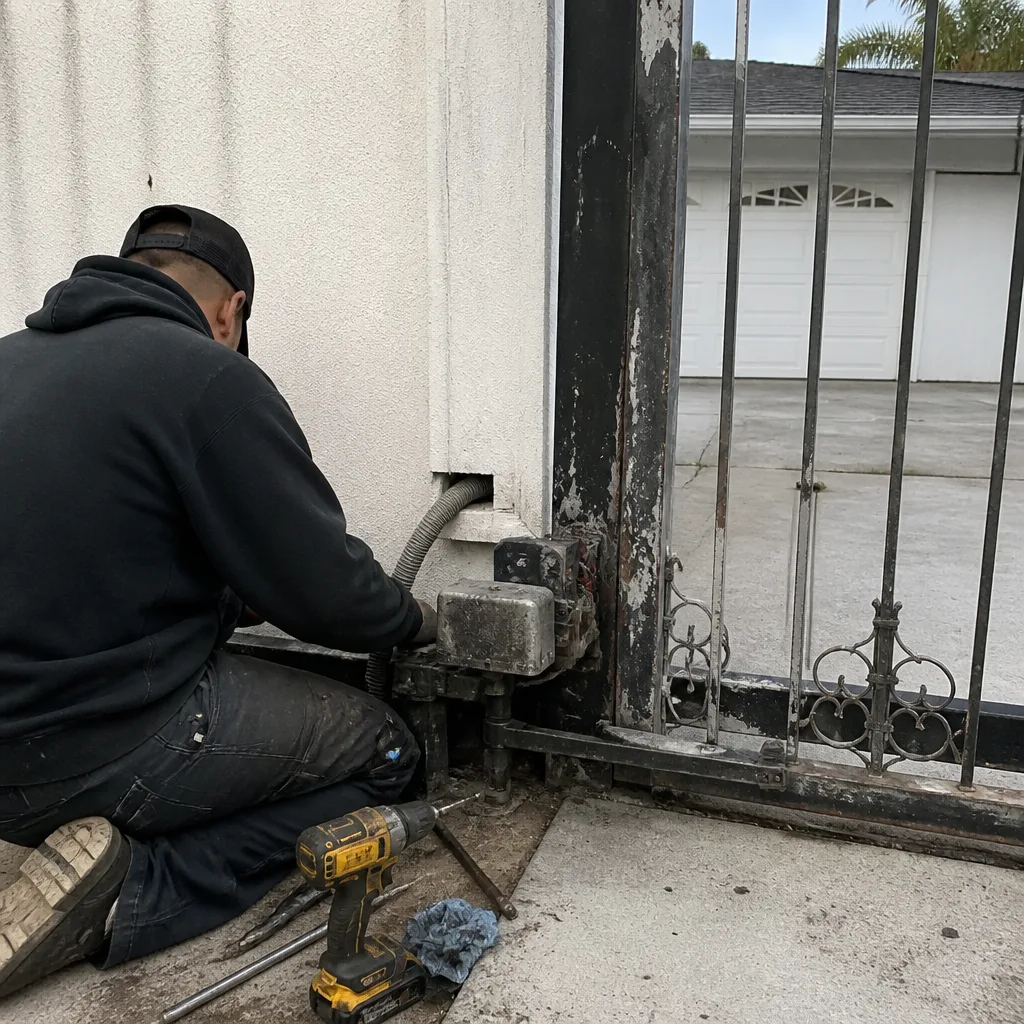 Before
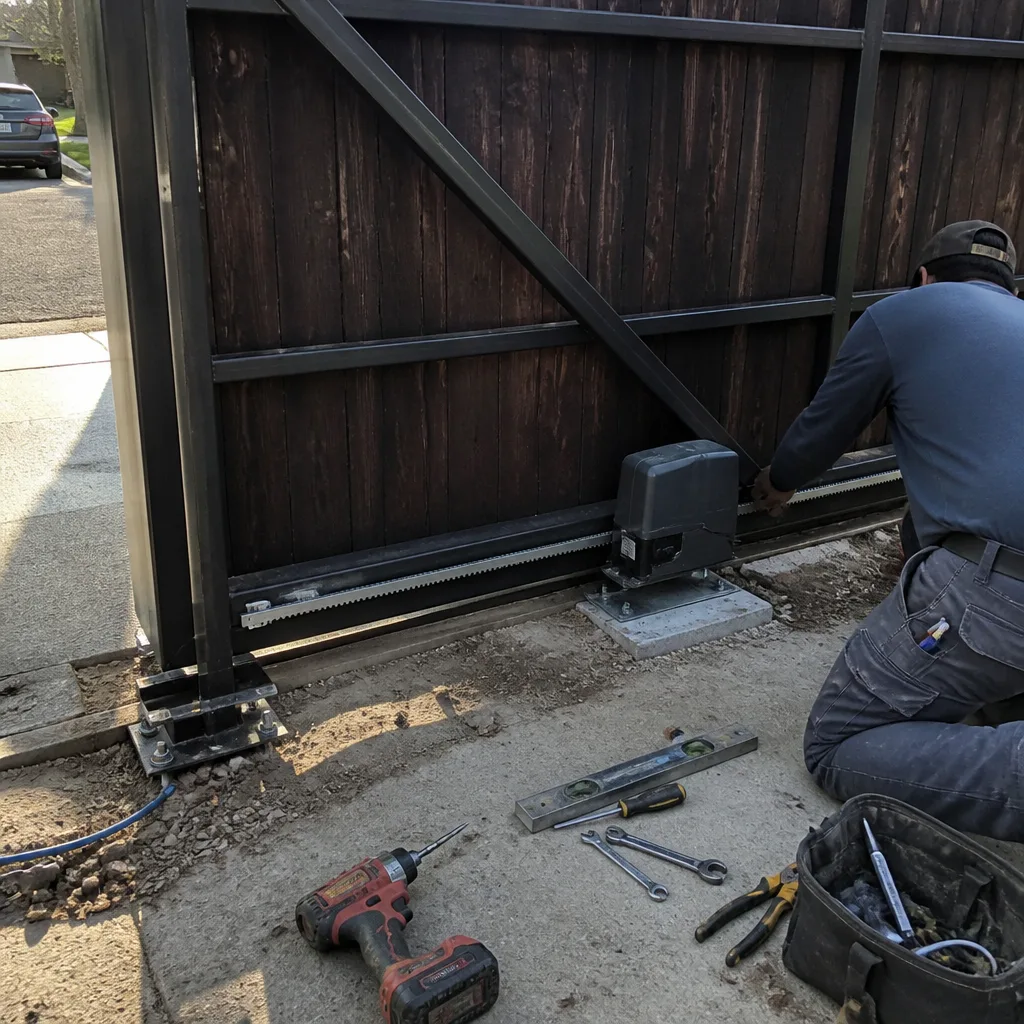 After
AfterThe Complete Guide to Gate Repair in Long Beach
A gate that reverses mid-swing or won’t latch looks like a dozen different problems. But field documentation from Long Beach service calls shows it’s usually the same three causes repeating: salt-air corrosion on hardware, voltage drop from undersized wire runs, and limit-switch drift. They get misdiagnosed and re-repaired because no one wrote down what they found the first time. This guide maps the full diagnostic path from first symptom to closed work order, so you understand what’s actually wrong before anyone picks up a tool.
Quick Answer
Gate repair in Long Beach typically costs $180-$640 depending on whether the failure is mechanical (hinges, wheels, strike plates), electrical (motor, circuit board, photo-eyes), or structural (welds, post alignment). See our Gate Repair Cost Breakdown: The Long Beach Homeowner’s Reference for 2026 for full details. Most repairs take 1-3 hours once the root cause is identified. The most common Long Beach-specific failures we document are salt-air corrosion on hardware, voltage drop from long wire runs, and limit-switch drift.
Table of Contents
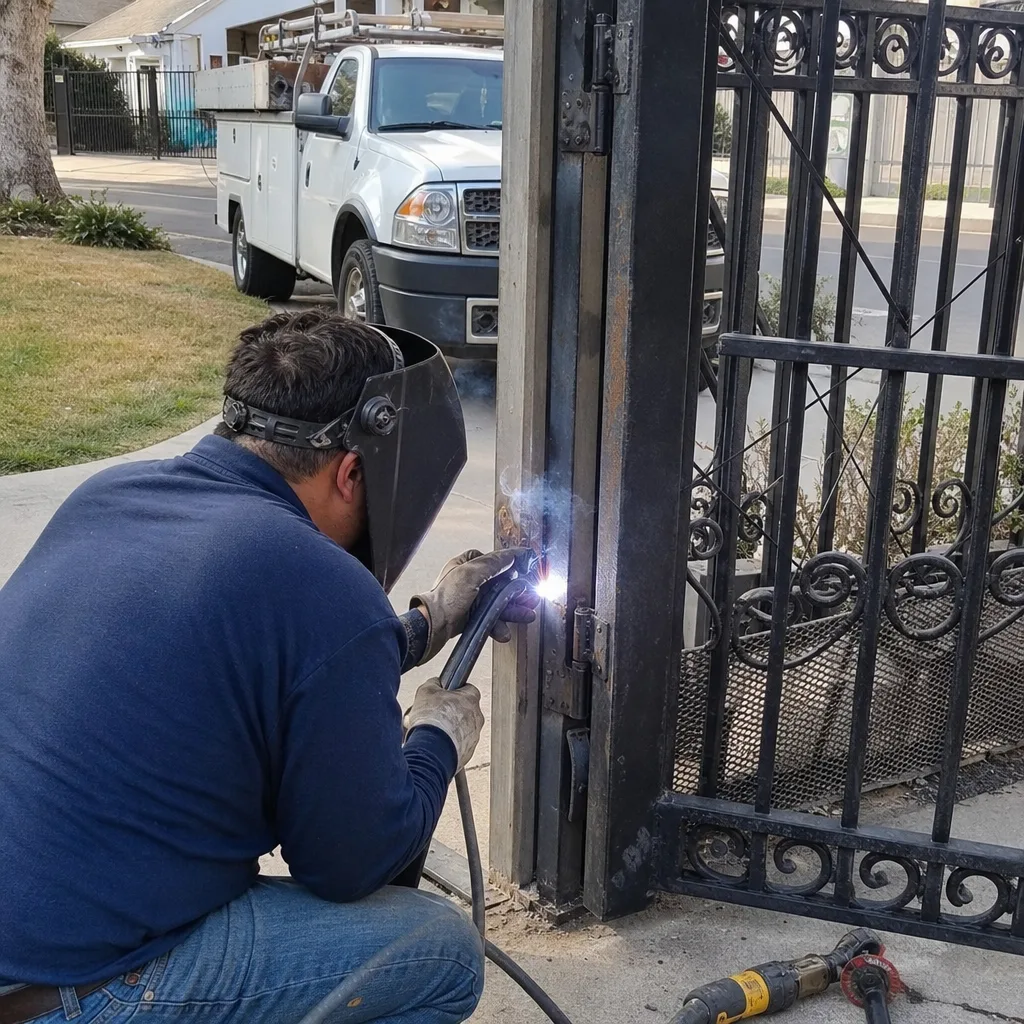
- The Diagnostic Order: Why Voltage Comes Before Mechanics
- How Long Beach’s Coastal Air Attacks Gate Hardware
- Operator Failure vs. Structural Failure: Know the Difference
- Gate System Components: A Plain-Language Glossary
- What a Complete Work Record Looks Like (And Why It Matters)
- Brands We Service: Working With What’s Already Installed
- Common Mistakes to Avoid
- When to Call a Professional
- Frequently Asked Questions
BeforeAfterThe Diagnostic Order: Why Voltage Comes Before Mechanics
When a gate misbehaves, the instinct is to look at the hinges or the motor. That instinct is expensive. Here’s the diagnostic sequence we follow on every Long Beach service call, and why the order matters.
Step 1: Check voltage at the motor, not at the outlet. A gate operator can read full voltage at the power source and still be starved at the board. Long Beach homes often have long wire runs from the house to the gate, especially on larger lots in neighborhoods like Los Altos or Bixby Knolls. Undersized wire creates voltage drop under load, and the motor browns out or behaves erratically. We’ve measured 118 volts at the house and 96 volts at the gate. The motor wasn’t broken; the wire was too thin.
Step 2: Document limit-switch positions before touching anything. Limit switches tell the motor where to stop. They drift over time from vibration, gate sag, or someone adjusting them without recording the original setting. If you don’t photograph or note the current position before changing it, you’re guessing. Limit-switch drift is one of the three Long Beach patterns we see weekly.
Step 3: Inspect mechanical points only after electrical checks are complete. Hinges, wheels, and track alignment get blamed for failures that are actually electrical. Once voltage and limits are ruled out, then you look at whether the gate physically moves freely. This order prevents swapping parts before identifying root cause, which is why many homeowners weigh DIY vs Professional Gate Repair: The Long Beach Homeowner’s Decision Guide carefully before picking up a tool.
Here’s a concrete Long Beach case: a homeowner in Belmont Shore called because their swing gate stopped midway. A previous company replaced the motor. The gate failed again two weeks later. We measured voltage at the board: 101 volts under load. The wire run from the house to the gate was 140 feet of 16-gauge wire. We replaced the run with 12-gauge, reset the limits, and the gate has operated correctly since. The motor was never the problem.
How Long Beach’s Coastal Air Attacks Gate Hardware
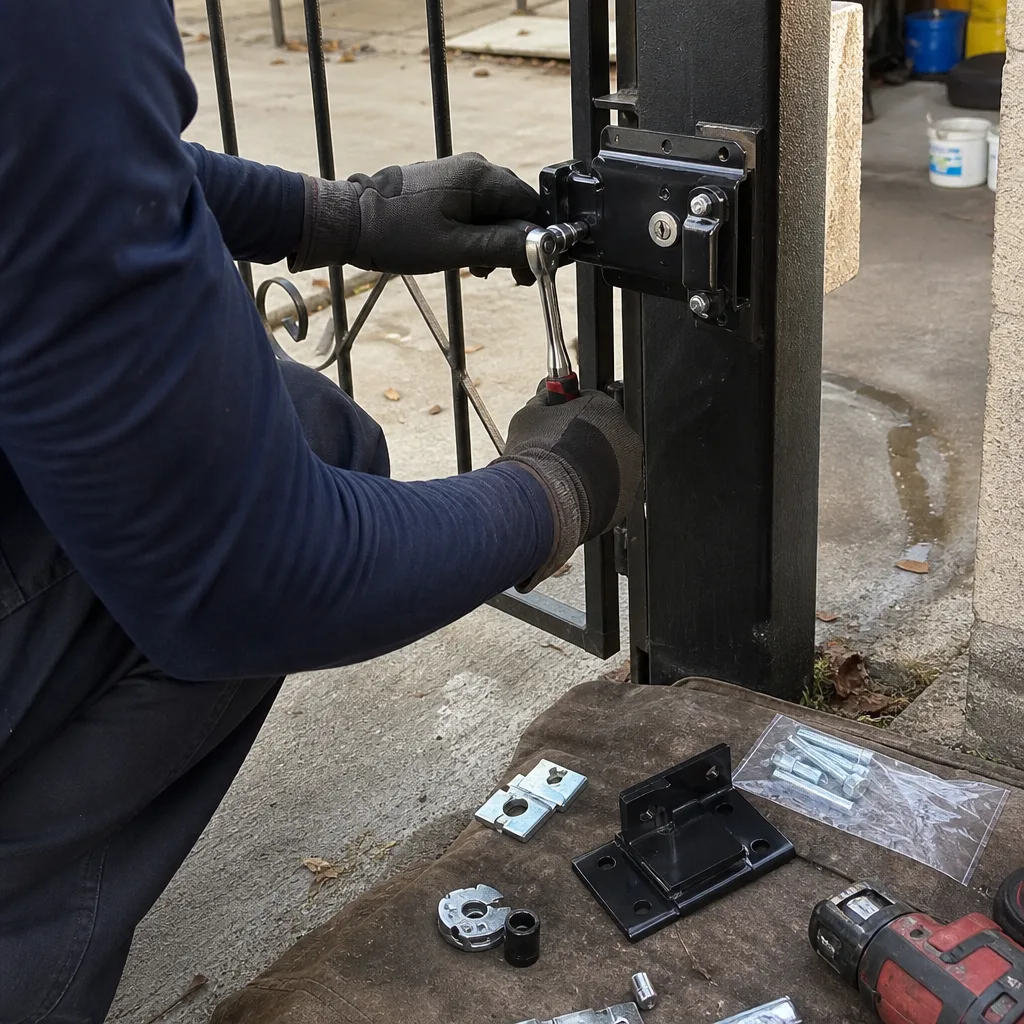
Long Beach sits on the Pacific with a marine layer that rolls in most mornings. That salt-laden air does something specific to gate hardware: it creates corrosion patterns on hinges, strike plates, and motor housings that inland California properties simply don’t see. We’ve pulled gate hinges in Belmont Shore that looked fine from the outside but had galling and pitting inside the pivot, invisible until removed.
The corrosion isn’t cosmetic. Here’s what it does mechanically:
- Hinge pivot corrosion increases friction, which makes the operator work harder, which draws more current, which trips the circuit board or burns the motor capacitor. One corroded hinge can destroy a healthy operator.
- Strike plate rust prevents the gate from latching, which triggers repeated close cycles, which overheats the operator.
- Motor housing pitting lets moisture into the control board cavity, which causes intermittent faults that look like a bad board but are actually water intrusion.
- Connector terminal oxidation creates resistance at every junction, compounding the voltage drop problem.
What protects against this is material selection and documentation. Stainless steel hardware lasts longer near the coast. Marine-grade coatings on motor housings matter. But the real protection is recording what was installed and when. Salt-air corrosion is a slow process, and a photo record from two years ago tells a technician exactly what’s changed. In inland areas like San Bernardino or Riverside, gates fail from dust and heat. Here in Long Beach, the marine layer is the primary environmental factor, and any repair that doesn’t account for it will not last.
Operator Failure vs. Structural Failure: Know the Difference
Mixing up the operator (the motor and controls) with the gate structure (the metal, hinges, and posts) leads to the most expensive misrepairs we see in Long Beach. They are different systems with different symptoms and different repair approaches.
Operator failure symptoms:
- The gate starts moving, then stops or reverses
- The motor hums but the gate doesn’t move
- The gate moves erratically or at inconsistent speeds
- The remote or keypad intermittently fails to open the gate
- The gate opens but won’t close, or closes but won’t open
Structural failure symptoms:
- The gate scrapes the ground or the post
- The gate sags visibly or leans to one side
- Hinges creak or show visible wear
- The gate binds at a specific point in travel
- Welds are cracked or the post moves when the gate moves
Here’s the trap: a structurally failing gate puts extra load on the operator, which then fails. If you replace the operator without fixing the structural issue, the new operator fails too, usually within months. We see this pattern in older Long Beach neighborhoods like Cal Heights and Naplumb Heights, where gates were installed decades ago and the original posts have settled or the hinges were never rated for the gate’s weight.
If you’re looking at Gate Motor & Opener in Long Beach repair or replacement, the first question we answer is whether the structure is sound. You can’t put a healthy motor on a failing gate and call it fixed.
Gate System Components: A Plain-Language Glossary
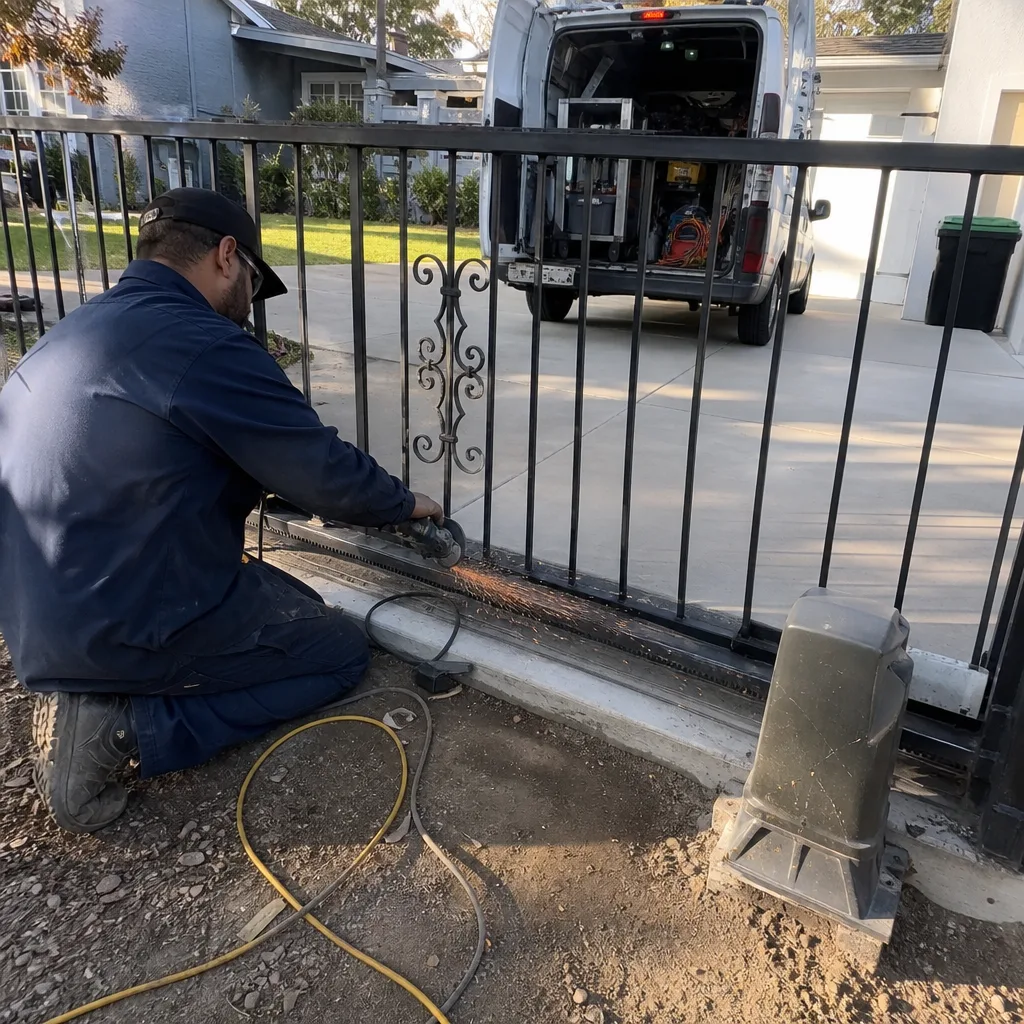
When you call any gate contractor, the precision of your description determines how quickly they can diagnose. Here’s the vocabulary we use on service calls, explained in plain language, so you can describe what you’re seeing accurately.
Operator: The motor and control board unit that moves the gate. It’s usually housed in a metal box at the base. When people say “the motor,” they mean the operator.
Limit switch: A sensor that tells the operator where the open and closed positions are. When it drifts, the gate stops short, overtravels, or reverses.
Photo-eye (photo sensor): The infrared beam that stops the gate if something crosses the path. A misaligned photo-eye by roughly two inches will make the gate refuse to close, or reverse every time.
Control board: The circuit board inside the operator that processes signals from remotes, keypads, and safety sensors. It’s the brain, and it’s the component most often misdiagnosed as failed when the real issue is voltage drop.
Hinges (pivot hinges): The bearing points on which a swing gate rotates. Corrosion here is the Long Beach signature failure.
Track and wheels (V-track): The rolling assembly on a slide gate. Sand and debris from coastal wind accumulate here, causing resistance.
Strike plate and latch: The mechanical lock point. Rust here forces the operator to work harder on every close cycle.
Capacitor: A cylindrical component that gives the motor its starting kick. It fails from heat and age, and the symptom is a motor that hums but doesn’t turn.
Actuator arm: On swing gates, the arm that connects the operator to the gate. If the bracket is loose or the arm is bent, the gate moves erratically.
Keep this section handy when you call. “My gate stops two feet short of the post and reverses” is a far better description than “my gate is broken.”
What a Complete Work Record Looks Like (And Why It Matters)
Under Clause 4 of the Haven Standard (Evidence on every job), every visit we make in Long Beach includes a documented photo record at no additional charge. Here’s what that record contains and why its absence is the root cause of repeat service calls.
What you receive after every visit:
- Photos of what was found: the corroded hinge, the drifted limit switch with its original position, the voltage reading at the board, the wire gauge encountered in the junction box.
- Photos of what was adjusted: the new limit position, the alignmented photo-eye, the cleaned terminal connections.
- Photos of what was installed: the part number visible, the manufacturer label, the torque specification if applicable.
- A written summary: the diagnosis, the repair performed, the parts used with part numbers, and any recommendations for future attention.
Why this matters in Long Beach specifically: the coastal environment means repairs degrade on a timeline. A hinge replaced two years ago may fail again, and the photo record tells us exactly what was installed, so the replacement is faster and we know whether the failure pattern is normal wear or a larger structural issue. Without a documented record, every new technician starts from zero, re-diagnoses what was already fixed, and you pay for the same discovery twice.
We’ve seen gates in Long Beach with four service stickers from four companies, each replacing a different part, none of which fixed the underlying issue. The problem wasn’t the parts. It was that no one recorded what they found, so no one could build on previous work. A written price is only half of Clause 1; the other half is knowing what you already paid to learn.
Brands We Service: Working With What’s Already Installed
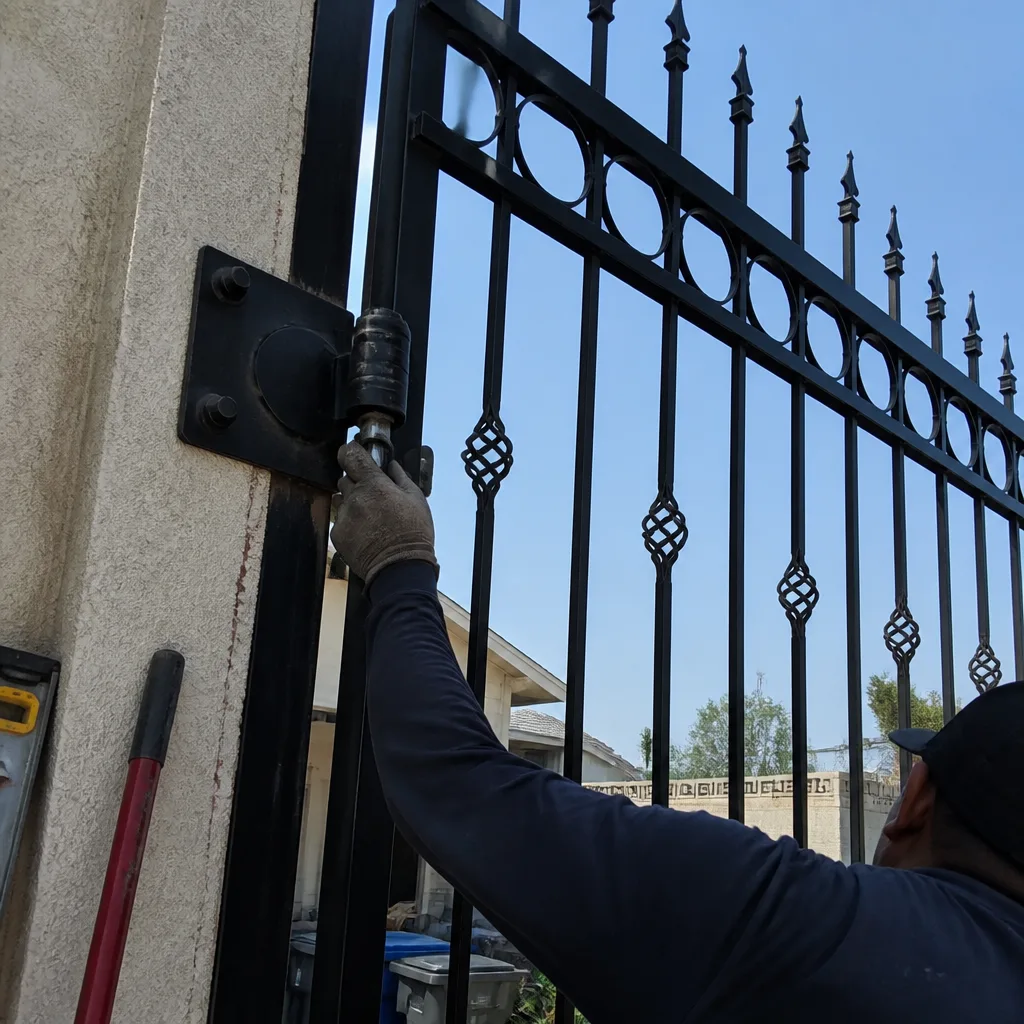
We service nine major gate automation brands, which matters because different manufacturers have different failure patterns and different parts availability. We work on LiftMaster, FAAC, BFT, Linear, Viking, Ghost Controls, DoorKing, Elite, and Mighty Mule. Our approach is to repair what’s on the property rather than steer you toward a replacement, unless the operator is genuinely beyond economical repair.
Here’s what we typically see by brand:
- LiftMaster and DoorKing are common on newer Long Beach installations. Control board failures occur, but voltage drop is the more frequent Long Beach root cause we document. Both brands have good parts availability.
- Elite and Mighty Mule are often found on older residential swing gates in neighborhoods like El Dorado Park and Los Altos. Capacitor failures and actuator arm bracket issues are the patterns we see most.
- FAAC, BFT, and Viking are more common on larger or custom gates. These are generally robust operators, but they’re sensitive to improper limit settings and need precise installation.
The practical point: if a company only services one brand, they’ll steer you toward replacing whatever you have with the brand they sell. That’s not diagnosis; that’s sales. We repair the brand you already own when it’s repairable, and we tell you when it’s not, with the price in writing either way.
For a deeper look at operators specifically, see our Gate Motor & Opener in Long Beach guide, and for cases where the gate itself needs replacement, our Gate Installation in Long Beach page covers the full process.
Common Mistakes to Avoid
- Skipping voltage testing before replacing parts. We’ve measured voltage drop on Long Beach properties with long wire runs that killed multiple operators before the wire was replaced. Always rule out electrical supply first; the motor is usually not the problem.
- Lubricating hinges without cleaning them. Spraying oil over salt-corroded hardware traps the corrosion inside. The hinge must be removed, cleaned, inspected, and then properly lubricated or replaced. Oiling a failing hinge masks the symptom until the operator fails.
- Replacing the operator on a structurally failing gate. A sagging gate or binding hinge will destroy any new motor. Structure first, operator second.
- Adjusting limit switches without recording the original position. Limit-switch drift is a documented Long Beach pattern. Without noting where it was, you can’t know what changed, and you’ve destroyed the evidence before diagnosis.
- Ignoring the photo-eye when the gate won’t close. A misaligned photo-eye is the most common reason a gate reverses. The sensor is usually fine; the alignment is the issue. Don’t replace a sensor because it’s not pointed at its reflector.
- Hiring on price alone without a written scope. You should always have the price in writing before work starts. A verbal estimate leaves too much room for the invoice and the diagnosis to drift. If they can’t write it down, they haven’t diagnosed it.
When to Call a Professional
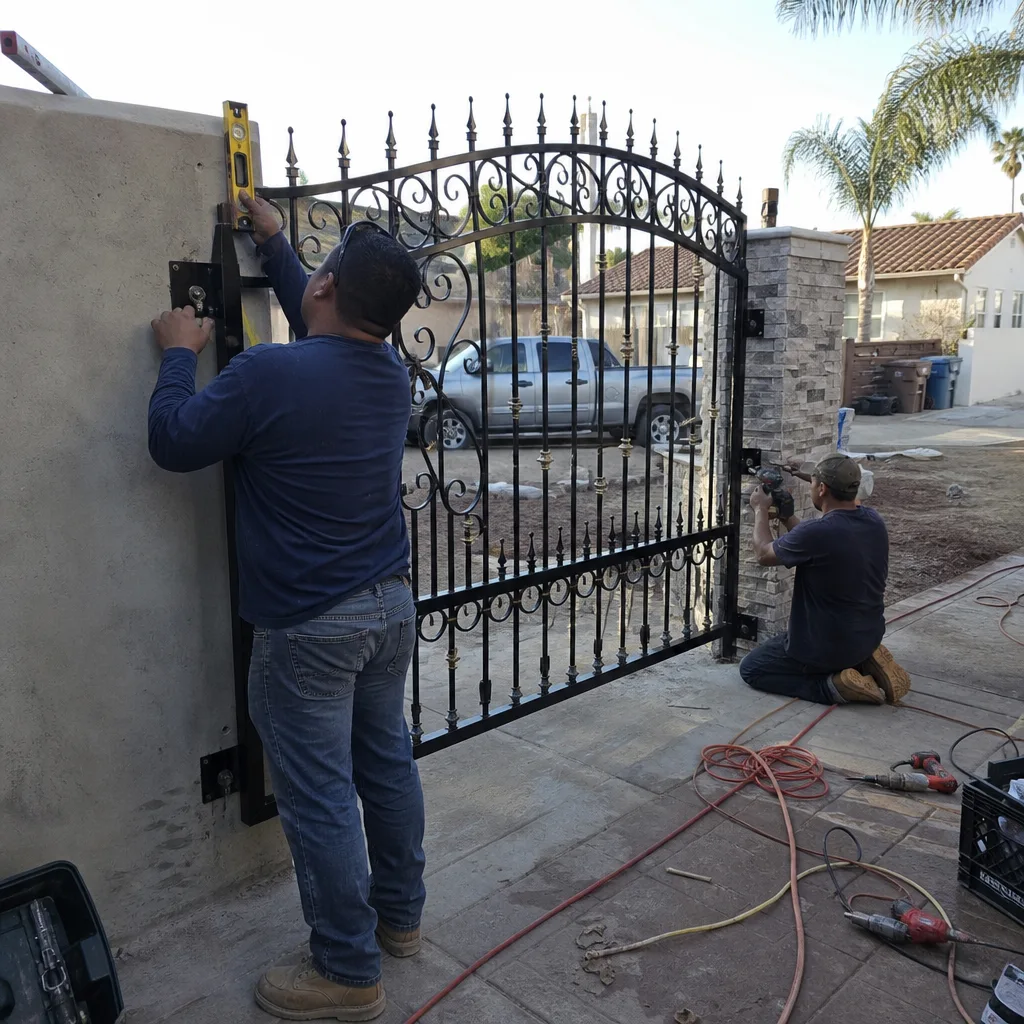
Call a professional when the gate moves unpredictably, when the operator hums but the gate doesn’t move, when you see visible hinge or post damage, or when the gate has failed more than once for the same symptom. Gates under tension from a failing component can cause serious injury, and operators wired to household current should never be opened by someone unfamiliar with the specific wiring. Coastal corrosion and voltage drop are not fixable with a quick adjustment; they require diagnosis, the correct parts, and a record of what was done. Our Gate Repair services include free estimates in Long Beach; call (424) 788-1027. We’ll name the problem, write the price, and leave you the photographic proof of what we found and what we fixed.
Frequently Asked Questions
Gate repair in Long Beach typically costs $180-$640. Here’s the breakdown by failure type:
- Hinge replacement: $180-$380, including removing the gate, installing new stainless hinges, and re-hanging with proper clearance.
- Limit switch adjustment or replacement: $90-$240, including documenting the new positions with photos.
- Photo-eye alignment or replacement: $80-$200, including verifying operation across the full travel path.
- Control board replacement: $280-$640, depending on the brand and whether the board is mounted in a weatherproof enclosure.
- Capacitor replacement: $55-$140, including testing the motor’s start current before and after.
- Full operator replacement (motor and board): $850-$2,800, depending on brand, gate size, and whether the wiring run needs upgrading.
Every price is written and agreed before work starts. Call (424) 788-1027 for an exact quote on your gate, estimates are free.
Yes, most gate repairs in Long Beach are completed same day. We carry common parts for all nine brands we service (LiftMaster, FAAC, BFT, Linear, Viking, Ghost Controls, DoorKing, Elite, Mighty Mule), so hinge replacements, limit adjustments, photo-eye alignments, and capacitor swaps are usually done in a single visit. For less common parts, we’ll tell you the timeline before any payment is made. Call (424) 788-1027 and a live person answers, 24/7.
That symptom is almost always a photo-eye misalignment or a limit-switch drift. The photo-eye (the infrared beam that stops the gate if something crosses the path) may be misaligned by roughly two inches, which makes the gate think there’s an obstruction. Or the limit switch has drifted so the gate thinks it’s traveled farther than it has. Both are quick fixes. Call (424) 788-1027 for a same-day diagnosis and a written price before we begin.
Yes. Salt-air corrosion on hinges, strike plates, and motor housings is one of the most common failures we document in neighborhoods like Belmont Shore and the Peninsula. The marine layer accelerates corrosion that inland properties don’t experience. We recommend stainless hardware and marine-grade operator enclosures on coastal properties, and we photograph every component so you can track deterioration over time.
Every repair includes a written scope, a written price before work starts, and a documented photo record when we leave: what we found, what we adjusted, and what we installed with part numbers. You also get the 365-Day Done Right Promise covering the repair. Call (424) 788-1027 to schedule.
We repair nine major gate automation brands: LiftMaster, FAAC, BFT, Linear, Viking, Ghost Controls, DoorKing, Elite, and Mighty Mule. We work on whatever motor is already on your property. If you’re not sure which brand you have, call (424) 788-1027 and we’ll identify it from a photo.
The Bottom Line
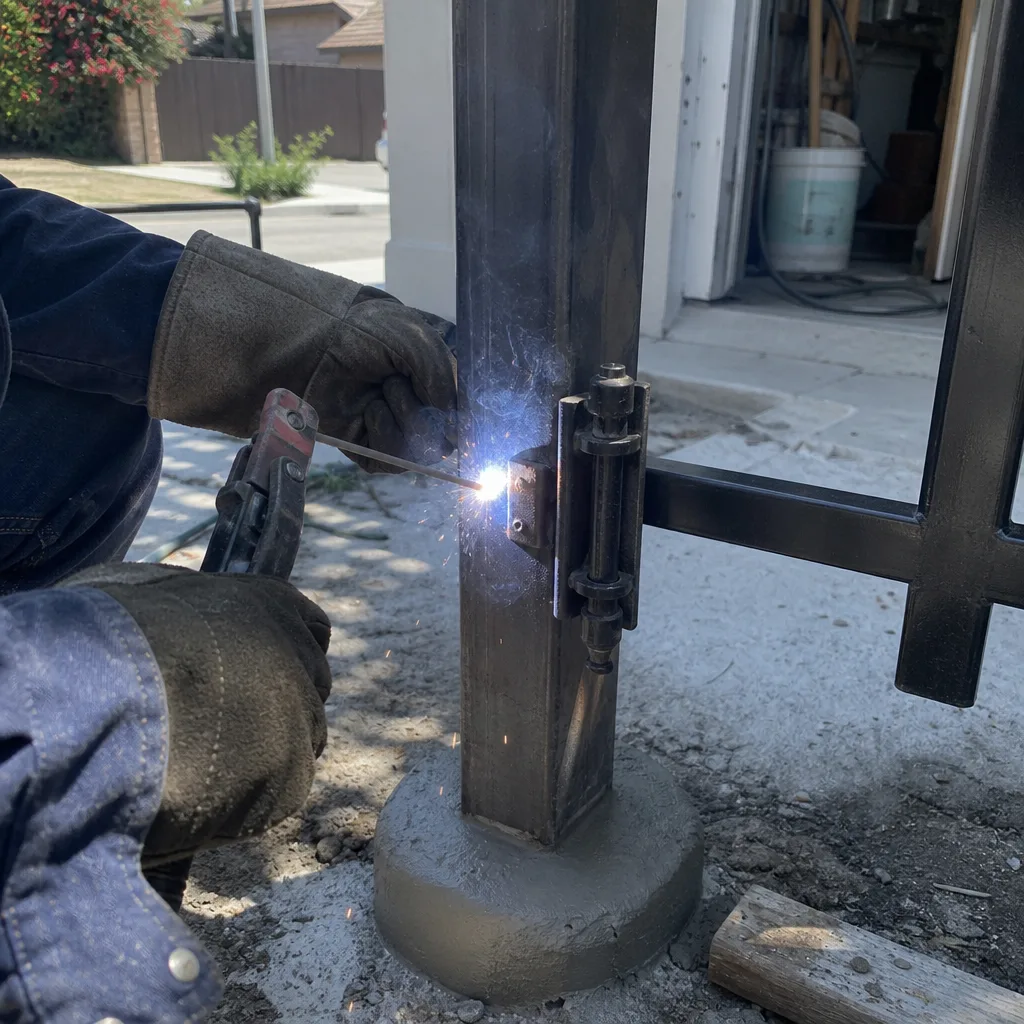
Gate repair in Long Beach comes down to three local root causes: salt-air corrosion, voltage drop, and limit-switch drift. Diagnose those first, in that order, and you avoid the expensive cycle of replacing parts that were never the problem. Every repair should leave you with a written price before the work starts and a documented record of what was found and fixed when the technician leaves. If you’re researching gate repair, you’re already ahead-explore our more guides & resources to stay informed. Call (424) 788-1027 for a free estimate, and we’ll put the diagnosis in writing before any tool comes off the truck.
Written by Adrian Vance, Owner at Vance Gate Repair Long Beach, serving Long Beach since 2014.